
Your shopping cart is empty!
Welcome visitor you can login or create an account.
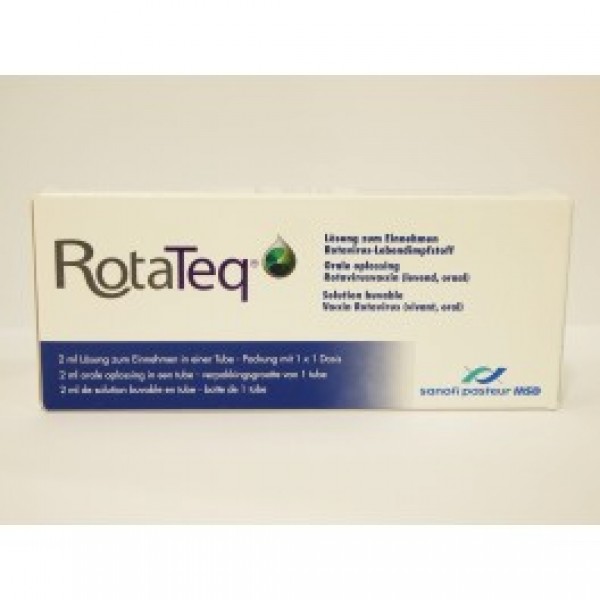
ROTATEQ 2 ml.
Product Code: ROTATEQ 2 ml.
Availability: In Stock
Product viewed: 1077


ROTATEQ 2 ml.
What RotaTeq is and what it is used
RotaTeq is an oral vaccine that helps protect infants and young children against gastroenteritis (diarrhea and vomiting) due to rotavirus infection, and can be administered to infants aged 6 weeks to 32 weeks (see section 3). The vaccine contains five types of live rotavirus strains. When the vaccine is administered to the infant immune system (the body's natural defenses) will make antibodies against the most commonly occurring types of rotavirus. These antibodies help protect against gastroenteritis caused by these types of rotavirus.
2. What you need to know before your child receives RotaTeq
Do not use RotaTeq, if:
Your child is allergic to any component of this vaccine (see section 6 Contents of the pack and other information);
Your child developed an allergic reaction after receiving a dose of RotaTeq or other rotavirus vaccine;
Your child had a history of intussusception (a bowel obstruction in which one segment of bowel becomes enfolded within another segment);
Your child was born with a malformation of the gastrointestinal system that might predispose them to the disease;
Your child has any disease which reduces its resistance to infection;
Your child has a severe infection with a high temperature. You may need to postpone the vaccination until recovery. A minor infection such as a cold should not be a problem, but talk to your doctor;
Your child has diarrhea or is vomiting. You may need to postpone the vaccination until recovery.
Warnings and Precautions
Talk to your doctor or pharmacist before using RotaTeq, if your child:
received in the past 6 weeks transfusion or immunoglobulins;
is in close contact with a family member who has a weakened immune system, for example. person with cancer or who take medications that can weaken the immune system;
a violation of the gastrointestinal system;
not gaining weight and growing as expected.
As usual, please wash your hands thoroughly after changing soiled diapers.
As with other vaccines, RotaTeq may not completely protect all children who are vaccinated even after all three doses.
If your child has already been infected with rotavirus, but at the time of vaccination is not sick, RotaTeq may not be able to prevent the disease.
RotaTeq does not protect against diarrhea and vomiting due to causes other than rotavirus.
Other medicines and RotaTeq
RotaTeq can be given concomitantly with as your child receives other normally recommended vaccinations, such as diphtheria, tetanus, pertussis (whooping cough), Haemophilus influenzae type 6, inactivated or oral poliomyelitis vaccine against hepatitis B, pneumococcal conjugate vaccine and a conjugate vaccine against meningococcal group C
Tell your doctor or pharmacist if your child is taking, has recently taken or might take any other medicines (or other vaccines).
RotaTeq with food and drink
There are no restrictions on taking food or liquid, including breast milk, either before or after vaccination with RotaTeq.
RotaTeq contains sucrose.
If you know that your child has an intolerance to some sugars, contact your doctor / health care professional before the vaccine.
3. How to use RotaTeq
RotaTeq IS FOR ORAL USE ONLY.
A doctor or nurse will administer the recommended doses of RotaTeq to your child. The vaccine will be given by gently squeezing the tube, the vaccine into your child's mouth.
The vaccine can be applied without having any regard to food, liquid or milk.
If the child spits or regurgitates most of the vaccine dose could be administered as a single dose in the same substituent vaccination visit.
Under no circumstance should this vaccine be administered by injection.
The first dose (2 ml) RotaTeq may be given from the age of 6 weeks of age, but not later than 12 weeks of age (about 3 months). RotaTeq can be given to infants born prematurely if the pregnancy had lasted at least 25 weeks. These children should receive the first dose of vaccine between 6 and 12 weeks after birth.
Your child will receive 3 doses of RotaTeq, administered at intervals of not less than four weeks. It is important that your child receives all 3 doses of the vaccine for protection against rotavirus. Preferably three doses should be administered before the age of 20-22 weeks and no later than the age of 32 weeks.
When RotaTeq is given to your child for the first dose, it is recommended that your child also receives RotaTeq (and not another rotavirus vaccine) to complete the vaccination course.
If you forget an appointment for RotaTeq:
It is important to follow the instructions of your doctor / health care professional regarding return visits for the subsequent doses. If you forget or are not able to go back to your doctor / health care professional designated by him / her time, ask your doctor / health care professional for advice.
4. Possible side effects
Like all vaccines and medicines, this vaccine can cause side effects, although not everybody gets them.
The use of RotaTeq in clinical trials and post-marketing have reported the following side effects:
Very common (may affect more than 1 in 10 infants): fever, diarrhea, vomiting;
Common (may affect up to 1 in 10 infants): infections of the upper respiratory tract;
Uncommon (may affect up to 1 in 100 infants): stomach pains, runny nose and sore throat, ear infection, rash, blood in stool *;
Rare (may affect up to 1 in 1000 infants): bronchospasm (wheezing or coughing), hives *;
Very rare (may affect up to 1 in 10,000 infants): intussusception (a bowel obstruction in which there is insertion of a segment of the intestine into another) **;
Not known (from the available data can not be estimated frequency): allergic reactions, which may be severe (anaphylaxis) *, allergic edema, which can affect the face, lips, tongue or throat *, irritability *.
* This adverse reaction has been reported post-marketing.
** Symptoms of intussusception may include severe abdominal pain, persistent vomiting, blood in stools, bloating and / or fever.
In premature infants (at or before 28 weeks of pregnancy) may occur in long pause between breaths than normal for 2-3 days after vaccination.
Ask your doctor / health care professional if you want to learn more about side effects for RotaTeq.
Adverse event reporting
If your child gets any side effects, tell your doctor or pharmacist. This includes any possible effects not listed in this leaflet. You can also report adverse events directly through the national reporting system. As reported adverse reactions, you can do your bit to get more information on the safety of this medicine.
5. How to store RotaTeq
The vaccine should be stored out of reach of children.
Do not use this vaccine after the expiry date stated on the label after EXP. The expiry date refers to the last day of that month.
Store in a refrigerator (2 ° C to 8 ° C). Dosing tube is stored in the outer carton to protect from light.
Do not dispose of medications in wastewater or household waste. Ask your pharmacist how to dispose of medicines no longer required. These measures will help to protect the environment.
6. Contents of the pack and other information
What RotaTeq contains
The active substances in RotaTeq are 5 human-bovine reassortant rotavirus strains:
G1 2,2 x 10⁶ infectious units;
G2 2,8 x 10⁶ infectious units;
G3 2,2 x 10⁶ infectious units;
G4 2,0 x 10⁶ infectious units;
P1A [8] 2,3 x 10⁶ infectious units.
The other ingredients in RotaTeq are: sucrose, sodium citrate, sodium dihydrogen phosphate monohydrate, sodium hydroxide, polysorbate 80, culture media (containing inorganic salts, amino acids and vitamins), and purified water.
What RotaTeq looks like and contents of the pack
oral solution
This vaccine is contained in a single-dose tube and is a pale yellow clear liquid that may have a pink tint.
RotaTeq is available in packs of 1, 10 dosing tubes.
Not all pack sizes may be marketed.
Write a review
Your Name:Your Review: Note: HTML is not translated!
Rating: Bad Good
Enter the code in the box below:
Related Products
SINFLORIX antipnevmokokova vaccine What Synflorix is and wha..
159.00€
Rotarix vaccine 1 ml. - GLAXOSMITHKLINE ROTARIX WHAT IS AND ..
139.00€
SYNFLORIX antipnevmokokova vaccine What Synflorix is and wha..
149.00€