Your shopping cart is empty!
Welcome visitor you can login or create an account.
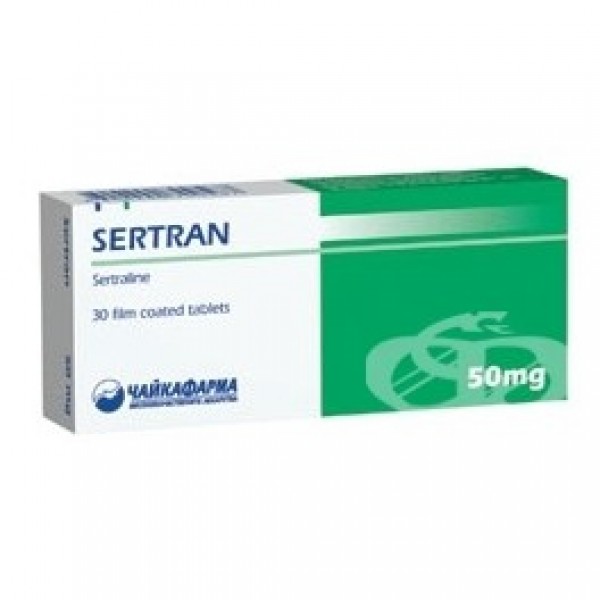
SERTRAN 50 mg. 30 tablets
Product Code: SERTRAN 50 mg. 30 tablets
Availability: In Stock
Product viewed: 1063


SERTRAN 50 mg. 30 tablets
What your medicine?
Each tablet contains: 50 mg or 100 mg of sertraline (as hydrochloride).
Excipients: calcium hydrogen phosphate, hydroxypropyl cellulose, hypromellose, magnesium stearate, microcrystalline cellulose, polysorbate-80, sodium starch glycolate, propylene glycol and titanium dioxide.
Each pack contains 30 tablets.
What type of drug is sertraline?
This drug is from the group of antidepressants, known as selective inhibitors of serotonin reuptake (SSRI).
What is your medicine?
Sertraline is used to treat depression, obsessive-compulsive disorder (OCD), post traumatic stress disorder (PTSD), panic disorder or social phobia. It is also used to treat OCD in children over 6 years. The tablets are not sleeping pills or sedatives. Your doctor has decided that this medicine is suitable for treating your Diseases.
Depression is a clinical Diseases. If you feel sad, you want to cry, you can not sleep easy or fun as before, sertraline will help you feel better. It can help to treat anxiety that can accompany depression Vi.Sertralin should not be used to treat depression in children and adolescents under 18 years. For more information, see the paragraph "Use of sertraline in children and adolescents."
Obsessive-compulsive disorder (OCD) is a disease associated with anxiety. If you have been constantly persecuted by obsessive ideas that makes you perform certain rituals, sertraline can help. Posttraumatic stress disorder (PTSD) is a condition that can occur after emotionally traumatic experience and has symptoms similar to those of depression and anxiety. If you suffer from PTSD, sertraline can help. Raztroystvo- panic disorder is associated with anxiety. In case you had short episodes of anxiety or panic zrazena and worry about it, sertraline can help. Your doctor may prescribe this medicine to prevent the return of panic disorder. Social phobia is a fear of social or public events - those where you feel afraid to meet new people and be criticized by others or fall into humiliating or embarrassing you in front of other people's situation. Your doctor may prescribe this medicine to prevent the return of social phobia.
Before taking sertraline
If the answer to any of the questions below is YES, DO NOT USE sertraline.
• Have you ever had an allergic reaction to sertraline?
• Do you have problems with your liver?
• Do you use or have you used in the last two weeks any medicines called monoamine oxidase inhibitors (MAOIs short-)?
• For six years you and I suffer from obsessive-compulsive disorder?
• For 18 years you and you suffer from depression?
• Do you use a medicine called pimozide?
If the answer to any of these questions is YES, immediately inform your doctor.
• Are you pregnant or do you think you might be pregnant?
• Breast milk it?
• Do you have problems with your liver?
• Do you have kidney problems?
• Are you diabetic?
• Have you ever had an epileptic fit?
• For 16 years you and you have symptoms of panic?
• Are you being treated currently with electroshock therapy?
• Do you drink alcohol while using this medicine?
• Do you drive or operate machinery while using this medicine?
• Are you being treated with any other medication for your illness, eg lithium, another antidepressant or antimanic medicine?
• Are you taking tryptophan, sumatriptan, fenfluramine, warfarin, diazepam, tolbutamide or cimetidine?
• Drink aspirin or other painkillers known as nonsteroidal anti-inflammatory drugs or other strong painkiller called Tramadol?
• Do you have a history of poor circulation?
Your doctor may require you to take blood tests if you are taking lithium or warfarin.
The herb St. John's wort should not be used in conjunction with sertraline. If you are already using St. John's wort preparations, discontinue use and tell your doctor at your next visit.
How to take your medicine
Your medicine should be taken only orally.
Depression (including accompanying symptoms of anxiety):
The starting dose is 50 mg once daily. Some patients may require doses higher than 50 mg.
Obsessive-compulsive disorder:
The initial dose is 50 mg once daily, a therapeutic dose is 50 - 200 mg daily.
Post-traumatic stress disorder:
Treatment for PTSD starts with 25 mg once daily. After one week the dosage was increased to 50 mg once daily.
Panic disorder:
The starting dose is 25 mg as a once daily after one week, your doctor will increase to 50 mg as a once daily. Social phobia: The starting dose is 25 mg as a once daily after one week, your doctor will increase to 50 mg as a once daily.
Children 6-17 years:
Treatment is prescribed only by a specialist. Implementation of Sertraline in 13-17 year-olds with OCD should begin with 50 .mg daily. Treatment of 6-12 year olds with OCD should begin with 25 mg once daily and increased to 50 mg daily after 1 week.
Adults over 65 years:
No special precautions. Recommended is the usual dose for vazrastni.V some cases, physicians prescribing a higher dose to a maximum of 200 mg per day. The label appears on the packaging your dose.
If you are not sure about the dose, ask your doctor or pharmacist.
• Swallow the tablet whole with some water.
• You should take the tablets every day at the same time, fasting or during the meal.
• Do not crush or chew the tablet.
• Continue to drink tablets every day. For your convenience, the day is marked on the package.
The doctor should not change your dose more often than once a week.
What should you do if you drink too many tablets?
Taking too many tablets at once can be dangerous. If you swallow many tablets, tell your doctor. If you can not contact your doctor immediately go to the nearest emergency room.
What should you do if you forget to take a tablet?
Do not worry. If you forget to take a tablet, do not take it. Just take the next tablet at the usual time.But at once take more tablets than your doctor has prescribed.
When you will feel the effect of the treatment?
• You can take sertraline 2 to 4 weeks before you feel better. Your doctor will want to monitor the process closer. • You should continue taking sertraline, to help you feel better.
• Visit your doctor before you run out of tablets.
• Keep taking the tablets in order to feel better.
Suicidal thoughts or self-harm may be part of Diseases and you can appear or even increase when you start to feel an improvement. This will change during treatment. Immediately tell your doctor if you have any distressing thoughts or anxiety.
What should you do if you feel better?
Tell your doctor if you have drunk all tablets and still do not feel good or feel bad.
Does your medicine cause undesirable effects?
Your medicine may cause some undesirable effects:
• Dry mouth
• Malaise
• Lack of appetite
• upset stomach
• Diarrhea
• Stomach ache
• Shaking
• Increased sweating
• Changes in sexual desire or function, for example. delayed ejaculation, inability to obtain orgasm
• Vertigo
• Insomnia
• Sleepiness
• Gastrointestinal disorders
Most of these side effects are usually mild and disappear in the course of treatment. If you cause nuisance or longer, ask your doctor or pharmacist.
Other adverse reactions:
• Effects on the nervous system such as headaches, tinnitus, numbness or uncontrollable twitching, convulsions (they are more likely if you have already had them).
• Convulsions. You should immediately inform your doctor if you get convulsions.
• Psychological effects such as confusion, amnesia, agitation, aggression, mania / hypomania, hallucinations, nervousness, panic reactions, decreased ability to properly respond to ezhedevni situations, loss of sense of identity and related depression effects: anxiety and desire for crying.
• Cardiovascular effects, including rapid heart beat and blood pressure changes, including low blood pressure / dizziness when standing up.
• Effects on the genitourinary system, such as water retention, menstrual disorders and increase the hormone prolactin, which can lead to abnormal release of milk or to a growth / development of the chest.
• Skin effects, including bruises, rashes, itching and changes in slantsechuvstvitelnostta.
• Other: fever, stiffness, vision changes, vague feeling of discomfort, fatigue, joint or muscle pain. Abnormal liver function tests, rarely jaundice, inflammation of the pancreas or liver, and liver failure. Also bleeding and low sodium content in the blood. Rare reports of abnormal blood tests.
• Symptoms such as dizziness, tremors, headache, anxiety and malaise can occur if treatment with sertraline is abruptly stopped. These symptoms are usually not serious and disappear within a few days. If you have symptoms when discontinuing treatment, tell your doctor.
All medicines may cause allergic reactions. Serious allergic reactions are rare. For all the occasional wheezing, difficulty breathing, rashes and itching (especially affecting the whole body) should immediately inform the treating lekar.Ako get any of these symptoms or any discomfort that you can not explain, immediately inform your doctor.
Use of sertraline in children and adolescents
Sertraline is approved for use in children and adolescents under 18 years with OCD, but should not be used to treat depression in this age group. The most common side effects in the treatment of pediatric OCD are: headache, anorexia, tremor, insomnia and irritability.
In clinical trials of sertraline on the treatment of depression in children and adolescents under 18 years, the most common side effects affecting less than 2% of patients were: dry mouth, superaktivnost, tremor, diarrhea, vomiting, irritability, loss of appetite and loss of control over urination. Thoughts and suicide attempts were mainly observed in studies in which were included children and adolescents with depression.
Look after your medicine!
This medicine is for you! Do not give it to others. It may not be suitable for tyah.Ne take the medicine after the date marked on the package.
Where to store your medicine?
Keep all medicines out of the reach of children. Store at temperatures below 25 ° C.
Write a review
Your Name:Your Review: Note: HTML is not translated!
Rating: Bad Good
Enter the code in the box below:
Related Products