Your shopping cart is empty!
Welcome visitor you can login or create an account.
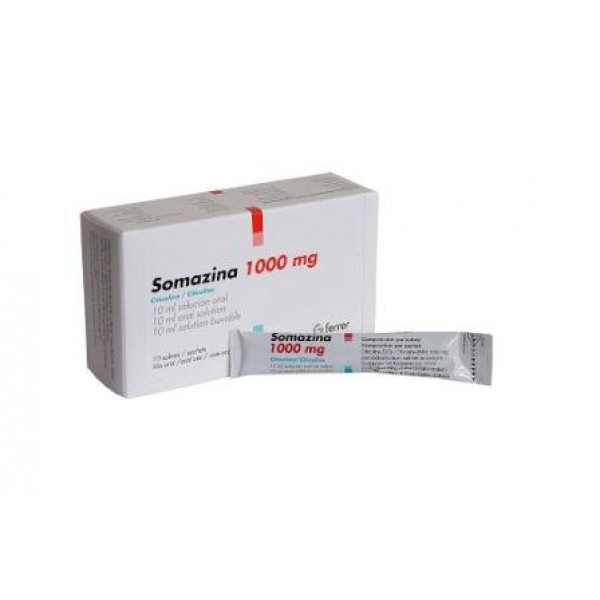
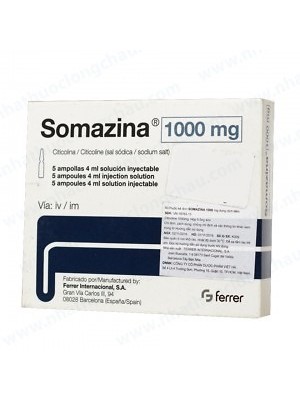
Somazina 1000 mg. 6 sachets
Product Code: Somazina 1000 mg. 6 sachets
Availability: In Stock
Product viewed: 1585


What Somazina is and what it is used for
Somazine 1000 mg oral solution is supplied in sachets containing 10 ml of solution. Each ml contains 100 mg siticoline as the sodium salt.
Citicoline stimulates the biosynthesis of structural phospholipids on the membrane of the neuron and through this action, improves the function of the mechanisms of the membrane, as well as the functioning of ion exchange pumps and receptors. Citicoline with its stabilizing action on the membrane has properties that favor the reabsorption of cerebral outflow.
Citicoline protects the energy reserve of nerve cells, inhibits apoptosis and stimulates the synthesis of acetylcholine.
What is Somazina used for?
Treatment of acute stroke and neurological consequences;
Treatment of brain trauma and neurological consequences;
Treatment of cognitive and behavioral disorders due to chronic vascular and degenerative brain diseases.
2. What you need to know before using Somazina
Do not use Somazina:
if you are allergic to the active substance or to any of the other ingredients of this medicine (listed in section 6);
if you have increased tone of the parasympathetic nervous system.
Warnings and precautions
Talk to your doctor or pharmacist before using Somazina.
Somazina 1000 mg oral solution contains as excipients:
Cochinyl red A (ponso 4R. E 124) - may cause allergic reactions and asthma, especially in patients allergic to acetylsalicylic acid.
Sorbitol (E 420) - If you have been told by your doctor that you have an intolerance to some sugars, contact your doctor before taking this medicinal product.
Parahydroxybenzoates in the form of propyl (E 217) and methyl (E 218) esters - may cause allergic reactions (possibly delayed) and in very rare cases bronchospasm.
Other medicines and Somazina
Tell your doctor or pharmacist if you are taking, have recently taken or might take any other medicines.
You must tell your doctor or pharmacist if you are taking:
Medicines containing L-Dopa, as siticoline enhances its effects;
Medicines containing meclofenoxate (centrophenoxine), as siticoline should not be taken with these medicines.
Somazina with food, drinks and alcohol
You can take Somazina regardless of meals.
Pregnancy, lactation and fertility
If you are pregnant, think you may be pregnant or are planning to have a baby, ask your doctor or pharmacist for advice before taking this medicine.
You should not take Somazine while you are pregnant or breast-feeding, unless clearly necessary and if the benefits outweigh the possible risks.
Driving and using machines
Somazina does not affect the ability to drive and use machines.
3. How to take Somazina
Always take this medicine exactly as your doctor or pharmacist has told you. If you are not sure, talk to your doctor or pharmacist.
The recommended dose is 1 or 2 sachets per day, depending on the severity of the disease.
Somazina 1000 mg is taken orally, and the contents of the sachet can be drunk directly or dissolved in half a glass of water. It can be taken during meals or between meals.
Use in children
Somazine has not been sufficiently studied in children and should therefore only be used if the expected therapeutic benefit outweighs any possible risk.
If you take more Somazina than you should
Due to the low toxicity of this medicinal product, intoxication is not expected in cases where therapeutic doses are accidentally exceeded.
However, if you take more than the prescribed dose, talk to your doctor.
If you forget to take Somazina
If you forget to take a dose, take it as soon as possible. If it is almost time for your next dose, take it as usual, skipping the missed dose. Do not take a double dose to make up for a forgotten dose.
If you stop taking Somazina
Do not stop treatment unless your doctor tells you to. Contact your doctor or pharmacist before doing so.
If you have any further questions on the use of this medicine, ask your doctor or pharmacist.
4. Possible side effects
Like all medicines, this medicine can cause side effects, although not everybody gets them.
Adverse reactions are ranked under headings of frequency using the following convention:
Common (affects 1 to 10 users in 100);
Uncommon (affects 1 to 10 users in 1,000);
Rare (affects less than 1 in 1,000 users);
Very rare (affects less than 1 user in 10,000);
Not known (frequency cannot be estimated from the available data).
Some patients have experienced the following side effects during treatment with Somazina:
Very rare (affects less than 1 user in 10,000):
hallucinations;
5. How to store Somazina
Keep out of reach of children.
This medicine does not require any special storage conditions.
Do not use this medicine after the expiry date which is stated on the carton. The expiry date refers to the last day of that month.
Do not throw away any medicines via wastewater or household waste. Ask your pharmacist how to dispose of medicines no longer required. These measures will help to protect the environment.
6. Contents of the package and additional information
What Somazina contains
The active substance is: siticoline. Each sachet contains 1000 mg of siticoline as the sodium salt.
The other ingredients are: sodium saccharin (E 954), liquid sorbitol (E 420), glycerol (E-422), methyl parahydroxybenzoate (E218), propyl parahydroxybenzoate (E 217), sodium citrate (E 331), glycerol formaldehyde, potassium sorbate (E202), cochineal red A (E 124), citric acid (E 330), strawberry flavor, purified water.
What Somazina looks like and contents of the pack
Sachets containing 10 ml of clear, pale pink solution, with the smell and taste of strawberry. Cardboard boxes containing 6, 10, 15 or 30 sachets. Not all pack sizes may be marketed.
Write a review
Your Name:Your Review: Note: HTML is not translated!
Rating: Bad Good
Enter the code in the box below:
Related Products
What is SOMAZINA and what it is used for
SOMAZINA contains ..
49.00€