Your shopping cart is empty!
Welcome visitor you can login or create an account.
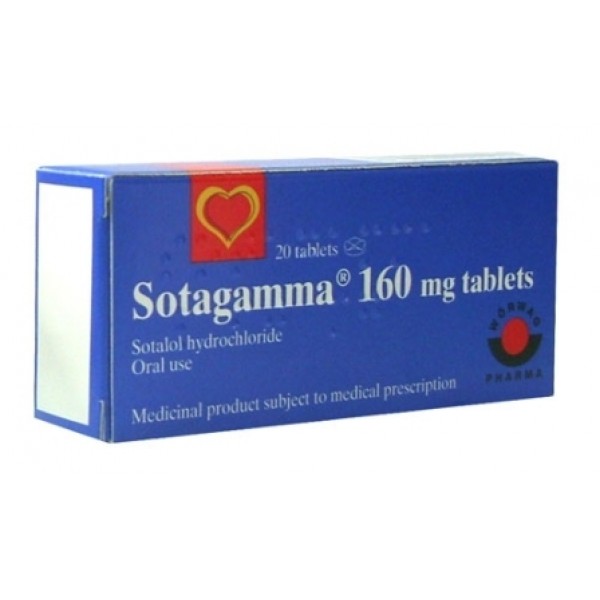
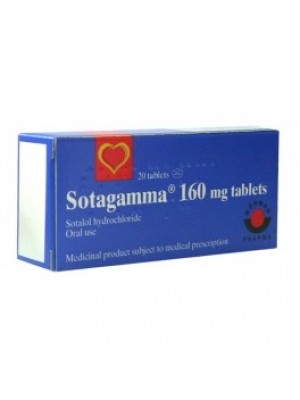
SOTAGAMMA 160 mg. 50 tablets
Product viewed: 3004


Composition
Active ingredient:
1 tablet contains: sotalol hydrochloride 160 mg
Other Ingredients:
Microcrystalline cellulose, magnesium stearate, highly dispersed silicon dioxide
Pharmaceutical form and contents of the pack:
Original pack of 20, 50 or 100 tablets.
Anti-arrhythmic agent of class III with marked blockade of beta-receptors
Areas of application
• Symptomatic tachycardic ventricular disturbances of heart rhythm (accelerated cardiac activity in heart chambers).
• Symptomatic and requiring treatment Tachycardic supraventricular heart rhythm disturbances (such as heart rhythm disturbances that are manifested by accelerated cardiac activity and originated in supraventricular divisions of the heart)
• Prevention of recurrences of atrial fibrillation (chronic non-cardiac heart attacks as a result of disease-induced atroxic excitability) after electroshock therapy
• Prophylaxis of atrial fibrillation attacks (non-ritual cardiac strokes that begin at an early onset and are the result of disease-induced atroxic excitability).
Contraindications
When should I not take Sotagamma 160? Sotagamma 160 should not be taken for:
• pronounced heart failure (NYHA class IV heart failure, uncompensated heart failure)
• acute heart attack
• shock
• severe disturbances in impulse conduction between heart aorta and heart chambers (AV block II and III)
• a sinus block (a heart block with a disturbed conduction from the sinus node to the heart atrium)
• sinus node syndrome (heart rhythm abnormalities due to impaired sinus function), which may occur, for example, as sinus bradycardia (slow heart rate <60 beats per minute), bradycardia-tachycardia syndrome (heart rate , Changing from slow to slow and vice versa), sinus block (cardiac block with sinusoidal conduction disturbances to heart atrium) or sinus arrest (stopping impulse formation in the sinus node)
• pulse at rest below 50 beats per minute before treatment commences (bradycardia <50 beats per minute)
• Pre-existing QT prolongation
• decreased potassium level (hypokalaemia)
• severely reduced blood pressure (hypotension)
• late stages of impaired peripheral blood supply
• severe airway diseases caused by their narrowing (obstruction)
• increased blood acidity caused by metabolism (metabolic acidosis)
• known hypersensitivity to sotalol and sulphonamides
In patients with psoriasis in your personal or family history, the use of beta-blocker drugs (eg Sotagamma 160) should only be performed after careful consideration of the benefit-risk ratio.
Sotalol has the ability to block beta-receptors and may increase susceptibility to allergens and the severity of severe common allergic reactions (anaphylactic reactions).
In patients with severe hypersensitivity reactions in the anamnesis and patients on treatment to reduce or suppress the body's response (desensitization treatment), there is an increased risk of developing more severe anaphylactic reactions. Therefore, such patients require very strict assessment of the indications.
Intravenous administration of verapamil and diltiazem type calcium antagonists is contraindicated in patients treated with Sotagamma 160 (except for emergency conditions).
What should you know during pregnancy and lactation?
If you are pregnant or breast-feeding, tell your doctor.
In pregnancy, especially during the first three months, Sotagamma 160 can only be used with caution and after evaluating the benefit-to-risk ratio, as there is currently insufficient experience in pregnant women. Because of the possible occurrence of side effects (bradycardia and hypotension) in the newborn, treatment should be stopped 48 - 72 hours before the scheduled time of delivery. After birth, the child should also be observed for a certain period of time. Sotalol hydrochloride passes into breast milk. If the patient breastfeeds during the treatment, the child should be observed for possible drug effects.
What should be observed in children and the elderly?
There is insufficient data on the use of Sotagamma 160 in children. Considerable impairment of renal function (see "Dosage") should be considered in the treatment of elderly patients.
Application precautions and warnings
What precautions should be considered?
Patients after myocardial infarction or those with impaired ventricular function are particularly at risk of increasing heart rhythm disturbances (proarrhythmias). They need particularly careful monitoring when treating with an anti-arrhythmic drug.
Administration of sotalol hydrochloride (intravenously) can only take place in a hospital setting. Continuous monitoring of breathing, blood pressure, heart rate and ECG is required. Treatment should be stopped gradually in patients with ischemic heart disease or after long administration, because abrupt discontinuation may lead to worsening of the clinical picture. Patients with a hormone-producing adrenal tumor (pheochromocytoma) cause simultaneous blocking of alpha-receptors.
During treatment with Sotagamma 160, hypoglycaemia may occur. Some signs of reduced blood sugar (especially tachycardia) can be confused with Sotagamma 160 therapy. This should be taken into account especially in diabetic patients with severely varying blood glucose levels and in patients using strict diets (fasting, fasting) .
What should you do when driving, operating machinery, and operating without a secure foothold?
This medication (and when used in accordance with the prescription) can change the responses to affect the ability to engage in street traffic, machine service, or work without a secure stance.
This is particularly true at the beginning of treatment, when the dose is increased and the drug is changed, as well as in the interaction with alcohol.
What else do you have to watch out for?
Taking sotalol leads to a reduction in the lesion, which can be affected by wearing contact lenses.
Interactions
Which other medicines affect the action of Sotagamma 160?
Tell your doctor about all the medicines you are taking. With the simultaneous oral administration of Sotagamma 160 and calcium channel blockers of the verapamil and diltiazem type, a more pronounced drop in blood pressure may occur; Bradycardic heart rhythm disturbances and high-grade atrioventricular disturbances in impulse transmission resulting from the combined effect on sinus and AV (atrioventricular) ventrias. Intravenous administration of verapamil and diltiazem type calcium antagonists has been demonstrated in patients who are Treated with Sotagamma 160 (except for emergency conditions). When combined with anti-arrhythmic preparations of Class I (especially quinidine-like substances) and other class III antiarrhythmics, there is a risk of significant stroke QT prolongation associated with an increased risk of ventricular arrhythmias.
Concomitant administration of calcium antagonists of the nifedipine type may result in a greater drop in blood pressure.
Concomitant administration of Sotagamma 160 and noradrenaline or MAOIs, as well as abrupt discontinuation of concomitant administration of clonidine, may significantly increase blood pressure.
Concomitant administration of Sotagamma 160 and tricyclic antidepressants, barbiturates, phenothiazine and narcotic drugs as well as anti-hypertensive medications, diuretics and vasodilators may result in a greater drop in blood pressure.
Sotagamma 160 reduces the abnormalities of the heart muscle (negative inotropic action). This effect can be enhanced by the use of narcotic drugs and antiarrhythmics. The decrease in heart rate and impulse action of Sotagamma 160 (negative-chronotropic and dromotropic) may increase with concomitant administration of reserpine, clonidine, alpha-methyldopa, guanfacine and Cardiac glycosides.
Neuromuscular blockade by tubocurarine can be enhanced by the inhibition of beta-receptors.
Concomitant administration of Sotagamma 160 and insulin or oral antidiabetic agents (especially at exercise) may cause a reduction in blood glucose (hypoglycemia) with congestion of the symptoms.
With concomitant administration of diuretics leading to increased potassium excretion (eg furosemide, hydrochlorothiazide), there is an increased risk of heart rhythm disturbance due to hypokalaemia.
Concomitant use of tricyclic antidepressants or alcohol and Sotagamma 160 should be avoided due to the possibility of ventricular arrhythmias (single cases have been reported). With simultaneous administration of sotalol and medications that can prolong the QT interval such as tri- and tetracyclic Antidepressants (imipramine, masproton), antihistamines (astemizole, terfenadine), macrolide antibiotics (erythromycin), probucol, haloperidol, halofantrine, and terrolidine,
Increase in dose should be done at the earliest after 2-3 days.
How and when to take Sotagamma 160?
The tablets are taken with a little liquid without chewing. Sotagamma 160 should not be taken during meals, as this may reduce the absorption of the active ingredient sotalol.
How long should you take Sotagamma 160?
The duration of treatment is determined by the treating physician.
After longer oral administration of Sotagamma 160, the treatment should be stopped gradually rather than abruptly.
Overdose and other mistakes in use / application
What should be done if too much Sotagamma 160 (intentional overdose or inadvertently) is taken?
If you suspect overdosage with Sotagamma 160, tell your doctor immediately. He will decide, depending on the symptoms, what needs to be done. In case of poisoning and / or in case of severe symptoms, immediate medical attention should be sought.
The clinical picture depends on the degree of intoxication and occurs mainly with cardiovascular and central nervous symptoms such as fatigue, unconsciousness, pupil enlargement, sometimes generalized seizures, hypotension, bradycardia to ascites (ECG is often seen as a substitute rhythm). Also atypical ventricular tachycardia (Torsade de pointes) and symptoms of cardiovascular shock.
What should you do if you have taken too little Sotagamma 160 or missed a dose?
When you have forgotten one or more doses, do not double the dose at the next dose, and continue treatment with the prescribed amount of the medicine. If heart rhythm disturbances occur again, contact your doctor immediately.
What should you do if you discontinue or stop the treatment prematurely?
Do not make any changes to the dosage without consulting your doctor! In patients with ischemic heart disease or long drug use, discontinuation of therapy should be gradual as abrupt discontinuation may lead to worsening of the picture of the disease.
Adverse drug reactions
What happens with Sotagamma 160? Sometimes fatigue, vertigo, dizziness, headache, confusion, hallucinations, more dreaming, paraesthesia (sensitivity disturbances), and cold limbs are seen with Sotagamma 160.
Rare side effects are gastrointestinal complaints (eg nausea, vomiting, disorder), shortness of breath in patients with obstructive airway disorders, skin reactions (redness, itching, exanthema), alopecia (hair loss) and sleep disturbances. This may result in increased peripheral blood supply, depressive moods, muscle cramps, respectively, muscle weakness and potency impairment.
Unwanted drop in blood pressure, worsening of heart failure (heart muscle weakness), bradycardia (severe heart failure) and AV-conduction disorders (disturbances in impulse and ventricular pulse conduction) have been observed rarely. In single cases, syncope has been reported (relapsing, short-term loss of consciousness). In some cases, angina pectoris attacks may be prolonged. Pro-arrhythmic action, in the form of a change or intensification of heart rhythm disturbances, which can lead to severe heart failure, with the possible consequence of stopping the heart.
Arrhythmogenic effects may occur primarily in patients with life-threatening heart rhythm disturbances and limited left ventricular function.
As Sotagamma 160 prolongs QT-time, ventricular tachyarrhythmias (including Torsades de pointes) may occur - predominantly overdosage and resulting bradycardia. Serious dry mouth, conjunctivitis (inflammation of the ocular mucosa) or Decreased tear formation, rarely visual disturbances and keratoconjunctivitis.
During treatment with Sotagamma 160, hypoglycaemia (a condition with low blood sugar) may occur. Signs of low blood sugar, especially tachycardia (accelerated heart rate), may not be clear when treated with Sotagamma 160. This can be expected especially in diabetics with very varying blood glucose levels and in patients on strict diets (Fasting, fasting). Sotagamma 160 can be fatal (total cholesterol and triglycerides increase, HDL-cholesterol lowering).
Special instructions
Beta-receptor blocking drugs (eg Sotagamma 160) may in some cases trigger psoriasis, aggravate the symptoms of this disease, or lead to such skin diseases. Due to its beta-receptor blocking properties, Sotagamma 160 may potentiate Sensitivity to allergens and the force of acute allergic diseases (anaphylactic reactions). For this reason, in patients with severe hypersensitivity reactions in the history and patients
Instructions and directions for the shelf life of the drug
The expiry date is printed on the packaging and blister.
Do not use the medicine after this date!
How should Sotagamma 160 be stored?
No special storage conditions.
Keep the medicine out of the reach of children!
Write a review
Your Name:Your Review: Note: HTML is not translated!
Rating: Bad Good
Enter the code in the box below:
Related Products
SOTAGAMA table. 160 mg. 50 tablets Areas of application Symp..
17.00€