Your shopping cart is empty!
Welcome visitor you can login or create an account.
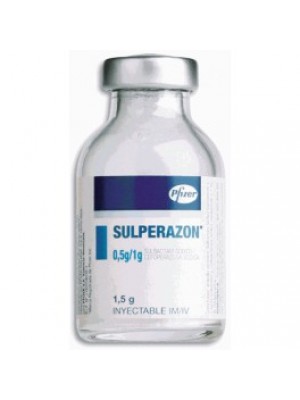
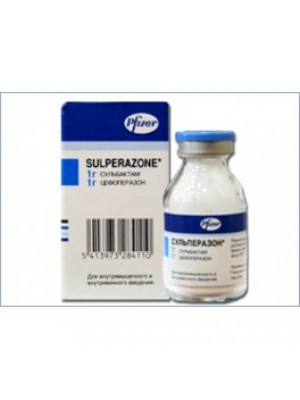
SULPERAZON -1 g vial.
Product Code: SULPERAZON -1 g vial.
Availability: In Stock
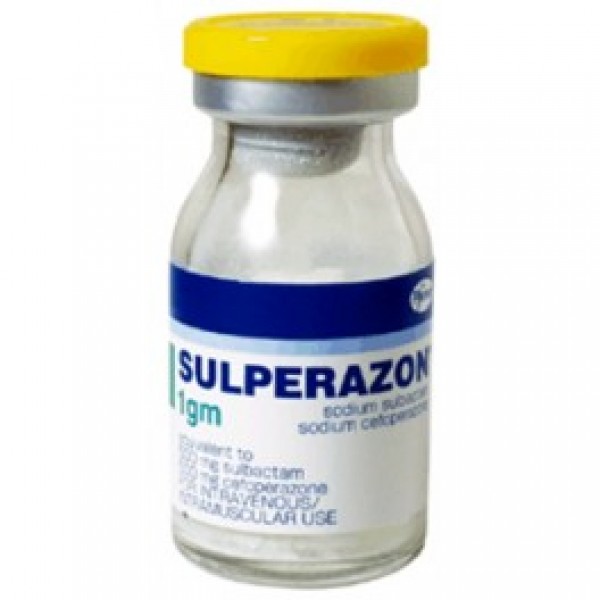
Product viewed: 1468


SULPERAZON -1 g vial.
QUALITATIVE AND QUANTITATIVE COMPOSITION
Sulbactam sodium / cefoperazone sodium dry powder for injection, which is available as a mixture of sulbactam and cefoperazone in the ratio 1: 1 (SBT / CPZ).
Sulbactam is a derivative of a basic penicillin nucleus. It is an irreversible beta-lactamase inhibitor for parenteral use. In chemical nature is sodium penitsilat sulfone. One gram contains 92 mg of sodium (4 mEq). Sulbactam is an off-white crystalline powder with high water solubility. The molecular weight is 255.22.
Cefoperazone sodium is a semisynthetic broad-spectrum cephalosporin antibiotic for parenteral administration. One gram contains 34 mg of sodium (1.5 mEq). Cefoperazone is a white crystalline powder that is readily soluble in water. The molecular weight is 667.65.
3 PHARMACEUTICAL FORM
Vials contain equivalent amounts of sulbactam and cefoperazone 1000 mg + 1000 mg.
4 CLINICAL DATA
4.1. indications
monotherapy
Sulbactam / cefoperazone is indicated for the treatment of severe infections requiring parenteral treatment for sensitive combination microorganisms:
- Respiratory tract infections (upper and lower);
- Urinary tract infections (upper and lower);
- Peritonitis, cholecystitis, cholangitis and other intra-abdominal infections;
- Septicemia;
- Meningitis;
- Skin infections and infections of the soft tissues;
- Bone and joint infections;
- Pelvic inflammatory disease, endometritis, gonorrhea and other infections of the reproductive system.
combination Therapy
Because of the wide spectrum of sulbactam / cefoperazone most infections can be treated adequately with this antibiotic monotherapy. However, sulbactam / cefoperazone may be used concomitantly with other antibiotics if such combinations are shown.
If used with an aminoglycoside (see. Section 6.2. Incompatibilities - Aminoglycosides), renal function should be monitored during treatment (see. Section 4.2. Dosage and method of administration - Use in renal failure).
4.2. Dosage and method of administration
Use in adults
The daily dose is divided into two equal parts in 12 hours.
In severe or refractory infections daily dose of sulbactam / cefoperazone may be increased to 8 g of 1: 1 ratio (ie the activity of cefoperazone - 4 g). You may need additional cefoperazone administered separately in some patients who were given the ratio 1: 1. The daily dose should be administered 12 hours, divided into equal parts.
The recommended maximum dose of sulbactam is 4 g.
Use in hepatic insufficiency
See. Section 4.4. Special warnings and precautions for use.
Use in renal failure
In patients with significantly reduced renal function (creatinine clearance <30 ml / min) is necessary to adjust the dosing regimen to compensate for the reduced clearance of sulbactam. In patients with creatinine clearance between 15 and 30 ml / min should be a maximum of 1 g sulbactam in 12 hours (maximum daily dose - 2 g sulbactam), while in patients with creatinine clearance below 15 ml / min should be a maximum of 500 mg sulbactam for 12 hours (maximum daily dose -1 g sulbactam). In severe infections may require additional application of cefoperazone.
The pharmacokinetic profile of sulbactam significantly altered by hemodialysis. The serum half-life of cefoperazone is reduced slightly during hemodialysis. Therefore, the drug should be administered after dialysis.
Use in the elderly
See. Section 5.2. Pharmacokinetics.
Use in children
The daily dose should be administered every 6 to 12 hours, divided into equal parts.
In severe or refractory infections, these doses may be increased to 160 mg / kg per day in the ratio 1: 1 (ie the activity of cefoperazone - 160 mg / kg per day). The daily dose should be npi 2 to 4 equal parts (see. Section 4.4. Special warnings and precautions for use - Use in children and Section 5.3. Preclinical Safety - Use in children).
Use in infants
In neonates up to one week of age the drug should be administered for 12 hours. The maximum daily dose of sulbactam in children should not exceed 80 mg / kg daily (see. Section 4.4. Special warnings and precautions for use - Use in infancy).
intravenous
For intermittent infusion, each vial sulbactam / cefoperazone must be reconstituted with the appropriate amount (see. Section 6.6. Application Instructions - Dilution) 5% aqueous solution of glucose, 0.9% sodium chloride solution for injection or sterile water for injection, and then diluted to 20 ml with the same solution, and then applied for 15 to 60 minutes.
Ringer's lactate solution is a suitable vehicle for intravenous infusion, but not for initial reconstitution (see. Section 6.2. Incompatibilities - Ringer lactate and Section 6.6. Application Instructions - Ringer lactate).
For intravenous injection, each vial is to be reconstituted, as mentioned above, and can be applied for at least 3 minutes.
intramuscular
Lidocain NS12% is an appropriate means for intramuscular use, but not for initial reconstitution (see. Section 6.2. Incompatibilities - Lidocain and Section 6.6. Application Instructions - Lidocain).
4.3. Contraindications
Sulbactam / cefoperazone is contraindicated in patients with known hypersensitivity to penicillins, sulbactam, cefoperazone or other cephalosporin antibiotic.
4.4. Special warnings and precautions for use
hypersensitivity
Observed serious and rarely fatal hypersensitivity (anaphylaxis) in patients who were given treatment with a beta-lactam or cephalosporin. The occurrence of these reactions is more likely in patients with a history of sensitivity to multiple allergens. If an allergic reaction occurs, the drug should be discontinued and appropriate therapy instituted.
Serious anaphylactic reactions require immediate emergency treatment with epinephrine. If shown to be applied oxygen, intravenous corticosteroids and maintain airway management, including intubation.
Use in hepatic insufficiency
Cefoperazone is excreted exclusively via the bile. In patients with liver disease and / or biliary obstruction serum half-life of the drug is usually prolonged and urinary excretion is increased. Even with severe hepatic impairment cefoperazone achieves therapeutic concentrations in bile and occurs only 2-4 fold increase in half-life.
Dose modification may be necessary in cases of severe biliary obstruction, severe liver disease, or in cases of both renal impairment and any of the above.
In patients with liver failure and concomitant renal impairment should be monitored cefoperazone serum concentrations and accordingly, if necessary, the dose can be adjusted. In case you do not provide a close monitoring of serum concentrations, the dose of cefoperazone should not exceed 2 g daily.
General
As with treatment with other antibiotics, and in a minority of patients treated with cefoperazone, was observed failure of vit. The mechanism is probably related to the inhibition of the intestinal flora which normally synthesize this vitamin. Patients with high risk were those with a poor diet, malabsorption (eg., Cystic fibrosis) and patients on long-term intravenous feeding. In these patients and in patients on anticoagulant therapy should be monitored prothrombin time and exogenous vit. K depending on the indication.
As with other antibiotics, and in long term treatment with sulbactam / cefoperazone may result in overgrowth of resistant organisms. Patients should be monitored closely during treatment. It is recommended that, as with all powerful operating system antibiotics, prolonged therapy periodically to monitor organ system dysfunction, which includes renal, hepatic and hematopoietic systems. This is particularly important for infants, particularly when premature, and infant.
Use in infants
Sulbactam / cefoperazone is used successfully in infants. Not been extensively studied in premature infants or neonates. Therefore, before initiating therapy in premature newborns and must be weighed against the potential benefits / potential risks (see. Section 5.3. Preclinical Safety - Use in children).
Cefoperazone not displace bilirubin from binding sites to plasma proteins.
4.5. Drug interactions and other forms of interaction
alcohol
Ingestion of alcohol during treatment with cefoperazone and the fifth day after the interruption was observed reaction characterized by flushing, sweating, headache, and tachycardia. A similar response was seen with other cephalosporins and patients should be advised not to drink alcohol during treatment with sulbactam / cefoperazone. For patients who require an artificial oral or parenteral feeding, to avoid solutions containing ethanol.
Interactions with laboratory tests
False positive reaction for glucose in the urine may occur with tests using Benedict's or Fleming.
4.6. Pregnancy and lactation
Use in Pregnancy
Were made reproduction studies in rats at doses up to 10 times higher than human and have revealed no evidence of impaired fertility or teratogenic effects. Sulbactam and cefoperazone cross the placental barrier. However, no adequate and well-controlled studies in pregnant women. Since studies on animal reproduction is not always predictive of the effects on reproduction in humans, this drug can be used during pregnancy only when it is really necessary.
Use in nursing
Only small amounts of sulbactam and cefoperazone is excreted in human milk. Although poorly excreted into the milk in lactating women, sulbactam / cefoperazone should be used with caution in them.
4.7. Effects on ability to drive and use machines
Clinical experience shows that it is unlikely sulbactam / cefoperazone impair the patient's ability to drive or use machines.
4 8 Undesirable effects
Sulbactam / cefoperazone is generally well tolerated. The majority of adverse events were mild to moderate and resolved during treatment. In pooled data from comparative and non-comparative clinical trials involving 2500 patients were observed following side effects:
Gastrointestinal: As with antibiotics, the most common side effects were gastrointestinal. The most frequently observed: diarrhea / loose stools - 3.9%, followed by nausea and vomiting - 0.6%.
Dermatological reactions: As with all penicillins and cephalosporins, hypersensitivity manifested by maculopapular rash and urticaria -0.6% - 0.08%. These reactions often occur in patients with a history of allergies, especially to penicillin.
Hematology: There was a slight decrease in neutrophils - 0.4% (5/1131). As with other beta-lactam antibiotics, prolonged use may cause reversible neutropenia - 0.5% (9/1696). In some patients, a positive direct test Coombs - 5,5% (15/296) during treatment. There was also a decrease in hemoglobin -0.9% (13/1416) or hematocrit - 0.9% (13/1409), which is consistent with the published literature on cephalosporins. Transient eosinophilia -3.5% (40/1130) and thrombocytopenia - 0.8% (11/1414) and hypoprothrombinemia - 3.8% (10/262).
• Miscellaneous: Headache - 0.04%, temperature - 0.5%, pain at the injection site - 0.08 percent, chills - 0.04%.
Laboratory changes: observed transient increases in liver function tests: ASAT- 5.7% (94/1638) ALT - 6.2% (95/1529), alkaline phosphatase, 2.4% (37/1518) and bilirubin levels: 1.2% (12/1040).
Local reactions: Sulbactam / cefoperazone is well tolerated following intramuscular administration. Sometimes such an application may follow transient pain. As with other cephalosporins and penicillins, as sulbactam / cefoperazone is administered by an intravenous catheter, it is possible in some patients (0.1%) to develop phlebitis at the site of infusion.
After leaving the drug on the market, the following additional adverse reactions:
General: anaphylactic reaction (including shock);
Cardiovascular: hypotension;
Gastrointestinal: pseudomembranous colitis; Hemopoietic: leukopenia;
Skin / skin appendages: pruritus syndrome Stevens-Johnson;
Urinary: hematuria; Vascular: vasculitis.
4.9. overdose
There is limited information on the acute toxicity of cefoperazone sodium and sulbactam sodium in humans. Overdose of the drug product is expected to lead to reactions that are more severe adverse reactions reported for the medicinal product. Must pay attention to the fact that high concentrations of beta-lactam antibiotics in the CNS can cause neurological effects, including seizures. Since cefoperazone, and sulbactam are removed from the circulation by hemodialysis, these procedures may accelerate the elimination of drug from the body if an overdose in patients with impaired renal function.
5 PHARMACOLOGICAL PROPERTIES
5.1. Pharmacodynamic properties
The antibacterial component of sulbactam / cefoperazone is cefoperazone, a third-generation cephalosporin that acts against sensitive actively growing cells by inhibiting the biosynthesis of the cell wall mukopeptid. Sulbactam has no useful antibacterial activity except against Neisseriaceae and Acinetobacter. However, biochemical studies with cell-free bacterial systems have proved to be an irreversible inhibitor of beta-lactamases produced by resistant to beta-lactam antibiotics of microorganisms.
Ability of sulbactam to prevent the destruction of penicillins and cephalosporins by resistant organisms was confirmed in studies using whole bacterial cells resistant strains in which sulbactam showed marked synergy with penicillins and cephalosporins. Since sulbactam is also associated with some of the penicillin-binding proteins susceptible strains also are often more susceptible to sulbactam / cefoperazone, than just cefoperazone. The combination of cefoperazone and sulbactam is active against all organisms sensitive to cefoperazone. In addition it demonstrates synergistic activity (up to fourfold reduction of the minimum inhibitory concentrations of the combination compared with that of each of its components) in the number of microorganisms, it is the most remarkable in:
Haemophilus influenzae
Bacteroides spp.
Staphylococcus spp.
Acinetobacter calcoaceticus
Enterobacter aerogenes
Morganella morganii
Citrobacter freundii
Enterobacter cloacae
Citrobacter diversus.
Sulbactam / cefoperazone is active in-vitro against a variety of clinically relevant microorganisms.
Gram-positive organisms:
Staphylococcus aureus - penitsilinazoprodutsirashti and penitsilinazoneprodutsirashti strains
Staphylococcus epidermidis
Streptococcus pneumoniae (before Diplococcus pneumoniae) Streptococcus pyogenes (group A beta-hemolytic streptococci) Streptococcus agalactiae (group B beta-hemolytic streptococcus)
Most strains of beta-hemolytic streptococci Most strains of Streptococcus faecalis (enterococci)
Gram-negative microorganisms: Escherichia coli Klebsiella spp. Enterobacter spp. Citrobacter spp. Haemophilus influenzae Proteus mirabilis Proteus vulgaris Morganella morganii (before Proteus morganii) Providencia rettgeri (before Proteus rettgeri) Providencia spp.
Serratia spp. (including S. marcescens) Salmonella and Shigella spp.
Pseudomonas aeruginosa and other Pseudomonas spp.
Acinetobacter calcoaceticus
Neisseria gonorrhoeae
Neisseria meningitidis
Bordetella pertussis
Yersinia enterocolitica
Anaerobic microorganisms:
Gram-negative bacilli (including Bacteroides fragilis, other Bacteroides spp. And Fusobacterium spp.)
Gram-positive and Gram-negative cocci (including Peptococcus, Peptostreptococcus and Veillonella spp.)
Gram-positive bacilli (including Clostridium, Eubacterium and Lactobacillus species)
For the determination of the IPC can be used serial dilutions of sulbactam / cefoperazone in a 1: 1 by plating on agar or broth. We recommend using a test with a susceptibility discs containing 30 mcg sulbactam and 75 mcg cefoperazone in drive. Laboratory of "susceptible" indicates that the infecting organism is likely to respond to therapy with sulbactam / cefoperazone, a report of "Resistant" indicates that the cause would not be affected. A report of "Intermediate" suggests that the organism would be susceptible to sulbactam / cefoperazone, if you use a higher dosage or if the infection is confined to tissues or fluids, which reached high antibiotic concentrations.
Recommended following control strains for quality control of antimicrobial susceptibility discs - 30 mcg / 75 mcg sulbactam / cefoperazone:
Control strain radius area
Acinetobacter spp. ATCC 43498 26-32
Pseudomonas aeruginosa ATCC 27853 22-28
Escherichia coli ATCC 25922 27-33
Staphylococcus aureus ATCC 25923 23-30
5.2. pharmacokinetics
About 84% of the dose of sulbactam and 25% of the dose of cefoperazone, attached as sulbactam / cefoperazone, is excreted by the kidneys. The majority of the remaining dose cefoperazone is excreted in the bile. After administration of sulbactam / cefoperazone sulbactam mean half-life of about 1 hour, while that of cefoperazone is approximately 1.7 hours. It was found that serum concentrations are proportional to the administered dose. These values are comparable to previously published values for each of the substances administered alone.
Write a review
Your Name:Your Review: Note: HTML is not translated!
Rating: Bad Good
Enter the code in the box below:
Related Products