
Your shopping cart is empty!
Welcome visitor you can login or create an account.
Tezeo HCT 80 mg. / 12.5 mg. 30 tablets
Product Code: Tezeo HCT 80 mg. / 12.5 mg. 30 tablets
Availability: In Stock
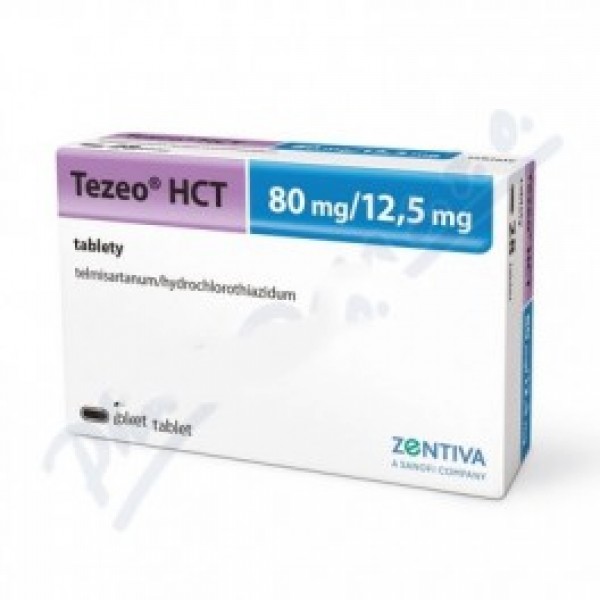
Product viewed: 1764


Tezeo HCT 80 mg. / 12.5 mg. 30 tablets
What is Tezeo HCT is and what it is used
Tezeo HCT is a combination of two active substances in one tablet - telmisartan and hydrochlorothiazide. Both substances help to control high blood pressure.
Telmisartan belongs to a group of medicines called receptor antagonists, angiotensin II. Angiotensin II is a substance produced in your body which causes blood vessels to narrow, thus increasing your blood pressure. Telmisartan blocks the effect of angiotensin II so that the blood vessels relax and blood pressure is lowered.
Hydrochlorothiazide belongs to a group of medicines called thiazide diuretics, which cause an increase in urine output, leading to a lowering of your blood pressure.
If left untreated, high blood pressure can damage blood vessels in several organs, which can sometimes lead to heart attacks, heart or kidney failure, stroke and blindness. Symptoms due to high blood pressure are not usually observed before damage occurs. It is therefore important to regularly measure blood pressure to verify if it is within normal limits.
Tezeo HCT is used to treat hypertension (essential hypertension) in adults whose blood pressure is not adequately controlled when telmisartan is used alone.
2. What you need to know before taking Tezeo HCT
Do not take Tezeo HCT
if you are allergic to telmisartan, hydrochlorothiazide or other medicines derived from sulfonamides or any of the other ingredients of this medicine (listed in section 6);
if you are pregnant after the third month. (Better to avoid the use of Theseus HCT in early pregnancy - see pregnancy section.)
if you have severe liver problems such as cholestasis or biliary obstruction (problems with drainage of the bile from the gall bladder) or any other severe liver disease;
if you have severe kidney disease;
if your doctor determines that you have low potassium levels or high calcium levels in the blood, which do not respond to treatment.
Tell your doctor or pharmacist before taking Th Tezeo HCT if any of the above applies to you.
Warnings and Precautions
Talk to your doctor or pharmacist before taking Tezeo HCT:
low blood pressure (hypotension), likely to occur if you are dehydrated (excessive loss of body water) or have salt deficiency due to diuretic therapy (water tablets), a diet low in salt, diarrhea, vomiting or hemodialysis;
kidney disease or kidney transplant;
renal artery stenosis (narrowing of the blood vessels to one or both kidneys);
liver disease;
heart problems;
diabetes;
gout;
elevated levels of aldosterone (retention of water and salts in the body, accompanied by imbalance of other minerals in the blood);
Systemic lupus erythematosus (also known as "lupus" or "SLE"), a disease in which the immune system attacks its own body;
the active ingredient hydrochlorothiazide may cause an unusual reaction leading to decreased vision and eye pain. These may be symptoms of increased intraocular pressure can occur within hours to weeks after the start of intake of Tezeo HCT. This can lead to permanent visual impairment if not treated.
You should tell your doctor if you think you are (or might become) pregnant. Theseus HCT is not recommended in early pregnancy, and should be taken after the third month of pregnancy because it may cause serious harm to your baby if used at that stage (see section Pregnancy).
Treatment with hydrochlorothiazide may cause electrolyte imbalance in your body. Typical symptoms of fluid or electrolyte imbalance include dry mouth, weakness, lethargy, drowsiness, restlessness, muscle pain or cramps, nausea (feeling sick), vomiting, muscle fatigue and palpitations (more than 100 beats per minute). You should tell your doctor if you experience any of these symptoms.
You should tell your doctor if you experience an increased sensitivity of the skin when exposed to the sun with symptoms of sunburn (such as redness, itching, swelling, rash) that occur more often than usual.
In case of surgery or anesthesia, you should tell your doctor that you are taking Tezeo HCT.
Tezeo HCT may be less effective in lowering blood pressure in black patients.
Children and adolescents
Not recommended for use Tezeo HCT in children and adolescents up to 18 years.
Other medicines and Tezeo HCT
Tell your doctor or pharmacist if you are taking, you have recently taken or might take other medicines.
You may need your doctor may change the dose of these medicines or take other precautions. In some cases it may be necessary to stop taking one of the drugs. This applies especially to the medicines listed below, when used simultaneously with Tezeo HCT:
Medicines containing lithium used to treat some types of depression;
Medicines associated with low blood potassium (hypokalemia) such as other diuretics ( "water tablets"), laxatives (eg castor oil), corticosteroids (such as prednisone), ACTH (a hormone), amphotericin (an antifungal medicine), carbenoxolone ( used for treatment of mouth ulcers), penicillin G sodium (an antibiotic), salicylic acid and its derivatives;
Potassium-sparing diuretics, potassium supplements, potassium-containing salt substitutes, ACE inhibitors that may increase the level of potassium in the blood;
Heart medicines (eg digoxin) or medicines to control heart rhythm (eg quinidine, disopyramide);
Medicines used for mental disorders (e.g., thioridazine, chlorpromazine, levomepromazine);
Other drugs used to treat high blood pressure, steroids, painkillers, drugs for treating cancer, arthritis and gout or additives with vitamin D.
Theseus HCT may increase the effect of lowering blood pressure other medicines and you should consult your doctor if you need to adjust the dose of the other medicine while taking Tezeo HCT
The effect of Tezeo HCT may be reduced when administered with NSAIDs (nonsteroidal anti-inflammatory drugs such as aspirin or ibuprofen).
Pregnancy, lactation and fertility
If you are pregnant or breast-feeding, you think you may be pregnant or planning to become pregnant, ask your doctor or pharmacist before taking this medicine.
pregnancy
You should tell your doctor if you think you are (or might become) pregnant. Usually, your doctor will advise you to stop taking Tezeo HCT before you become pregnant or as soon as you know you are pregnant and will advise you to take another medicine instead of Tezeo HCT. Theseus HCT is not recommended during pregnancy and should not be taken if you are pregnant after the third month, as it may cause serious harm to your baby if used after the third month of pregnancy.
breastfeeding
Tell your doctor if you are breastfeeding or planning to breastfeed. Theseus HCT is not recommended for mothers who are breastfeeding and your doctor may prescribe another treatment if you want to breastfeed.
Driving and using machines
Some people feel dizzy or tired when taking Tezeo HCT. If you feel dizzy or tired, do not drive or operate machinery.
Tezeo HCT contains sorbitol (E420).
If your doctor has told you that you have an intolerance to some sugars, consult your doctor before you start taking this medicine.
3. How to take Tezeo HCT
Always take this medicine exactly as you told your doctor or pharmacist. If you're not sure, ask your doctor or pharmacist.
The recommended dose of Tezeo HCTis one tablet daily. Try to take the tablet at the same time each day. It can take Theseus HCT with or without food. The tablets should be swallowed with some water or soft drink. It is important to take Theseus HCT every day until your doctor tells you otherwise. If your liver is not working properly, the usual dose should not exceed 40 mg / 12,5 mg once daily.
If you take more than the amount Tezeo HCT
If accidentally take too many tablets contact your doctor, pharmacist or nearest hospital for emergency care.
If you forget to take Tezeo HCT
If you forget to take a dose, do not worry. Take it as you remember and continue as before. If you do not take your tablet on the same day, take your normal dose the next day. Do not take a double dose to make up for the one you missed.
If you have questions about taking this medicine, ask your doctor or pharmacist.
4. Possible side effects
Like all medicines, this medicine can cause side effects, although not everybody gets them.
Some side effects can be serious and require medical attention:
You should visit your doctor immediately if you experience any of the following symptoms:
Sepsis * (often called "blood poisoning" - severe infection with inflammation throughout the body), rapid swelling of the skin and mucosa (angioedema); These side effects are rare (may affect up to 1 in 1000 people) but very serious and patients should stop taking the drug immediately and consult a doctor. If untreated, these reactions can be fatal.
An increased incidence of sepsis was observed with telmisartan only, but can not be excluded at Taizé HCT.
Possible side effects of Tezeo HCT
Common side effects (may affect up to 1 in 10 patients):
dizziness.
Uncommon side effects (may affect up to 1 in 100 patients):
decreased levels of potassium in the blood;
anxiety;
fainting (syncope);
tingling sensation;
tingling (paraesthesia);
dizziness (vertigo);
increased heart rate (tachycardia);
heart rhythm disturbances;
low blood pressure;
sudden drop in blood pressure upon standing;
shortness of breath (dyspnoea);
diarrhea;
dry mouth;
emissions;
back pain;
muscular spasms;
muscle pain;
erectile dysfunction (inability to get or keep an erection);
chest pain;
increased levels of uric acid in the blood.
Rare side effects (may affect up to 1 in 1000 patients):
lung inflammation (bronchitis);
activation or worsening of systemic lupus erythematosus (a disease in which the immune system attacks its own body that causes joint pain, skin rash and fever);
sore throat;
inflamed sinuses;
feeling sad (depression);
insomnia (insomnia);
visual disturbances;
difficulty breathing;
stomach ache;
constipation;
bloating (dyspepsia);
nausea;
inflammation of the stomach (gastritis);
abnormal liver function (in Japanese patients are more likely to experience this side effect), rapid swelling of the skin and mucous membranes, which can lead to death (angioedema also with fatal outcome);
skin redness (erythema);
allergic reactions such as itching or rash;
increased sweating;
hives (urticaria);
joint pain (arthralgia) and pain in extremity;
muscle cramps;
flu-like illness;
pain;
increased levels of uric acid;
low sodium level;
increased levels of creatinine, hepatic enzymes or creatine phosphokinase in the blood.
Side effects reported for each component may have potential side effects of Theseus HCT even if not observed in clinical studies for this product.
telmisartan
The following additional adverse reactions were reported in patients taking telmisartan alone:
Uncommon side effects (may affect up to 1 in 100 people):
infection of the upper respiratory tract (eg sore throat, inflamed sinuses, common cold);
urinary tract infections;
reduced number of red blood cells (anemia);
Elevated potassium levels;
slow heart rate (bradycardia);
renal impairment including acute renal failure;
weakness;
cough.
Rare side effects (may affect up to 1 in 1000 people):
sepsis * (often called "blood poisoning", is a severe infection with an inflammatory process in the whole body, which can result in death);
reduced platelet count (thrombocytopenia);
increased number of certain white blood cells (eosinophilia);
serious allergic reactions (eg hypersensitivity, anaphylactic reaction, drug rash);
reduced blood sugar levels (in diabetic patients);
upset stomach;
eczema (a skin disorder);
osteoarthritis;
inflammation of the tendons;
decreased hemoglobin (a blood protein);
drowsiness.
Very rare side effects (may affect up to 1 in 10,000 people):
Progressive scarring of lung tissue (interstitial lung disease) **.
* The event may be a chance finding or related to the unknown until the mechanism.
** Cases of progressive scarring of lung tissue have been reported during intake of telmisartan. However, it is not known whether the cause is telmisartan.
hydrochlorothiazide
The following adverse reactions were reported in patients taking only hydrochlorothiazide:
Adverse reactions known (from the available data can not be made assessment of frequency):
inflammation of the salivary glands;
low blood counts, including low red and white blood cells;
reduced platelet count (thrombocytopenia);
serious allergic reactions (eg hypersensitivity, anaphylactic reaction);
reduction or loss of appetite;
anxiety;
fainting;
blurred vision or seeing yellow;
reduced vision and eye pain (possible signs of acute myopia and acute angle-closure glaucoma);
inflammation of the blood vessels (vasculitis necrotising);
inflammation of the pancreas;
upset stomach;
yellowing of the skin or eyes (jaundice);
syndrome similar to lupus (a condition resembling a disease called systemic lupus erythematosus where the body's own immune system attacks the body);
skin disorders such as inflamed blood vessels in the skin, increased sensitivity to sunlight, or blistering and peeling of the top layer of skin (toxic epidermal necrolysis);
weakness;
kidney inflammation or impaired kidney function;
presence of glucose in the urine (glycosuria);
fever;
disturbed electrolyte balance;
elevated cholesterol levels in the blood;
decreased blood volume;
elevated levels of glucose or lipids in the blood.
5. How to store Tezeo HCT
Keep out of reach of children.
Do not use this medicine after the expiry date stated on the packaging after "EXP". The expiry date refers to the last day of that month.
Do not store above 25 ° C.
Write a review
Your Name:Your Review: Note: HTML is not translated!
Rating: Bad Good
Enter the code in the box below:
Related Products
TANYDON HCT 80 mg. / 12.5 mg. 30 tabletsWhat is Tanydon HCT ..
19.00€
TANIDON HCT 80 mg. / 12.5 mg. 30 tabletsWhat is Tanidon HCT ..
17.00€
TANIDON HCT 80 mg. / 25 mg. 30 tabletsWhat is Tanidon HCT is..
18.00€
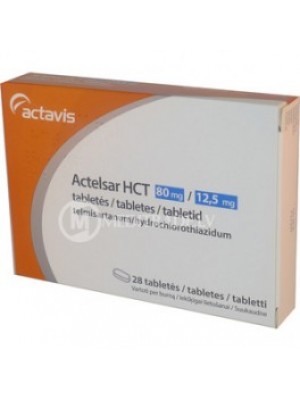
Actelsar HCT 80 mg/12,5 mg. 28 tabletsWhat is Actelsar HCT i..
18.00€