Your shopping cart is empty!
Welcome visitor you can login or create an account.
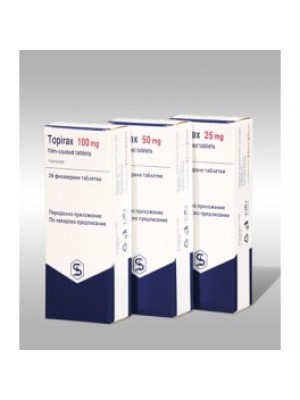
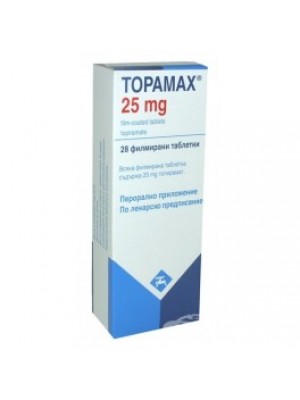
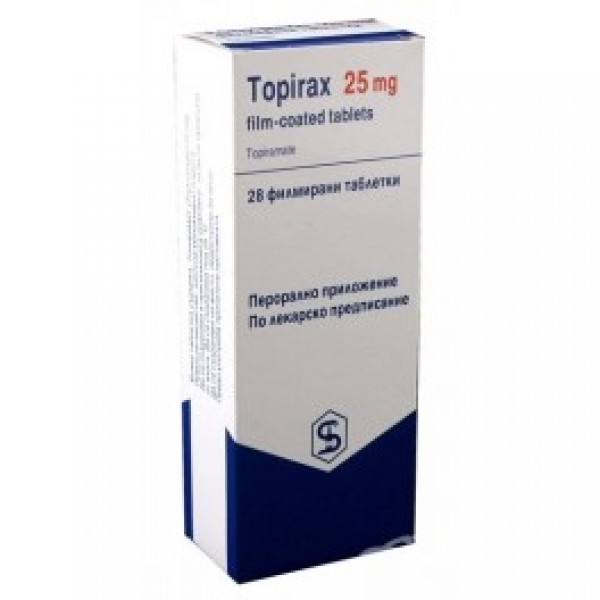
TOPIRAX - 28 tablets - 25 mg.
Product Code: TOPIRAX - 28 tablets - 25 mg.
Availability: In Stock
Product viewed: 1119


TOPIRAX - 28 tablets - 25 mg.

TOPIRAX WHAT IS AND WHAT IT IS USED FOR ?
Topirax active substance contains topiramate.
Topirax is indicated for :
monotherapy in patients with newly diagnosed epilepsy or conversion to monotherapy in patients with epilepsy;
adjunctive therapy in adults and children / or over 2 years with partial or
generalized tonic- clonic seizures ;
adjunctive therapy in adults and children with seizures associated with the syndrome of Lennox-Gastaut.
Topiraks is indicated for the prevention of migraine in adults. Using Topiraks to treat acute attacks of migraine have not yet been investigated .
2 . BEFORE YOU TAKE TOPIRAX
Do not take Topiraks
if you are allergic (hypersensitive ) to the active substance or to any of the other ingredients of this medicine.
Take special care with Topiraks
In patients with / or without a history of seizures or epilepsy, antiepileptic drugs , including Topiraks should be withdrawn gradually to minimize the appearance of seizures or increase their frequency . In clinical trials, daily dosages were reduced to weekly intervals from 50 to 100 mg, in adults with epilepsy and at intervals of 25 to 50 mg, in adult patients receiving Topiraks in dosages up to 100 mg / day for the prevention of migraine . In clinical studies in children Topiraks withdrawn gradually over a period of two to eight weeks.
Unchanged topiramate and its metabolites are eliminated primarily by the kidneys. Eliminated by this pathway is dependent on renal function and does not depend on age. In patients with moderate or severe renal insufficiency, it may take 10-15 days to reach steady-state plasma concentrations , compared in patients with normal renal function, this is 4-8 days.
As with all patients , the appointment of the regimen must be based on clinical outcomes , ie , seizure control and prevention of adverse effects , given that patients with renal failure may need a longer period of time steady state at each dose.
Proper hydration during treatment with Topiraks is very important. Hydration may reduce the risk of nephrolithiasis . Proper hydration before and during activities associated with physical exertion or exposure to high temperatures can reduce the risk of side effects associated with heat.
side effects
Mood / Depression
Observed are more common manifestations of mood swings and depression during treatment with topiramate.
Suicide attempt
Small number of people being treated with antiepileptics such as topiramate have had thoughts of harming or killing themselves . If you have these thoughts, immediately contact your doctor.
nephrolithiasis
In some patients , and in particular susceptible to nephrolithiasis , the risk of kidney stone formation and the associated signs and symptoms such as renal colic , lumbar pain or flank pain , it may be larger .
Risk factors for nephrolithiasis include a history of prior stone formation , a family history of nephrolithiasis and hypercalciuria ( svrahizhvarlyane of salts in the urine ) . None of these risk factors can not be sure predictor of kidney stones during treatment with topiramate. Furthermore, the increased risk may be and patients treated with other medications associated with risk of nephrolithiasis .
Reduced hepatic function
In patients with a change in liver function are recommended cautiously prescribing topiramate, because it can reduce the purification of this medicament .
Acute myopia and secondary angle closure glaucoma
A syndrome , comprising acute myopia and secondary angle closure glaucoma is described in patients treated with Topiraks . Early symptoms include a sharp reduction in visual acuity and / or ocular pain . Ocular findings include myopia, anterior chamber edema , ocular hyperemia (redness ) and increased intraocular pressure. There may be , and may not have mydriasis ( dilation of the pupils and iris) . This syndrome may be associated with accumulation of fluid supratsiliarno resulting in displacement of the front lens and the iris , with secondary angle closure glaucoma . The symptoms usually occur one month
beginning therapy with Topiraks . In contrast to primary narrow angle glaucoma, which is rare in people under 40 years of age, secondary angle closure glaucoma associated with topiramate has been reported in children than in adults. Treatment includes discontinuation of Topiraks , as quickly as possible and on the advice of the doctor , and adequate measures to reduce intraocular pressure. These measures generally lead to lower intraocular pressure.
metabolic acidosis
Svrahkiselinnata metabolic acidosis, without a loss of the anion , i.e. the reduction of serum bicarbonate levels below normal reference without respiratory alkalosis is associated with topiramate . This drop in serum bicarbonate is due to the inhibitory effect of topiramate on renal carbonic anhydrase. Typically, the decrease in the bicarbonate occurs at the beginning , but can occur at any time during treatment. The reduction of the bicarbonate is usually mild to moderate (mean decrease of 4 mmol / L with a dose equal to or higher than 100 mg of topiramate per day for adults and about 6 mg / Kg / day for children . Rarely occurs in some patients, a decrease in values below 10 mmol / L. The clinical or therapeutic conditions which predispose to the occurrence of acidosis, for example , renal disease , severe respiratory disease , status epilepticus , diarrhea , surgery , ketogenic diet, or certain drugs , may have an additive effect on the reduction of bicarbonate caused by topiramate. Chronic metabolic acidosis in children can slow growth. effect of topiramate on growth and its effects on bone has not been studied systematically in children or adults .
Depending on the underlying conditions during topiramate treatment , it is recommended to make a study of the plasma bicarbonate level . If you came metabolic acidosis and continues, to be taken to reduce the dose or discontinuing topiramate (using dose tapering ) .
nutritional supplements
Should be considered include supplements or increase food intake by patients who lose weight during treatment with this medication .
3 . TOPIRAX AND OTHER DRUGS
Effects of Topiraks on other anti- drugs
Adding Topiraks to other antiepileptic drugs ( phenytoin , carbamazepine, valproic acid , phenobarbital or primidone ) does not affect the plasma concentrations at steady state , with the exception of individual cases where the addition of Topiraks phenytoin may result in increased plasma concentrations phenytoin . This is probably due to inhibition of a specific isoform of the polymorphic enzyme (CYP2C19). Therefore, in any patient undergoing treatment with phenytoin , wherein the signs and symptoms of toxicity , must be carried out monitoring of plasma levels of phenytoin.
Pharmacokinetic interaction studies in patients with epilepsy suggests that the addition of topiramate to lamotrigine had no effect on their plasma concentrations at a dose of 100 toparamat to 400 mg / day. Furthermore , no change in plasma concentrations of toparamat during and after discontinuation of lamotrigine ( average dose 327 mg / day ) .
Effects of other antiepileptic drugs on Topirax
Phenytoin and carbamazepine lowering plasma concentrations of topiramate. adding or
suspension of phenytoin or carbamazepine, when carrying out the treatment with Topiraks ,
may require adjustment of dosage him . These changes should be made after
Evaluation of clinical effect. Addition or discontinuation of valproic acid does not cause clinically significant changes in plasma concentrations of toparamat due
which , in this case , it is not necessary to make a change in the dosage of Topiraks .
The results of these reactions are summarized in the following table:
AEM applied concentration AEM concentration Topiraks
Phenytoin - ** P
Carbamazepine (CBZ) - P
Valproic acid -
Phenobarbital - MP
Primidone - MP
legend:
- = No effect on the plasma concentration
= ** Increased plasma concentrations in individual cases
P = plasma Mitigation
NR = Not studied
AED = antiepileptic drug
Interactions with other drugs
digoxin
In single-dose study , the area under the curve (AUC) of the plasma concentration of digoxin in serum decreased by 12% due to the simultaneous administration of Topiraks . The clinical relevance of this observation has not been determined. When added or stops Topiraks in patients treated with digoxin should pay special attention to the routine monitoring of serum levels of digoxin.
Depressants of the central nervous system
Coadministration of Topiraks alcohol or other drugs that depress the central nervous system has not been evaluated in clinical trials. Not recommended to Topiraks together with alcohol or other drugs that suppress the central nervous system.
oral contraceptives
In a study on the pharmacokinetic interactions in healthy volunteers assigned concurrent combination contraceptive product containing I mg norethindrone +35 mcg ethinylestradiol and topiramate , taken in the absence of other medications at doses of 50 to 200 mg / day was not associated with statistically significant changes in mean exposure (AUC) of any component of oral contraceptives . In another study, ethinyl estradiol was statistically significantly reduced by topiramate at dosages of 200, 400 and 800 mg / d ( 18% , 21% and 30% respectively ) , when administered as adjunctive therapy in patients taking valproic acid . In both studies, topiramate (50 mg / day to 800 mg / day) did not significantly alter the effect of norethindrone . Although there is a dose- dependent reduction of ethinyl - effects at doses between 200-800 mg / day , no significant dose-dependent change in etiniestradiol - exposure doses between 50 and 200 mg / day. The clinical significance of the changes observed is not known. You can avoid the possibility of a reduction in contraceptive effectiveness and increase breakthrough bleeding in patients taking combination oral contraceptive product and Topiraks . Patients taking estrogen containing contraceptives should be asked to report any changes in their menstrual period. Contraceptive efficacy can be decreased even in the absence of breakthrough bleeding .
lithium
In healthy volunteers saw a reduction of 18 % in the AUC in systemic exposure of lithium during concomitant topiramate 200 mg / day. In patients with bipolar disease , the pharmacokinetics of the lithium is not affected during the treatment with topiramate to 200 mg / day. Moreover , it is observed an increase of 26% in AUC in the systemic exposure of lithium , and then treatment with topiramate at doses up to 600 mg / day. Serum lithium levels should be monitored when prescribing with topiramate.
risperidone
Drug interaction studies performed with single or multiple dose in healthy volunteers and patients with bipolar have produced similar results. When Risperidone is given concomitantly with topiramate in increasing doses 100 , 200 and 400 mg / day , a reduction occurs in the systemic exposure of risperidone (16% and 33% of the AUC at steady state topiramate at dosages of 250 and 400 mg / day, respectively ) , when given in doses ranging between 1 and 6 mg / day. Throughout the active antipsychotic fraction ( risperidone and 9 - hydroxyrisperidone ) were observed minimal changes in pharmacokinetics as not observed in isolated 9- hydroxyrisperidone . There were no clinically significant changes in systemic exposure to the total active fraction of risperidone and topiramate . Therefore, this interaction is probably not clinically significant.
Hydrochlorothiazide (HCTZ)
A drug interaction study in healthy volunteers evaluated the steady state pharmacokinetics of HCTZ ( 25 mg / day) and topiramate (96 mg for 12/12 hours) taken separately or simultaneously. The survey results show that Smax topiramate has increased by 25% and AUC increased by 29% after the addition of HCTZ to topiramate. The clinical significance of this change is unknown. The addition of HCTZ to topiramate therapy may require an adjustment of the dose of topiramate. Steady-state pharmacokinetics of HCTZ were not significantly altered by the adoption of topiramate. Laboratory results showed a decrease in serum potassium after taking topiramate or HCTZ, this reduction was more pronounced when the adoption of HCTZ and topiramate is both .
metformin
Study conducted in healthy volunteers for drug-drug interaction evaluated the steady state pharmacokinetics of metformin and topiramate in plasma when metformin was given alone and when metformin and topiramate were given simultaneously. The study results showed that the mean Cmax and mean AUC ( 0 -12h) increased by 18% and 25% , while the average CL / F decreased 20% when metformin was co-administered with topiramate. Topiramate has no influence on Tmax of metformin. The clinical significance of the effect of topiramate on metformin pharmacokinetics is unclear. Oral plasma clearance of topiramate was decreased when administered with metformin. The degree of change in the clearance is unclear. The clinical significance of the effect of metformin on the pharmacokinetics of topiramate is not clear. When topiramate is added or discontinued in patients treated with metformin, attention must be given to the routine monitoring for adequate control of their diabetes.
pioglitazone
Drug interaction study conducted in healthy volunteers evaluated the equilibrium concentration of topiramate and pioglitazone when administered alone and in combination . There is a 15% reduction AUCtss of pioglitazone with no change in Cmax . This observation was not statistically significant . Furthermore, there is a decrease 13% and 16% in Cmax and AUCTSS respectively active A hydroxy and a 60% reduction in Cmax for the active and AUCTSS keto metabolite. The clinical significance of these findings is unknown. at
addition of topiramate to treatment with pioglitazone or if pioglitazone is added to topiramate therapy , careful routine monitoring of patients for adequate control of their diabetes.
glyburide
A study of drug interaction in patients with diabetes type II, evaluated the steady state pharmacokinetics of glyburide ( 5 mg / day) and topiramate (150
mg / day) , taken separately or simultaneously . Was noted a 25% reduction of glyburide AUC24 when given topiramate . Systemic exposure to the active metabolite 4 -trans-hidroxi- glyburide (M1 ) and D -cis-hidroxi- glyburide is decreased 13% and 15% respectively . Steady-state pharmacokinetics of topiramate were unaffected by concomitant administration of glyburide . When topiramate is given concomitantly with glyburide or vice versa, should pay special attention to routine monitoring for adequate control of diabetes.
other interactions
Medications that predispose to nephrolithiasis
When used in conjunction with other medications that may predispose to nephrolithiasis , Topiraks may increase the risk of nephrolithiasis . During treatment with Topiraks to avoid these drugs , as they can establish a physiological medium , which could increase the risk of formation of kidney stones .
valproic acid
Co-administration of topiramate and valproic acid was coupled with svrahamoniemiya with / or without encephalopathy in patients who tolerated these drugs when they are administered separately . In most cases, the signs and symptoms disappear after cessation of treatment . This undesirable effect is not due to a pharmacokinetic interaction . No association was found between svrahamoniemiyata and topiramate therapy or concomitant treatment with other antiepileptic .
laboratory tests
Results from clinical studies indicate that topiramate was associated with a mean decrease of 4 mmol / L of serum bicarbonate (see Special precautions in use Topiraks ) .
4 . Pregnancy and lactation
Consult your doctor or pharmacist before taking any medication.
pregnancy
All women of childbearing age (who may become pregnant ) should get the advice of a specialist before starting treatment , because of the increased risk of congenital malformations.
Treatment with protivoepiliptichni medications must be assessed again when the woman is planning to become pregnant .
Generally the risk of birth defects is 2-3 times greater in children pregnant women, treated with anti- drug during pregnancy . The most common malformations affecting the lips and oral cavity, the cardiovascular system and the neural tube . Treatment with other anti-epileptic drugs ( polytherapy ) is associated with a higher risk of congenital malformations than treatment with a single medicament (monotherapy ) . Whenever possible, polytherapy regimens should be simplified. Treated with antiepileptic drugs should not be stopped abruptly , as it may increase the risk of seizures with serious consequences for the mother and / or fetus.
In preclinical studies , topiramate showed teratogenic in studies in animal models ( rats , rats, and rabbits) . In rats , topiramate crosses the placental barrier.
No studies on the use of Topiraks in pregnant women. However , Topiraks should be used during pregnancy only when the potential benefits to the mother outweigh the potential risk to the fetus.
breastfeeding
Topiramate is excreted in milk of lactating mice. The excretion of topiramate in human milk has not been evaluated in controlled trials . Limited observations in patients suggest prolonged excretion of topiramate in human milk. Because many drugs are excreted in human milk should be given to the decision to discontinue nursing or the drug , depending on the importance of the drug to the mother's health , post- marketing experience , cases of hypospadias in newborn boys out of intrauterine topiramate with or without other anticonvulsant drugs. Causal relationship with topiramate , however, has not been established .
5 . DRIVE AND USE MACHINES
Topiraks acts on the central nervous system and can cause drowsiness , dizziness , and the like symptoms. These otherwise mild or moderate adverse effects can be potentially dangerous in patients driving or operating machinery, especially to identify the individual effects of the drug on each patient.
Important information about some of the ingredients of Topirax
Topiraks coated tablets contain lactose and urea sodium glycolate . If your doctor has advised that you have an intolerance to some sugars, contact your doctor before taking this medicine.
6 . HOW TO TAKE TOPIRAX
Take Topiraks always under medical prescriptions . Talk to your doctor or pharmacist if you have any doubts .
For perfect control , both in adults and in children , it is recommended to start treatment with a low dose , followed by specifying the dosage until an effective dose.
TOPIRAKS produced tablets. Not recommended breakage of tablets .
There is no need routinely plasma concentrations of topiramate for the optimization of therapy Topiraks . In rare cases, giving Topiraks with phenytoin may require adjustment of dose of phenytoin to get a favorable clinical outcome. Giving or withdrawal of phenytoin and carbamazepine as adjunctive therapy Topiraks may require adjustment of dosage
Topiraks can be taken regardless of meals.
Adjunctive therapy for epilepsy
adults
Topiraks therapy should start with 25-50 mg nightly for one week. It has been reported for the use of a lower dose , but this was not studied systematically . Thereafter, for a week or two-week dose interval should be increased by 25-50 [ 100 ] mg daily and assumed to be in two divided doses. Increasing the dose is depending on the clinical picture. In some patients can achieve effect once-daily dosing .
In clinical studies, the lowest dose tested and effective as adjunctive therapy was 200 mg. Hence, it is considered the minimum effective dose. The usual daily dose is from 200 to 400 mg in two divided doses . Individual patients may receive doses of up to 1600 mg per day.
Since Topiraks was removed from plasma by hemodialysis , an extra dose Topiraks equal to approximately half of the daily dose to be administered on the day of dialysis. The supplemental dose should be taken in divided doses - at the beginning and after the completion of hemodialysis . The additional dose may vary according to the characteristics of the dialysis equipment .
These doses are recommended to apply to all adults including the elderly , provided that there is no underlying renal disease (see Special warnings and precautions for use Topiraks ) .
Children / or over 2 years
adults
If the patient does not tolerate the specified amount can be made smaller increments or longer intervals between each dose increase . Dosing should be done in accordance with clinical outcome .
The recommended dose for topiramate monotherapy in adults is 100 mg / day, the maximum recommended dose is 500 mg / day. These therapeutic recommendations apply to all adults, including elderly people, when they have kidney disease.
children
Dosing should be done in accordance with clinical outcome .
Children with newly diagnosed partial seizures were treated at doses up to 500 mg / day.
Dosing should begin at 25 mg, administered in the evening , for one week. Then, the dosage should be increased by 25 mg / day , with an interval of 1 week. If the patient does not tolerate the dosage regimen may consider larger intervals of dosing and dose adjustment .
Some patients may experience an improvement in a total daily dose of 50 mg / day. In all cases, the dose and speed of upwards must be consistent with the clinical results.
7 .
There are reports of overdoses topiramate. Clinical complications in most cases are not serious , but there have been reports of fatalities after taking more drugs in overdose , including topiramate.
Patient who ingested a dose calculated to be between 96 and 110 g topiramate was admitted to hospital with coma lasting 20-24 hours followed by full recovery after 3-4 days.
treatment
Must be adequately supportive care. Patients may be needed to be well hydrated.
POSSIBLE SIDE EFFECTS
Clinical trials as adjunctive therapy for epilepsy
adults
Adverse reactions that occurred with less frequency include: change in taste , agitation, nonspecific cognitive problems , emotional lability, coordination problems , gait disturbance , apathy, symptoms of psychosis or psychotic symptoms, suicide attempts , aggressive behavior or reactions , leucopenia and nephrolithiasis . Isolated cases of thrombosis have also been described , although a causal relationship to medicinal product has not been established .
children
Clinical trials as monotherapy for epilepsy
With the exception of paraesthesia and fatigue, these side effects are common with a similar or lower incidence in clinical trials as monotherapy .
adults
children
Clinical studies for the prevention of migraine
Such changes in body weight was observed in the group of patients receiving placebo.
Write a review
Your Name:Your Review: Note: HTML is not translated!
Rating: Bad Good
Enter the code in the box below:
Related Products