
Your shopping cart is empty!
Welcome visitor you can login or create an account.
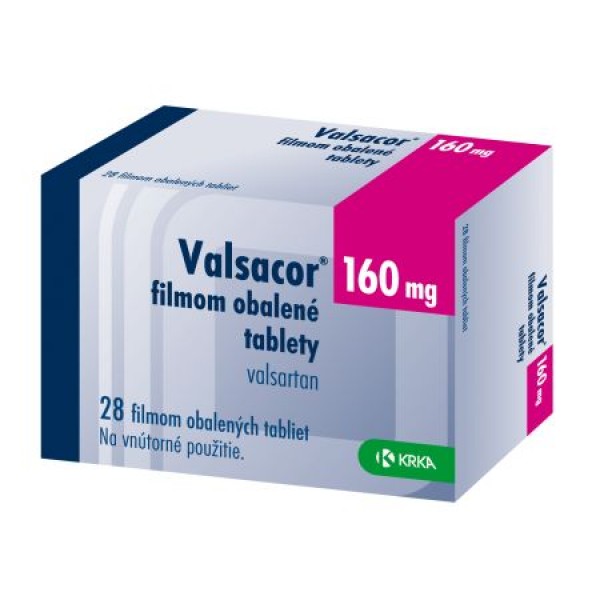
Valsacor 160 mg. 28 tablets
Product viewed: 2759


What Valsacor is and what it is used for
Valsacor belongs to a group of medicines called angiotensin II receptor blockers and is used to lower high blood pressure. Angiotensin II is a blood vessel constrictor that is found in the body and can cause high blood pressure. Valsacor works by blocking angiotensin II. This leads to blood vessel enlargement and lower blood pressure.
Valsartan 40 mg film-coated tablets can be used in two different diseases:
* to treat people after a recent heart attack (myocardial infarction). "Fresh" in this case means between 12 hours and 10 days.
* for the treatment of symptomatic heart failure. Valsacor is used when a group of medicines called angiotensin converting enzyme (ACE) (a medicine used to treat heart failure) can not be used or as an adjunct to ACE inhibitors when beta-blockers (other medicines used to treat heart failure) deficiency) can not be used. Symptoms of heart failure include shortness of breath and swelling of the feet and feet due to fluid build-up. This occurs when the heart muscle can not pump the blood enough to supply the whole body with the necessary blood.
Valsacor 80 mg and 160 mg film-coated tablets can be used in three different diseases:
* for the treatment of high blood pressure. High arterial pressure increases the load on the heart and arteries. If not treated, it can damage the blood vessels of the brain, heart and kidneys, and cause stroke, heart failure or kidney failure. High blood pressure increases the risk of heart attacks. Lowering your blood pressure to normal reduces the risk of developing these disorders. * to treat people after a recent heart attack (myocardial infarction). "Fresh" in this case means between 12 hours and 10 days. * for the treatment of symptomatic heart failure. Valsacor is used when a group of medicines called angiotensin converting enzyme (ACE) (a medicine used to treat heart failure) can not be used or as an adjunct to ACE inhibitors when beta-blockers (other medicines to treat heart failure ) can not be used. Symptoms of heart failure include shortness of breath and swelling of the feet and feet due to fluid build-up. This occurs when the heart muscle can not pump the blood enough to supply the whole body with the necessary blood.
2. Before you take Valsacor
Do not take Valsacor:
* if you are allergic (hypersensitive) to valsartan or any of the other ingredients of Valsacor. * if you have severe liver disease * if you are pregnant after the 3rd month (it is also good to avoid Valsacor in early pregnancy - see section "Pregnancy").
Do not take Valsacor if any of these apply to you.
Take special care with Valsacor:
* if you have liver disease;
* if you have severe kidney disease and are on dialysis;
* if you suffer from narrowing of the renal artery;
* if you have recently had a kidney transplant (you have received a new kidney);
- if you are being treated for a heart attack or for heart failure, your doctor may check your kidney function;
* if you are taking medicines that increase the level of potassium in the blood. These include potassium supplements or salt substitutes containing potassium, potassium-sparing medicines and heparin. It may be necessary to check blood potassium levels at regular intervals;
* if you suffer from hyperaldosteronism - a disease in which your adrenal glands form too much of the aldosterone hormone. In this case, use of Valsacor is not recommended;
* if you have lost plenty of fluid (dehydration) due to diarrhea, vomiting and high doses of dewatering tablets (diuretics);
* the use of Valsacor in children and adolescents (under 18 years of age) is not recommended;
* you should tell your doctor if you think you are pregnant or are likely to become pregnant. Valsacor is not recommended during early pregnancy, and should not be taken if you are more than 3 months pregnant, as it may cause serious harm to your baby if taken during this period (see section "Pregnancy").
If any of these apply to you, tell your doctor before taking Valsacor.
Taking other medicines
Please tell your doctor or pharmacist if you are taking or have recently taken any other medicines, including medicines obtained without a prescription. The effect of treatment may be affected by taking other medicines at the same time as Valsacor. It may be necessary to change the dosage, take other precautions or, in some cases, stop taking some of the medicines. This is true as
Take Valsacor with food and drink
You can take Valsacor with or without food.
Pregnancy and breastfeeding
Ask your doctor or pharmacist for advice before taking any medicine.
You should tell your doctor if you think you are pregnant or are likely to become pregnant. Your doctor will usually advise you to stop taking Valsacor before you become pregnant or as soon as you know you are pregnant and will advise you to take another medicine instead of Valsacor. Valsacor is not recommended during early pregnancy and should not be taken after the third month as it may cause serious harm to your baby if taken after the third month of pregnancy.
Tell your doctor if you are breast-feeding or intend to breast-feed. Valsacor is not recommended for nursing mothers and your doctor may prescribe another treatment if you wish to breast-feed, especially if your baby is newborn or born prematurely.
Ability to drive and use machines
Before driving, using machines or other activities requiring full concentration, make sure you know how you react to the effects of Valsacor. Like many other high blood pressure medicines, Valsartan may cause dizziness or affect concentration in some cases.
Important information about some of the ingredients of Valsacor
Valsacor contains lactose. If you have been told by your doctor that you have an intolerance to some diazaccharides, contact your doctor before taking this medicinal product.
3. How to take Valsacor
Always take Valsartan exactly as your doctor has told you to achieve the best result and avoid the occurrence of side effects. Take the medicine only on prescription. If you are not sure, ask your doctor or pharmacist. Patients with high blood pressure do not always recognize the symptoms of this disease. Many of them feel normal. Therefore, it is important to carry with you your medicine prescribed by your doctor when you go to visit him, even when you feel good.
After a recent heart attack: After a heart attack, treatment may begin 12 hours thereafter, usually with a lower dose of 20 mg twice a day. You are given the 20 mg dose, dividing the 40 mg tablet. The treating physician will gradually increase the dose over the next few weeks to a maximum of 160 mg twice a day. The final dose depends on how each patient is taking the medicine. Valsacor can be taken at the same time as another heart attack treatment and your doctor will decide which treatment is right for you.
Heart failure: Treatment usually starts with 40 mg twice daily. The physician may prescribe a higher dose by gradually increasing it to a maximum of 160 mg twice a day. The final dose depends on how each patient is taking the medicine. Valsacor can also be taken with another heart failure medicine, and your doctor will decide which treatment is right for you.
High blood pressure: The usual dose is 80 mg daily. In some cases your doctor may prescribe higher doses (eg 160 mg or 320 mg). He may also combine Valsacor with an additional medicine (eg a diuretic).
After a recent heart attack: After a heart attack, treatment may begin 12 hours thereafter, usually with a lower dose of 20 mg twice a day. You are given the 20 mg dose, dividing the 40 mg tablet. The treating physician will gradually increase the dose over the next few weeks to a maximum of 160 mg twice a day. The final dose depends on how each patient is taking the medicine. Valsacor can be taken at the same time as another heart attack treatment and your doctor will decide which treatment is right for you.
Heart failure: Treatment usually starts with 40 mg twice daily. The physician may prescribe a higher dose by gradually increasing it to a maximum of 160 mg twice a day. The final dosage depends on how each patient carries the medicine. Valsacor can also be taken with another heart failure medicine, and your doctor will decide which treatment is right for you.
If you take more Valsacor than you should
In case of severe dizziness and / or fainting, lie down and contact your doctor immediately. If you have accidentally taken too much medicine, contact your doctor, pharmacist or hospital.
If you forget to take Valsacor
Do not take a double dose to make up for the missed dose. If you miss a dose, take it as soon as you remember. If it is almost time for the next dose, skip the missed dose.
If you stop taking Valsacor
Discontinuation of treatment with Valsacor may aggravate your condition. Do not stop taking your medicine unless your doctor tells you to. If you have any further questions on the use of this product,
Possible side effects
Like all medicines, Valsacor can cause side effects, although not everyone gets them.
These side effects may occur at a frequency defined as follows:
* very common: affects more than 1 in 10 patients;
* common: affects 1 to 10 in 100 patients;
* uncommon: affects 1 to 10 per 1,000 patients;
* rare: affects 1 to 10 in 10,000 patients;
* very rare: affects less than 1 in 10,000 patients;
* Not known: can not be estimated from the available data.
Some symptoms require immediate medical attention:
You may have symptoms of angioneurotic edema, for example:
swelling of the face, tongue or throat
* difficulties in swallowing;
* hives and difficulty breathing.
You should contact your doctor immediately if you get any of them.
Other side effects include:
Common:
* dizziness, dizziness after standing up from a lying or sitting position.
* low blood pressure with symptoms like dizziness
* reduced kidney function (signs of renal impairment)
Uncommon:
* allergic reaction with symptoms such as rash, itching, dizziness, swelling of the face, lips, tongue or throat, difficulty in breathing or swallowing, dizziness (signs of angioneurotic edema)
* Sudden loss of consciousness
* vertigo
* severely reduced renal function (acute kidney failure)
* muscle cramps, abnormal heart rhythm (manifestations of hyperkalemia)
* shortness of breath, difficulty in breathing, swelling of the feet and legs (signs of heart failure)
* headache
coughing
* stomach ache
* nausea
* diarrhea
* fatigue
* fatigue
Not known
* rash, pruritus accompanied by any of the following symptoms or symptoms: fever, joint pain, muscle aches, swollen lymph nodes and / or flu-like symptoms (signs of serum sickness)
* purplish spots, fever pruritus (manifestations of inflammation of the blood vessels called vasculitis)
* abnormal bleeding or bruising (manifestations of thrombocytopenia)
* muscle pain (myalgia)
* fever, sore throat or mouth ulcers due to infections (low white blood cell manifestations called neutropenia)
* Decreased hemoglobin and a decreased percentage of red blood cells in the blood (which can lead to anemia in severe cases)
* increased blood potassium levels (which may cause muscle spasms and abnormal heart rhythm in severe cases)
* elevated liver function (which may indicate liver damage), including elevated levels of bilirubin in the blood (which may cause yellowing of the skin and eyes in severe cases)
* increase in blood urea level and increase in serum creatinine levels (which may be indicative of impaired renal function)
The frequency of some side effects may vary depending on your illness. For example, undesirable effects such as dizziness and decreased renal function are less common in patients with high blood pressure than in patients treated for heart failure or a recent heart attack.
If any of the side effects gets serious, or if you notice any side effects not listed in this leaflet, please tell your doctor or pharmacist.
5. How to store Valsacor
Keep out of the reach and sight of children. Store below 30 ° C. Store in the original package in order to protect from moisture.
Shelf life
Do not use Valsacor after the expiry date which is stated on the pack. The expiry date refers to the last day of that month.
Medicines should not be disposed of via wastewater or household waste. Ask your pharmacist how to dispose of your unnecessary medicines. These measures will help to protect the environment.
6. Additional information
What does Varsacor contain?
* The active substance is valsartan.
Each film-coated tablet contains 1 60 mg valsartan.
* Excipients in the tablet core are lactose monohydrate, microcrystalline cellulose, povidone, croscarmellose sodium, colloidal anhydrous silica, and magnesium stearate.
Other excipients in the 160 mg film-coated tablets are hypromellose, titanium dioxide (E171), macrogol 4000, yellow iron oxide (E172) and red iron oxide (E172).
What Valsacor looks like in the packaging
160 mg film-coated tablets are yellow-brown, oval, biconvex film-coated tablets scored on one side.
For all concentrations, they are available in packs of 7, 14, 28, 56, 84 and 98 film-coated tablets in blister packs.
Not all packs may be marketed.
Write a review
Your Name:Your Review: Note: HTML is not translated!
Rating: Bad Good
Enter the code in the box below:
Related Products
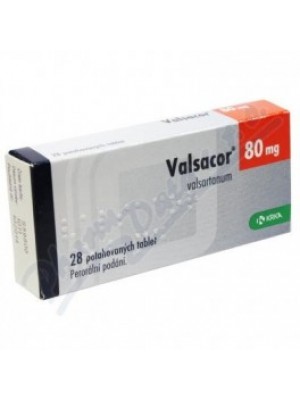
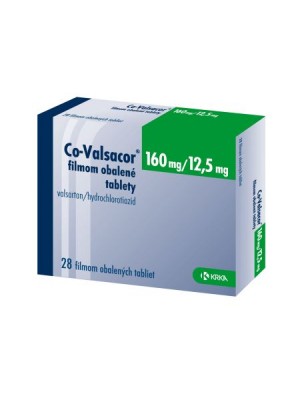
WHAT CO-VALSACOR IS AND WHAT IT IS USED FOR
Co-Valsacor fil..
19.00€
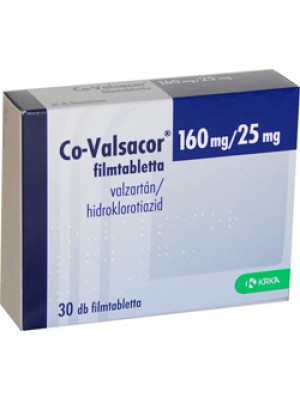
WHAT CO-VALSACOR IS AND WHAT IT IS USED FOR
Co-Valsacor fil..
18.00€
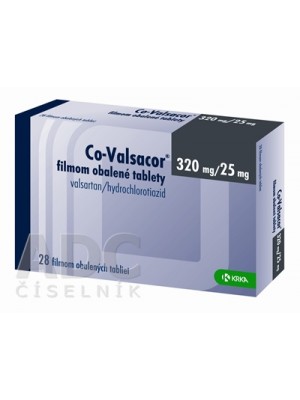
WHAT CO-VALSACOR IS AND WHAT IT IS USED FOR
Co-Valsacor fil..
25.00€