Your shopping cart is empty!
Welcome visitor you can login or create an account.
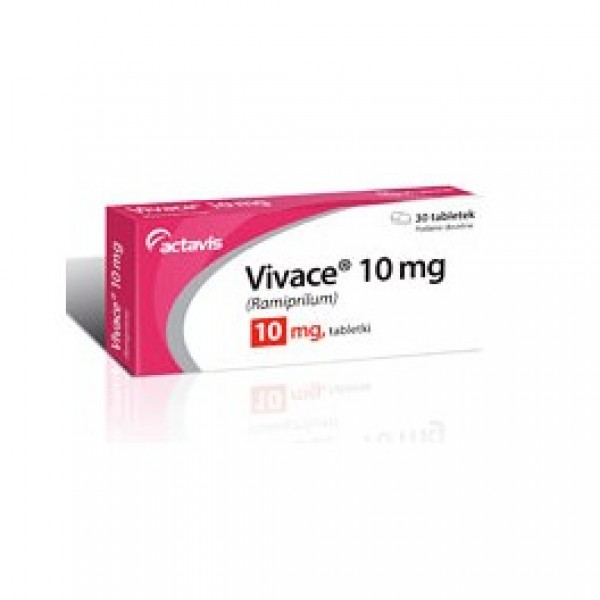
VIVACE 10 mg. 30 tablets
Product Code: VIVACE 10 mg. 30 tablets
Availability: In Stock
Product viewed: 1931


VIVACE 10 mg. 30 tablets
One tablet contains 10 mg of Vivace Ramipril 10 mg.
Excipients: sodium hydrogen carbonate, lactose monohydrate, croscarmellose sodium, prezhelatinozno starch, sodium stearyl fumarate, colorant.
PHARMACEUTICAL FORM AND CONTENTS
Tablets number 30 or number 14 in blisters AI / A1 foil. 3 blisters of 30 pieces tablets per carton. 2 blisters of 14 pieces tablets per carton.
ACTION
Viveys is a medicinal product of the so-called. ACE inhibitors. Its therapeutic effect is the reduction of elevated blood pressure, and in lower doses, it helps the treatment of heart failure. In cases of overt nephropathy in diabetic and non-diabetics, Viveys slows progression of renal failure and the achievement of end-stage renal failure, and thus the need for dialysis or kidney transplantation.
INDICATIONS
For the treatment of;
• Hypertension;
• Heart failure:
- Chronic congestive heart failure;
- Experienced heart failure after acute myocardial infarction;
• Glomerular nephropathy (kidney disease with impairment of renal function) with or without diabetes.
NECESSARY INFORMATION BEFORE USE
CONTRAINDICATIONS
• Known hypersensitivity (allergy) to ramipril or to any of the excipients;
• Known in the past angioedema (swelling of the tongue, the lining of the mouth and / or throat) obtained during previous therapy with ACE inhibitors or in patients with congenital or idiopathic angioedema;
• Bilateral renal artery stenosis or narrowing of the artery to a solitary kidney;
• After kidney transplantation;
• Difficulty in blood flow coming from the heart (hemodynamically significant aortic or mitral klayana stenosis, hypertrophic cardiomyopathy);
• Primary aldosteronism (a disease of the adrenal glands);
• Pregnancy and lactation.
When Viveys used to treat mild to moderate degrees of heart failure after acute myocardial infarction, come into force following additional warnings:
• pronounced lowering of blood pressure (systolic blood pressure below 90 mmHg);
• Lowering of blood pressure when standing up (drop in systolic blood pressure of 20 mmHg, after one minute seated);
• Severe heart failure (IV class NYHA);
• Unstable angina;
• Life-threatening ventricular arrhythmias;
• Lung heart.
SPECIAL PRECAUTIONS FOR USE
Assessment of renal function prior to initiation of therapy with Viveys should assess the patient's renal function and to monitor regularly during lechenieto.Uvredena renal function: Patients with renal insufficiency require dose reduction and strict control of renal function during treatment. Possible changes in renal function in susceptible individuals. There is an increased risk of worsening renal function in patients with underlying renal insufficiency, congestive heart failure, bilateral renal artery stenosis or narrowing of the artery to a solitary kidney after kidney transplantation. Registering impairment of renal function during treatment with ramipril undergoes reversible upon discontinuation of therapy. Cases of anaphylactoid (allergic type) reactions in dialysis patients treated concomitantly with ACE inhibitors. During treatment with Viveys not recommended dialysis and hemofiltration through high flux membranes. In such patients should be considered the possibility of using another type of dialysis membrane or antihypertensive drug from another class. Similar effects have been observed in the course of removing low density lipoprotein (LDL) with dextran sulfate and concurrent use of ACE inhibitors and therefore it must be izbyagva.Vazmozhno is negligible and transient increase in nitrogen bodies in blood in hypertensive patients with pre-existing but unrevealed renal impairment, which occurs more frequently if Viveys co-administered with a diuretic (medication that increase the flow of urine). These patients may require a dose adjustment and discontinuation of the diuretic terapiya.Hiperkaliemiya (increased content of potassium in the blood) during treatment with ACE inhibitors, particularly in the presence of renal and / or heart failure can be established hyperkalemia. In most cases, these are one-off measured values, which spontaneously to normal despite continued treatment. Risk factors for the development of hyperkalemia include renal insufficiency, diabetes mellitus, concomitant use of potassium-sparing diuretics, potassium products and / or potassium-containing salt substitutes, which should be used cautiously in combination with Viveys.
Hypotension (low blood pressure): There was a sharp and abrupt decrease in blood pressure during treatment with ramipril. As a possible reason for this phenomenon are considered salt deficiency or decreased blood volume, therapy with potent diuretics, patients on hemodialysis. Very rarely occurs in patients with uncomplicated form of hypertension. Strong hypotension was observed in patients with severe congestive heart failure with or without associated renal failure and may occur with oliguria (decreased urine production) and / or progressive azotemia (elevated content of nitrogen bodies in the blood), rarely with acute renal failure including fatal. Due to the risk of sudden sharp drop in blood pressure in these groups of patients, therapy should be initiated under medical supervision. These patients should be monitored in the first two weeks of treatment, as well as necessary by increasing the dose of ramipril and / or diuretika.Podobno behavior also applies to the elderly (over 65 years), patients suffering from coronary artery disease heart or cerebrovascular disease, where a sharp drop in blood pressure can lead to myocardial infarction or cerebrovascular accident. In the event of a sharp drop in blood pressure, the patient should be placed in a horizontal position and need to apply saline infusion. Transient decreases in blood pressure is not a contraindication to continue therapy with Viveys in appropriate dose.
Surgery and anesthesia: It is a significant reduction of blood pressure in patients treated with Viveys during major surgical operations and / or the carrying out of anesthesia drugs that may cause hypotension. If hypotension occurs this mechanism, it can be corrected with the infusion of a sufficient quantity of water-salt raztvori.Promeni in the composition of blood (agranulocytosis) and bone marrow suppression: Some ACE inhibitors may cause agranulocytosis and bone marrow depression, and also reduce the number of erythrocytes, hemoglobin, and platelets, which is rare in uncomplicated patients but is more common in patients with impaired renal function or suffering from connective tissue disease (systemic collagenosis, such as lupus erythematosus, scleroderma), and those of the immunosuppressive therapy. Therefore, periodic monitoring of the leukocyte count and the level of protein in the urine in these patients.
Allergy / angioneurotic edema: Angioedema (swelling of the face, extremities, lips, tongue, throat and / or vocal cords) were observed in patients treated with ACE inhibitors, including with ramipril.V these cases, treatment should be discontinued and appropriate therapy. In case of only a limited swelling of the face and lips, the condition can recover without treatment, but may also be used in anti-allergic agents (eg. Antihistamines) to alleviate symptoms. Angioedema progressing to swelling of the throat and vocal cords a life-threatening complication. When it is accompanied by obstruction (narrowing) of the airways should immediately conduct appropriate therapy, for example. subcutaneous administration of epinephrine (0.3 to 0.5 ml of 1: 1000) and take the necessary measures to release the airways. These patients should be monitored in hospital for 12-24 hours or until the symptoms disappear completely.
DRUG INTERACTIONS AND OTHER
Combining Viveys with diuretics (drugs that increase the flow of urine) or to other antihypertensives (blood pressure lowering) may lead to mutual reinforcement of action im.Simpatikomimetshtite (eg. Adrenaline) may reduce the antihypertensive effect of ACE inhibitors, which requires careful nalyagane.Izpolzvaneto control blood potassium-sparing duypemuifu (eg. spironolactone, triamterene, amiloride), potassium supplements or potassium-containing salt substitutes may increase the risk of hyperkalemia (elevated potassium levels). Ramipril may reduce potassium depleting effect of thiazide diuretics. If concomitant use of such products is necessary, it should be done carefully and regular monitoring of blood potassium chloride kontsentratsiya.Natrieviyat weaken hypotensive effect of Ramipril, as well as its effectiveness in terms of symptoms of heart failure. Ramipril increases the risk of hypoglycemia (low blood sugar) in the administration of products gntidiabetichni (insulin and oral antidiabetics) due to a reduction of insulin and anti rezistentnost.Analgetshtite products (eg. Acetyl salicylic acid, indomethacin, etc.) May reduce the antihypertensive efficacy of ramipril co-administration.
ACE inhibitors reduce the renal excretion of lithium and increase the risk of lithium intoxication. The effects of lithium toxicity are reversible after discontinuation of treatment ramipril. Concomitant use of lithium products and ramipril requires frequent monitoring of serum litiya.Hipnotichnite, drugs and anesthetic products potentiate the hypotensive action of ramipril.Alopurinol, procainamide, cytostatics, immunosuppressants and corticosteroids may enhance the effects of ramipril on blood indicators ( a significant reduction of white blood cells). Antacids reduce the passage of ACE inhibitors in the body. Alcohol enhances the antihypertensive effect of ACE inhibitors.
WARNINGS FOR SPECIAL GROUPS OF PATIENTS
Children: This product is not recommended for children. Its safety and efficacy have not been dokazana.Patsienti elderly (over 65 years): Because of increased sensitivity, these patients should be treated with lower doses under strict control of blood pressure.
Patients on hemodialysis: The mode of administration of Viveys in patients on hemodialysis is determined according to the degree of renal impairment (creatinine clearance).
Pregnancy and lactation
Use during pregnancy:
Viveys is contraindicated during pregnancy. ACE inhibitors can cause injury and fetal death when administered to pregnant women. When pregnancy during treatment with Viveys need immediate discontinuation of the product. Use of ACE inhibitors during the second and third trimester of pregnancy is associated with damage to the fetus and newborn, including hypotension, skull underdevelopment, anuria, reversible or irreversible renal failure and death. Reported oligohydroamnion (increased amount of amniotic fluid), likely due to decreased renal function of the fetus. In such cases oligohydramnios combined with contractures of the fetal extremities, maxillofacial deformities and underdevelopment of the lungs.
Infants with data vatreuhrobno exposure to the action of Viveystryabva be carefully examined for hypotension, oliguria ihiperkaliemiya.
Use during lactation:
Ramipril passes into breast milk. If its use is imperative, the patient should stop nursing.
EFFECTS ON THE ABILITY TO DRIVE AND USE MACHINES
At the beginning of treatment Viveys may be a temporary occurrence of faintness and dizziness, which can affect the ability to drive and use machines.
DATA ABOUT THE OTHER INGREDIENTS
This medicinal product contains lactose as an excipient This makes it unsuitable for patients with lactase deficiency.
INFORMATION FOR PROPER USE
DOSAGE AND METHOD OF USE
With a prescription. Administered orally.
• Hypertension (high blood pressure): Recommended starting dose - 2.5 mg once daily. The dosage may be gradually increased at intervals of 2-3 weeks, depending on the effect and tolerability to a maximum of 10 mg once daily. If there is insufficient effect of a daily dose of 10 mg should be given combination therapy is adding a second antihypertensive medikament.Obichaynata maintenance dose is 2.5 - 5 mg once daily. Maximum daily dose - 10 mg dnevno.V cases of prior treatment with diuretics, it should be discontinued for 2-3 days prior to the initial administration of Viveys to avoid symptomatic hypotension (a sharp decrease in blood pressure). The recommended initial dose in this case is 1.25 mg daily.
• Congestive heart failure: Recommended initial dose - 1.25 mg once dnevno.Dozata can be increased gradually depending on the effect and tolerability, doubled in intervals of 1-2 weeks. If the daily dose is 2.5 mg or more, it can be administered once daily or divided into two doses. Maximum daily dose - 10 mg.Za to avoid symptomatic hypotension in patients previously diuretic therapy is desirable prior to initiating therapy with ^ ^ Vytrie dose of diuretic should be reduced.
Treatment should be started in hospital between the third and 10th day from the beginning of acute myocardial infarction in hemodynamically stable patients. The starting dose is 2.5 mg twice a day, after two days was increased to 5 mg twice daily. If the initial dose of 2.5 mg is not well tolerated, it should be reduced to 1.25 mg twice a day for two days, and then increased to 2.5 mg twice daily. If the dose can be increased to 2.5 mg twice a day treatment should be discontinued. Maintenance dose - 2.5 to 5 mg twice daily.
• Glomerular nephropathy (kidney disease with renal impairment) with or without diabetes: Recommended starting dose - 1.25 mg once daily. The dose can be gradually increased depending on the effect and tolerability, as is doubled at intervals of 2-3 weeks. Maximum daily dose - 10 mg daily.
Dosage in renal insufficiency: In patients with renal impairment, the dose should be adjusted after assessment of the extent of involvement (according to the creatinine clearance). With creatinine clearance <30 ml / min, the initial dose is 1.25 mg Viveys once daily, the usual maintenance is 2.5 mg once daily, and the maximum is 5 mg once daily. In patients with severe renal insufficiency (creatinine clearance <10 mL / min) is not recommended for use Viveys.
Patients with hepatic impairment: Due to the possibility of a different response to treatment between patients closely monitored. Treatment of such patients should be started at a dose of 1,25 mg once daily, and the maximum permissible dose is 2,5 mg.
Elderly (over 65 years): These patients should be treated with lower doses under strict control blood pressure - starting dose of 1.25 mg once daily, routine maintenance 2.5 mg once daily and a maximum of 5 mg once daily.
Children: This product is not recommended for children. Its safety and efficacy have not been dokazana.Priemaneto the medicinal product is independent of food intake. Tablets should be taken with plenty of water, preferably in the morning.
OVERDOSE
In clinical overdose, symptomatic and supportive treatment. Viveys therapy should be discontinued and the patient should be put under strict medical supervision. Therapeutic measures depend on the nature and severity of clinical symptoms and include measures to reduce the passage of drug into the blood and accelerate elimination from the body. Typical symptoms of overdose are severely lower blood pressure, electrolyte imbalance and renal failure. If a severe hypotension, the patient should be placed in the supine position and to flow quickly right amount of saline. Ramipril can be eliminated by hemodialysis.
Write a review
Your Name:Your Review: Note: HTML is not translated!
Rating: Bad Good
Enter the code in the box below:
Related Products