Your shopping cart is empty!
Welcome visitor you can login or create an account.
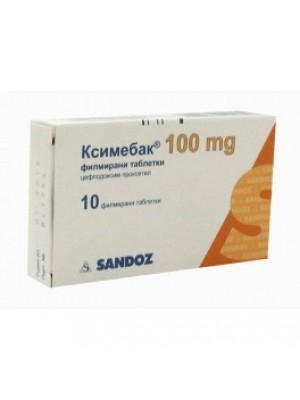
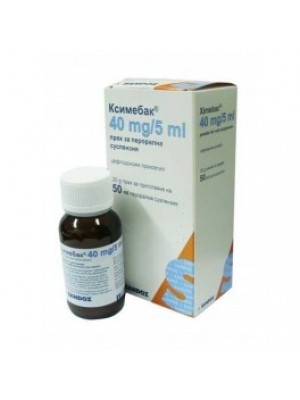
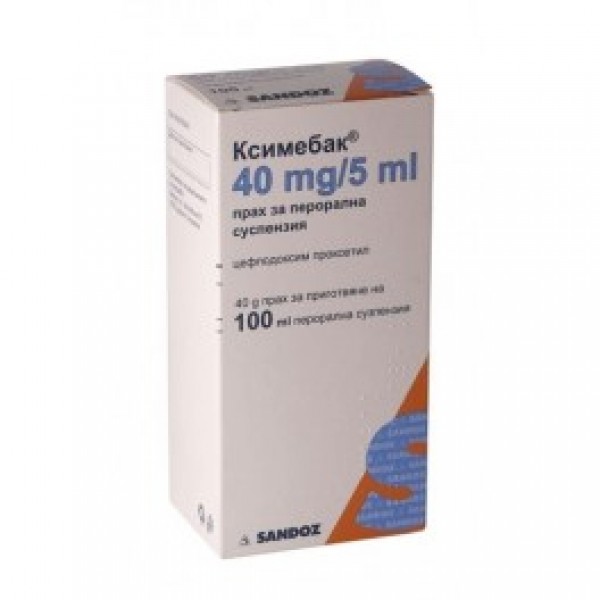
XIMEBAC suspension 40 mg. / 5 ml. 100 ml.
Product Code: XIMEBAC suspension 40 mg. / 5 ml. 100 ml.
Availability: In Stock
Product viewed: 1683


XIMEBAC suspension 40 mg. / 5 ml. 100 ml.

XIMEBAC WHAT IS AND WHAT IT IS USED
Cefpodoxime antibiotic. It belongs to a group of antibiotics called cephalosporin. These antibiotics are similar to penicillin.
Cefpodoxime destroys bacteria and can be used against various infections.
Like all antibiotics, cefpodoxime is only effective against some types of bacteria. It is therefore only suitable for treating certain types of infections.
Cefpodoxime can be used for treatment of:
acute otitis media;
sinus infections;
throat infections;
respiratory infections such as bronchitis and some types of pneumonia.
2 BEFORE YOU TAKE XIMEBAC
Do not take this medicine if:
you are allergic (hypersensitive) to cefpodoxime proxetil or any of the other ingredients of this medicine (see Additional Information in Section 6);
you are allergic (hypersensitive) to another antibiotic of cephalosporin group;
have ever had a severe allergic reaction to any penicillin antibiotic.
Not all people who are allergic to penicillins are also allergic to cephalosporins.
However, you should not take this medicine if you have ever had a severe allergic reaction to any penicillin. This is important because you may be allergic to this medicine.
If you are unsure about anything, ask your doctor or pharmacist.
Take special care with this medicine if:
have ever had an allergic reaction to any antibiotic, tell your doctor or pharmacist before taking this medicine;
you have ever been told that your kidneys do not function very well. Also, if you carry out any treatment (such as dialysis) concerning renal failure. In this case, you can take cefpodoxime, but you may need a lower dose;
if you have had bowel inflammation called colitis or any other serious illness that affects your bowels;
This medicine may affect the results of some blood tests (such as blood group compatibility test and Coombs' test). It is important to tell your doctor that you are taking this medicine if you need to do any of these tests;
This drug may also affect the results of urine tests for blood sugar (such as tests of Benedict or Fehling). If you have diabetes and regularly examine your urine, tell your doctor. This is important because it may be necessary to use other tests for monitoring of a diabetic.
Ask your doctor or pharmacist if any of the above applies to you.
Taking other medicines
Please tell your doctor or pharmacist if you are taking or have recently taken any other medicines, including medicines obtained without a prescription.
This medicine may be affected by other drugs that are eliminated by the kidneys. This is especially important if other drugs also affect renal function. Many drugs can have such effects, so consult your doctor or pharmacist before taking this medicine.
In particular, tell your doctor or pharmacist if you are taking:
antibiotics called aminoglycosides (such as gentamicin);
water tablets or injections (diuretics) such as furosemide. It may be necessary during treatment often to check your kidney function. This can be done with a blood test and urine.
Cefpodoxime do not take concomitantly with drugs that reduce stomach acidity. These include:
antacids;
drugs such as ranitidine, cimetidine or famotidine (called H2 receptor antagonists).
It is necessary to take two or three hours after taking this medicine before you take any of the above drugs.
Taking Ximebac with food and drink
Take this medicine with food. This is because it contributes to the absorption in the body.
Pregnancy and lactation
You are pregnant or think you may be pregnant? Although there is no evidence to indicate that this drug may harm the unborn child, it will be prescribed to a pregnant woman only if really necessary;
You breast-feeding? This drug should not be prescribed to women who are breastfeeding. This is necessary because small amounts of it into your milk.
Ask your doctor or pharmacist before taking any medicine.
Driving and using machines
You may feel dizzy while taking this medicine. This can affect your ability to drive and use machines. If this happens, do not drive or operate machinery.
Important information about some of the ingredients of this medicine
Ximebac 40 mg / 5 ml powder for oral suspension contains sucrose. If your doctor has told you that you have an intolerance to some sugars, contact before taking this medicine.
Ximebac 40 mg / 5 ml powder for oral suspension contains aspartame (E951). Aspartame contains a source of phenylalanine. This medicine may be harmful for people who have a disease called phenylketonuria.
3 HOW TO TAKE XIMEBAC
Always take this medicine exactly as your doctor has told you. If you are not sure about anything ask your doctor or pharmacist.
The pharmacist annotates the packaging how much of this medicine you should take and how often. Please read carefully. Dose that your doctor prescribes depends on the type of infection and its severity. It also depends on the function of the kidneys. Your doctor will explain this.
Adults: Teenagers and adults who need treatment with cefpodoxime normally obtained tablets. Separate leaflets with information about the user are available for tablets.
Children older than 15 days:
The daily amount is determined in accordance with the weight of the child.
Typically, the total amount of the day is 8 mg per kilogram of body weight;
Usually divided into two portions;
Apply each dose every 12 hours with food. The exact dose will be determined by the doctor and will be indicated on the packaging from your pharmacist.
The following table gives a guide to the usual dosing:
Body weight in kg dose of cefpodoxime in mg, which is administered twice daily dose of cefpodoxime in ml of the suspension to be administered twice daily
5 20 mg 2.5 ml
10 40 mg of 5 ml of
15 60 mg 7.5 ml
20 80 mg of 10 ml of
25 100 mg 12.5 ml
How to Measure the dose
This medicine is granted c 10 ml syringe is graduated in half milliliter. Comes with an adapter that matches the bottle.
To take an drug:
Shake the bottle;
Insert the adapter into the neck of the bottle;
Place the tip of the syringe into the adapter;
Turn the bottle upside down;
Pull the plunger to take an appropriate dose.
Ask your doctor or pharmacist if you need advice on how to take an the drug.
Children whose weight is at least 25 kg may adopt 12,5 ml of the drug twice daily. Or you may prefer to take 100 mg tablets twice daily.
Children under the age of 15 days should not take this medicine.
If your child has kidney problems, your doctor may prescribe a dose different from the usual. This usually means doses can be taken less frequently than twice a day.
How to prepare this medicine
To open the bottle of medicine you have to press down the child-resistant cap and then rotate it.
Before preparation of the solution, silica gel dryer, which is located within a capsule in the capsule should be removed and discarded.
If necessary to independently prepare this medicine, you should fill the bottle with cold water just below the measuring line marked on the bottle. Shake it well immediately after.
Then add more water next to the measuring line marked on the bottle and shake again.
You need to take an of the drug as follows:
50 ml suspension will need 20 g of granules of the drug and 37 ml of water;
100 ml oral suspension will need 40 g of granules of the drug and 74 ml of water.
Every time shake the bottle before taking this medicine.
Remember to always shake the bottle before each dose to take an.
If you take more than the dose of this medicine
If you or your child take more dose of this medicine, call your doctor or go to the emergency room of the nearest hospital. Take you medicine in its container, as to be able to understand exactly what it is absorbed.
If you forget to take this medicine
If you miss a dose of this medicine at the right time, take it as soon as you remember. Do not take a double dose to make up for a missed dose.
If you stop taking this medicine
It is important to take this medicine until you finish the prescribed course of treatment. You should not stop taking this medicine just because you feel better. If you stop taking too soon, the infection may again resume. If treatment-experienced patients is still not feeling well at the end of the prescribed course of treatment, or feels worse during treatment, tell your doctor.
If you have any further questions on the use of this product, ask your doctor or pharmacist.
4 POSSIBLE SIDE EFFECTS
Like all medicines, this medicine can cause side effects, although not everybody gets them.
Severe allergic reactions to this medicine are very rare (affects less than 1 in 10,000 patients). These may include:
Suddenly playing and tightness in the chest;
Swelling of eyelids, face or lips;
Rash where can blister and may affect the eyes, mouth and genitals;
Loss of consciousness (fainting).
Each of these allergic reactions need urgent medical attention. If you think you have any of these types of reaction, stop taking this medicine and contact your doctor or the emergency room of the nearest hospital.
Common side effects (affects less than 1 in 10 patients) include:
Stomach problems: bloating, nausea, vomiting, stomach pain, flatulence (gas) and diarrhea. If you have severe diarrhea or bloody diarrhea should stop taking this medicine immediately and contact your doctor;
Feeding problems: lack of appetite.
Uncommon side effects (affects less than 1 in 100 patients) include:
Problems with the immune system: hypersensitivity reactions (that is, skin rashes that are not as severe as mentioned above, embossing rash (urticaria), itching);
Nervous system disorders: headache, numbness and tingling, dizziness;
Problems with ears ringing in the ears;
Common problems: nausea or vomiting, weakness and general feeling of illness.
Rare side effects (affects less than 1 in 1000 patients) include:
Problems with the liver and gallbladder: changes in blood tests that show how your liver functions;
Blood problems: anemia, reducing the number of different cells in the blood (the symptoms may include fatigue, new infection, and easy bruising and bleeding), increased number of certain types of white cells in blood, increasing the number of small cells are necessary for blood clotting.
Very rare side effects (affects less than 1 in 10,000 patients) include:
Problems with the immune system: anaphylactic reactions (eg. Bronchospasm, purpura and edema of the face and limbs);
Kidney problems: changes in renal function;
Problems with the liver and bile: liver damage leading to jaundice (this can manifest as yellowing of the skin or whites of the eyes);
Infections: When conducting a course of treatment with cefpodoxime may temporarily increase the chance to get an infection that is caused by other microorganisms. For example, can develop a fungal infection;
Problems with the blood and lymphatic system: types of anemia, which can be severe and is caused by the rupture of red blood cells. If you will have blood tests for any reason, tell the person taking your blood sample that you are taking this medicine, as this can affect your results.
If any of the side effects gets serious, or if you notice other effects not listed in this leaflet, please tell your doctor or pharmacist.
5 HOW TO STORE XIMEBAC
Keep out of reach of children.
Do not use after the expiry date stated on the carton label. The expiry date refers to the last day of that month. Do not use after expiry date.
Do not store above 25 ° C. Keep container tightly closed.
Store the medicine in a refrigerator (2-8 ° C) and do not use the remaining amount of drug after 14 days.
Medicines should not be disposed of via wastewater or household waste. Ask your pharmacist how to dispose of medicines no longer required. These measures will help to protect the environment.
6 FURTHER INFORMATION
Contents Ximebac
The active substance is cefpodoxime proxetil, equivalent to 40 mg of cefpodoxime / 5 ml.
The other ingredients are sucrose, guar galactomannan, aspartame, orange flavor, sodium benzoate, sodium chloride, citric acid anhydrous, citric essence, sorbitan trioleate, talc, yellow iron oxide (E172), silicon dioxide.
Looks Ximebac
Cream to orange-yellow colored powder. After being mixed with water is converted into an orange-yellow suspension.
Ximebac 40 mg / 5 ml powder for oral suspension is available in a brown glass bottle containing 50 ml, 100 ml or 2 x 100 ml.
Marketing Authorisation Holder:
Sandoz
Write a review
Your Name:Your Review: Note: HTML is not translated!
Rating: Bad Good
Enter the code in the box below:
Related Products
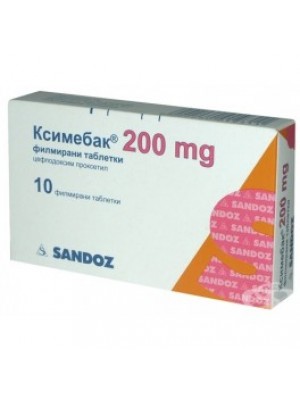
XIMEBAC. 200 mg. 14 coated table XIMEBAC WHAT IS AND WHAT I..
35.00€