Your shopping cart is empty!
Welcome visitor you can login or create an account.
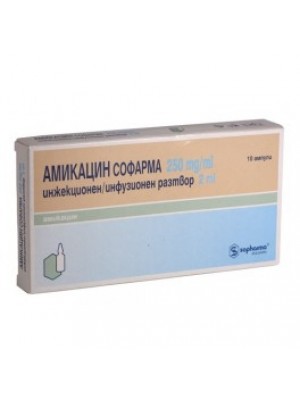
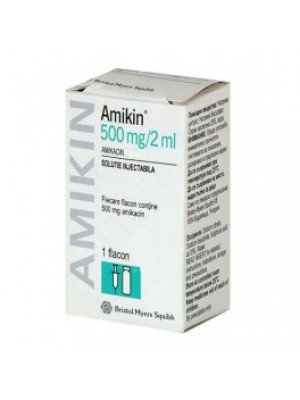
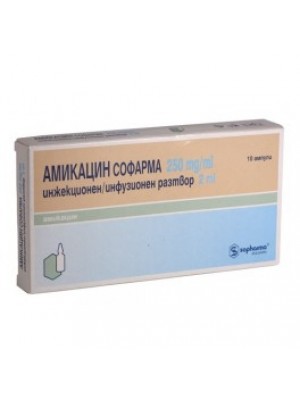
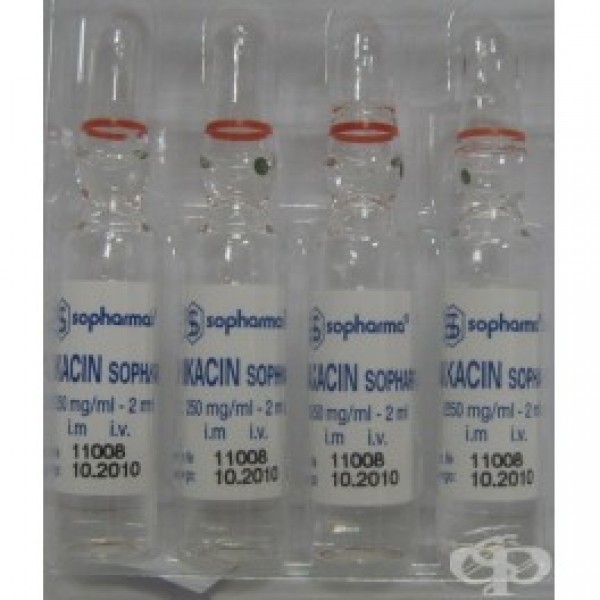
Amikacin. 10 ampoules of 125 mg. / Ml. 2 ml.
Product Code: Amikacin. 10 ampoules of 125 mg. / Ml. 2 ml.
Availability: In Stock
Product viewed: 1415


Amikacin. 10 ampoules of 125 mg. / Ml. 2 ml.

QUALITATIVE AND QUANTITATIVE COMPOSITION
Each 2 ml ampoule contains drug amikacin 100 mg, 250 mg or 500 mg, and amikacin sulfate.Vsyaka 4 ml ampoule contains drug amikacin 1 g, and amikacin sulfate.
3. PHARMACEUTICAL FORM
Injection / infusion
4. CLINICAL DATA
4.1. Witness
For short-term treatment of severe infections caused by Gr (-) microorganisms: Proteus spp., Pseudomonas spp., E. coli, Providencia spp., Klebsiella-Enterobacter-Serratia spp., Acinetobacter spp., Citrobacter freundii and some Gr (+ ) microorganisms sensitive to amikacin:
• Bacterial septicemia "(including neonatal sepsis and bacterial endocarditis);
• central nervous system (including meningitis);
• respiratory tract; bones and joints; skin and soft tissue; postoperativnii infections and after burning; intra-abdominal infections (including peritonitis);
• heavy, complicated and recurrent infections of the urogenital tract (originated in and uncomplicated infections from urinary amikacin applies only when the causative agent is not sensitive to antibiotics with lower nephrotoxicity).
4.2. Dosage and method of administration
Method of administration - intramuscular and intravenous (spray or drip) Individual daily doses Amikacin the same for intramuscular and intravenous administration. Before initiation of therapy with amikacin is necessary to assess the status of renal function to determine the endogenous creatinine clearance and serum concentrations. These indicators are monitored periodically during treatment.
Patients with normal renal function
Intramuscular
Adults, children and adolescents:
A daily dose of -15 mg / kg body weight, divided by 1,2 or 3 doses:
• 15 mg / kg once daily (up to 1 g);
• At the 7,5 mg / kg every 12 hours;
• or by 5 mg / kg every 8 hours.
Newborn -10 mg / kg once, and then the treatment continued with a dose of 7,5 mg / kg for 12 h.
Prematurity - 7,5 mg / kg for 12 hours.
Infants of more than 2 weeks of age - 7,5 mg / kg per 12 hours, or 5 mg / kg every 8 hours.
Obese patients - the daily dose should not exceed 1,5 g.
Patients aged 65 - age - initially measured kidney function.
In dysfunction see Dosage in impaired renal function.
Single daily dose is recommended for patients older than 65 years, impaired renal function, duration of treatment for more than 10 days, neutropenia, infections caused by Gr (+) microorganisms; infections caused by Pseudomonas and Serratia.
Intravenous
Amikacin is not to be injected intravenously nerazreden.Infuzionniyat solution was prepared by 500 mg of the product was diluted with 200 ml of sterile 0.9% saline, or other compatible diluent (5% glucose, mannitol, Ringer's, or 6% dextran). A dose of 1 g was applied for 1 hour; dose of 500 mg - for 30 min or 1 hour.
Infusion in children and adults remains 30-60 mm, in neonates -1 to 2 chasa.Pri uncomplicated urinary tract infections (except for those caused by Pseudomonas), the product may be administered intramuscularly, or by intravenous infusion at a dose of 250 mg of 12 chasa.Pri infections caused by Pseudomonas - 500 mg or 750 mg every 8 hours. The maximum daily dose should not exceed 15 mg / kg body weight (or 1,5 g).
The course of the adult dose should not be higher than 15 g.Srednata treatment duration - 7-10 days at intramusulno administration and for 5-7 days, when administered intravenously.
Therapeutic effect in susceptible microorganisms is obtained 24 to 48 hours of application. In the case that, within 3 to 5 days no therapeutic efficacy is required to stop the treatment. In the presence of septic foci requiring surgical drainage or in a resistance to microorganisms as possible the infection is not affected.
If necessary, treatment can last more than 10 days (less responsive or complicated infections) assessing benefit / risk. Treatment after 10 days continues with monitoring of serum concentrations of amikacin, renal function, and auditory and vestibular apparatus.
Patients with impaired renal function (creatinine clearance <50 ml / min)
• It is not recommended once daily dosing.
• It is renal function be monitored and administered appropriate dose depending on her condition
• Dosage is determined in accordance with the values of creatinine clearance and serum creatinine level.
The usual recommended dose with extended dosing interval
At steady state of the patient and unknown values of creatinine clearance interval between doses are calculated by multiplying the serum creatinine by 9 (t is the value of serum creatinine is 2 mg/100 ml recommended dose of 7,5 mg / kg should be applied at intervals of 18 hours).
Reduced dose with fixed time intervals between entries
Treatment was initiated at a dose of 7,5 mg / kg. The maintenance dose is administered at 12 hour intervals and is calculated by the following formula:
Maintenance dose = set ClCr (ml / min) x loading dose (mg) normal ClCr (ml / min). CICr = creatinine clearance
4.3. Contraindications
Hypersensitivity to amikacin or aminoglycoside antibiotics (there is cross-hypersensitivity to antibiotics in this class), hypersensitivity to any component of the product. 4.4. Special warnings and precautions
• The risk of oto-or nephrotoxicity associated with taking higher dosages, impaired renal function or prolonged treatment. Advanced age and dehydration are factors that can increase the risk of toxic effects. It is recommended that plasma concentrations of amikacin should not exceed 30-35 mcg / ml, because of increased risk of oto-and nephrotoxicity. During continuous treatment with amikacin is necessary to monitor renal function and tracks the status of the hearing. In patients with disorders of the cochlear and vestibular apparatus application of amikacin is not recommended or amikacin appointed with attention.
• In urinalysis and determine the incidence of rolls of erythrocytes, leukocytes, albuminuria, decreased creatinine clearance, increased creatinine, decreased specific gravity, oliguria, and progressive azotemia and treatment should be discontinued immediately and the patient hydrated.
• The characteristic of aminoglycosides curare-like effect may lead to relaxation of the muscles, so that amikacin should be administered with caution to patients suffering from parkinsonism and myasthenia gravis.
• Should the need of surgical intervention is necessary to inform the anesthesiologist that the patient is treated with amikacin due to the risk of stepping on the neuromuscular block.
• In neonates and premature infants is prolonged half-life of amikacin due to immaturity and underdevelopment of the kidneys, which requires strict and careful dosing them.
• Aminoglycosides are active in alkaline medium.
• Amikacin does not apply when bacteriologic testing indicates that the agents are not sensitive to it.
• Anaerobic are naturally resistant to aminoglycosides.
• a low level of natural resistance are enterococci and streptococci, which is avoidable by achieving synergy with penicillins.
• present as an excipient sodium metabisulphite in rare cases can cause allergic reactions, including anaphylaxis in hypersensitive patients. Increased sensitivity to sulfites occurred more frequently in asthmatics.
• Amikacin should not be used in botulism.
4.5. Interactions
• It is necessary to avoid the combination of aminoglycoside antibiotics with each other due to the strengthening of ototoxic and nephrotoxic effects. It is necessary to avoid concomitant administration of amikacin and other medicinal products that are neuro-or nephrotoxicity: bacitracin, cisplatin, amphotericin B, colistin, vancomycin.
• Amikacin enhances the effect of botulinum toxin, and therefore should be avoided its use in botulism.
• Combining with aminoglycosides or cephalosporins, polymyxins amplifies the risk of nephrotoxicity.
• Co-administration of aminoglycosides with furosemide or ethacrynic acid in renal failure increases the ototoxic and nephrotoxic risk especially with intravenous administration.
• Concomitant administration of Amikacin with peripheral muscle relaxants is prolonged neuromuscular blockade may occur apnea.
• There is synergism in terms of chemotherapeutic effect between the beta-lactam antibiotics and aminoglycosides. Is established antagonism between aminoglycosides and bacteriostatic antibiotics (tetracyclines, chloramphenicol, lincosamides).
4.6. Pregnancy and lactation
Category D
Amikacin crosses the placental barrier. During pregnancy, use of the product is not recommended because of the risk of ototoxicity in the fetus.
Amikacin small amounts are found in breast milk, so avoid its use during lactation or drugs are given after consideration of the benefit / risk ratio.
4.7. Effects on ability to drive and use machines
Testimony in which the amikacin exclude the possibility to drive and use machines.
4.8. Undesirable effects
All aminoglycoside antibiotics can cause irreversible hearing impairment, with damage to the cochlear and vestibular nerve, have toxic effects on the kidneys, causing neuromuscular block. These side effects often occur in patients with impaired renal function, concomitant treatment with other ototoxic and nephrotoxic drugs, prolonged treatment with amikacin and / or administration of higher than recommended doses.
Cochlear disorders present with early hearing loss only treble, but in terms of the vestibular system with dizziness and imbalance.
Nephrotoxicity - initial symptoms of kidney failure are increasing serum creatinine, albuminuria, the occurrence of erythrocytes, leukocytes and cylinders in urine, oliguria, azotemia. This leads to a decreased glomerular filtration and electrolyte imbalance, followed by acute tubular necrosis.
Neuro-and ototoxicity - toxic effects on the eighth cranial nerve occur with: hearing loss, vertigo, tinnitus.
Neurotoxicity - blockade - less can be monitored respiratory depression, apnea and muscular paresis due neuromuscular blocking action of the aminoglycoside antibiotics.
Others - headache, paresthesia; stomatitis, nausea and vomiting, diarrhea; rash; changes in blood parameters granulocytopenia, thrombocytopenia, leukopenia, anemia, eosinophilia, increased serum bilirubin, transaminases and alkaline phosphatase; hypotension ototsi.Vazmozhno a superinfection of resistant microorganisms and fungi Amikacin. 4.9.
Overdose
Overdose with aminoglycoside antibiotics patient undergoes hemodialysis or peritoneal dialysis. At the onset of neuromuscular block are appointed intravenous calcium salts or neostigmine. In the infants can be performed exchange transfusion.
5. Pharmacological
5.1. Pharmacodynamic properties
ATC code-J01GB06Farmakoterapevtichna group - Antibacterials for systemic use. Aminoglikozidi.Amikatsin refers to the group of aminoglycoside antibiotics and is a semisynthetic derivative of Kanamycin A Aminoglycosides are broad spectrum antibiotics, very effective against aerobic and facultative anaerobic Gram-negative bacteria, Sem. Enterobacteriaceae and Pseudomonas aeruginosa. They exert a rapid bactericidal effect on sensitive organisms.
Amikacin acting bactericidal of: Pseudomonas spp., E. Coli, Proteus spp., Providencia spp., Klebsiella-Enterobacter-Serratia spp., Acinetobacter spp., Citrobacter freundii, Salmonella spp., Shigella spp. From Gr (+) microorganisms sensitive to amikacin are S. aureus, including methicillin-resistant strains. May be active against certain strains of S. pyogenes, S. pneumonie, Enterococcus spp.
The mechanism of action of amikacin was similar to other aminoglycosides irreversible binding to the 30 S ribosome inhibiting the synthesis of the protein, and erroneous reading of the genetic code; subsequent incorporation of erroneous proteins in the cytoplasmic membrane disorganization and accelerated its penetration of the aminoglycoside into the cell
The presence of residual alpha-hydroxybutyric acid in the molecule makes amikacin insensitive enzymes produced by resistant to aminoglycosides other Enterobacteriaceae and Pseudomonas. When 86% of the gentamicin-resistant Enterobacteriaceae established sensitivity amikacin.
Pharmacokinetics
RezorbtsiyaAmikatsin is absorbed very rapidly after intramuscular administration. After parenteral administration diffuses mainly in the extracellular fluid, and passing a small degree in the cerebrospinal technost.Maksimalni serum were detected 1 hour after intramuscular administration. A single intramuscular administration of 250 mg in 2 hours, to reach a plasma concentration of 563 mg / ml, and after 12 h - 163 mg / ml.
Distribution
Binds weakly to plasma proteins <20%. Is distributed into the tissues - heart, bile, lung tissue, sputum, bronchial secretions, interstitial, pleural and synovial fluid. Passes quickly in perilymph of the inner ear and the placental barrier. Reaches high concentrations in the urine. In breast milk is found in small quantities. Does not cross the blood-brain barrier. Amikacin penetrates in high concentrations in the CSF at vazpalenimeningi, mainly in infants and young children. When administered at recommended doses no evidence of accumulation of the drug with multiple doses.
Metabolism
Not metabolised.
Excretion
Amikacin is excreted unchanged by glomerular filtration. In patients with normal renal function, the elimination half-life is 2-3 hours. Upon intravenous administration of 500 mg dose of amikacin of 87% of the antibiotic was excreted in urine after 6 h, then 24 h, 95% excreted. 5.3.
Preclinical safety data
LD50pri intramuscular administration in rats is 240 mg / kg bw, and in mice -1458,5 mg / kg bw LD50 after subcutaneous administration in rats is 2500 mg / kg, in mice - 2552.1 mg / kg.Pri tests for subacute and chronic toxicity no statistically significant differences in body weight, behavior and haematological and clinicochemical testove.Nyama evidence of carcinogenicity, mutagenicity and reproductive toxicity.
6. Pharmaceutical particulars
6.1. List of excipients
Sodium metabisulphite, Sodium citrate, Dilute sulphuric acid - pH-4, 5, Water for injections
6.2. Fizpko Incompatibilities
It is necessary to avoid mixing in vitro with aminoglycosides of beta-lactam antibiotics, novobiocin, due to the formation of an insoluble precipitate and inactivation.
6.3. Shelf life 2 (two) years.
6.4. Special precautions for storage
In original packaging in a dry and dark place at a temperature below 25 ° C.
Do not freeze!
Keep out of reach of children!
6.5. Packaging Data
Primary packaging
Injection / infusion ampoules of 2 ml clear glass first hydrolytic class - 50, 125 or 250 mg / ml. Ten vials were placed in a blister pack of rigid PVC-foil.
Injection / infusion in vials of 4 ml clear glass first hydrolytic class - 250 mg / ml. Ten vials were placed in a blister pack of rigid PVC film
Secondary packaging
A blister or ten ampoules of 2 ml were placed in a cardboard box with leaflet. A blister or five ampoules of 4 ml were placed in a cardboard box with leaflet.
6.6. Recommendations for use
Solution for intravenous use up to 12 hours after preparation.
Write a review
Your Name:Your Review: Note: HTML is not translated!
Rating: Bad Good
Enter the code in the box below:
Related Products