Your shopping cart is empty!
Welcome visitor you can login or create an account.
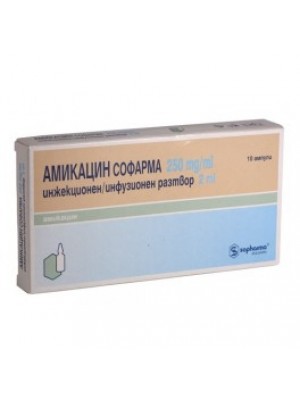
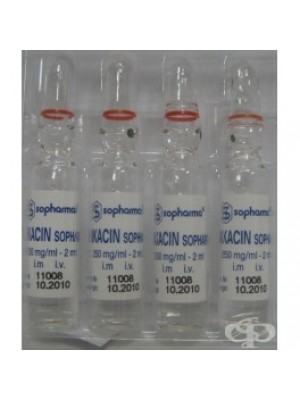
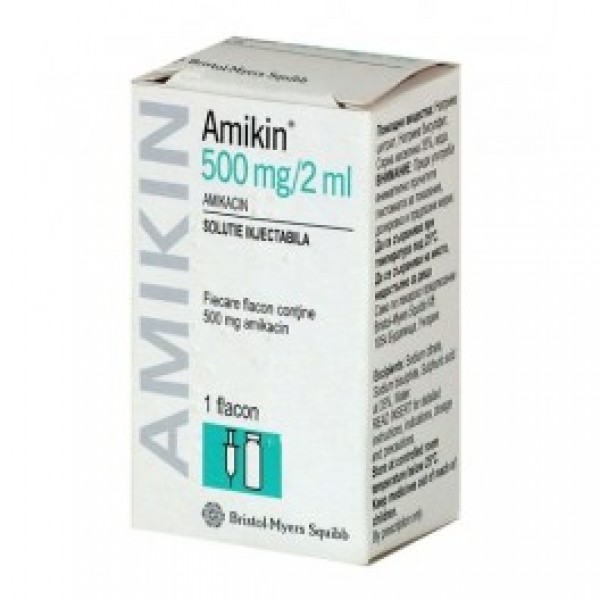
AMIKIN. 500 mg. 2 ml.
Product Code: AMIKIN. 500 mg. 2 ml.
Availability: In Stock
Product viewed: 1415


AMIKIN. 500 mg. 2 ml.

QUALITATIVE AND QUANTITATIVE COMPOSITION
Amikin 500 mg / 2 ml vial
Each vial contains Amikacin sulphate, equivalent to 500 mg Amikacin.
3. PHARMACEUTICAL FORM
A sterile solution for injection
4. CLINICAL DATA
4.1. Witness
AMIKIN is indicated for short-term treatment of severe infections caused by susceptible strains of Gram-negative bacteria, including: Pseudomonas, Escherichia coli, indole-positive and indole-negative species Proteus, Provodencia, Klebsiella-Enterobacter-Serratia, Acinetobacter (Mima-Herellea ).
Clinical studies have shown that it is effective in AMIKIN bacteraemia and septicemia (including neonatal sepsis); during severe infections of the respiratory tract, bone and joint, central nervous system (including meningitis) and skin and soft tissue; intra-abdominal infections (including peritonitis); in burns and postoperative infections (including post vascular surgery) (see 4.2. Dosage and method of administration).
Clinical studies show that AMIKIN is effective in severe complicated and recurrent urinary tract infections caused by the following organisms. Aminoglycosides including AMIKIN injections are listed in uncomplicated initial events of infection by the urinary system, unless the causative organism is sensitive to antibiotics having less potential toxicity. When amikacin is indicated for the treatment of uncomplicated urinary tract infections, can be given a reduced dose (see 4.2. Dosage and method of administration).
For the determination of causative agents of the infection and their sensitivity to amikacin is necessary to make a bacteriological test. AMIKIN can be used as an initial treatment for suspected infection caused by gram-negative organisms, such treatment can be started before the results of susceptibility testing.
4.2 Posology and method of administration
Before initiation of therapy should be measured weight of the patient to determine the correct dose. AMIKIN can be administered intramuscularly or intravenously.
You need to assess renal function by measuring the concentration of serum creatinine or calculated endogenous creatinine clearance. The determination of nitrogen substances in the blood (BUN) is much less reliable method. During treatment should be periodically re-evaluation of renal function.
Where possible, should be measured serum concentrations of amikacin in order to ensure adequate but not excessive levels. It is desirable that, at the time of treatment were measured as the peak concentrations and the intermediate serum. To avoid peak concentrations (30-90 min after injection) above 35 mcg / ml and intermediate (just before the next dose) serum concentrations above 10 mcg / ml. If necessary, the dose should not change. In patients with normal renal function can be applied once daily: in this case the peak concentrations may exceed 35 mcg / ml.
Intramuscular and intravenous administration in patients with normal renal function
The recommended dose for intramuscular or intravenous administration to adults, children and adolescents with normal renal function was 15 mg / kg / day divided in 2 or 3 doses of the same and injected at regular time intervals, e.g. 7.5 mg / kg per 12 hours, or 5 mg / kg every 8 hours. The dose for patients with a high weight may not exceed 1.5 g / day.
In premature infants, the recommended dose is 7.5 mg / kg every 12 hours. Newborns should be administered 10 mg / kg as a bolus and 7.5 mg / kg every 12 hours thereafter. Infants of more than 2 weeks and children should receive 7.5 mg / kg per 12 hours, or 5 mg / kg for 8 hours, as was indicated above.
Alternatively, for patients with renal function in which creatinine clearance is> 50 mL / min, can be administered once daily intravenous dose of 15 mg / kg / day for an adult, or 20 mg / kg / day for children (age 4 weeks or above) in bacteremia, septicemia, respiratory tract infections, complicated urinary tract infections, intra-abdominal infections and empiric use in febrile neutropenia.
Data on the use of a single daily dose in patients with involvement of other organs are limited.
When administered in AMIKIN uncomplicated urinary tract infections, may be used a total daily dose of 500 mg, and single and two equal doses (mg x 250).
Careful determination of the dosages as a reconstituted solution with a concentration of 50 mg / mL should be diluted in order to allow for appropriate dosages in smaller premature infants. The usual duration of treatment is from 7 to 10 days. The total daily dose for all routes of administration should not exceed 15-20 mg / kg / day. In less responsive and complicated infections where treatment provides more than 10 days should be re-evaluated implementation of AMIKIN, and if it continues - to monitor renal, auditory, vestibular function, and levels of amikacin in serum.
Upon application of the recommended doses in uncomplicated infections caused by sensitive organisms amikacin must reply is received within 24 to 48 hours. If within 3 to 5 days, no definite clinical response, treatment should be discontinued and re-checked the antibiotic sensitivity of the causative organism by antibiogram. If the infection is not affected by the treatment, this may be due to a resistance of the microorganism or in the presence of septic foci requiring surgical drainage.
Use in patients with impaired renal function
NOTE: In patients with impaired renal function, patients with creatinine clearance <50 mL / min, it is not desirable single administration of the total daily dose of amikacin, as these patients will be subjected to prolonged exposure to high intermediate concentrations. Cf. The following dose adjustment in patients with impaired renal function.
In patients with impaired renal function receiving a daily dose generally in two or three divided doses, to monitoring serum levels of amikacin using appropriate tests, as much as possible. In patients with impaired renal function the dose should be modified by applying normal doses of extended intervals or reduced doses at fixed intervals.
Both methods are based on the patient's creatinine clearance or creatinine value in serum, since these were found to correlate with the time of semi-elimination of aminoglycoside in patients with impaired renal function. This dosage regimen should be used in parallel with careful clinical and laboratory monitoring of the patient and, if necessary, be altered, including during the dialysis session.
Normal dose extended interval between doses if creatinine clearance is not known, but the patient's condition is stable, the interval between two doses in hours for normal single dose (ie the dose given to patients with normal renal function scheme BID - 7.5 mg / kg) can be calculated as a serum creatinine of a patient multiplied by 9; i.e. if the concentration of serum creatinine is 2 mg/100 ml of the recommended single dose (7.5 mg / kg) should be administered at an interval of 18 hours.
Reduced dose of regular intervals between doses
When renal function is impaired and must be administered AMIKIN certain time intervals, the dose should be reduced. These patients should be measured serum amikacin to determine the exact dosage and avoid excessive serum concentrations. If there is no data on serum concentrations and the patient's condition is stable, serum creatinine and creatinine clearance may serve as the most reliable indicators of the degree of renal impairment.
First, start treatment with application of normal dose - 7.5 mg / kg - a loading dose. This dose was the same as in patients with normal renal function, as described above.
To determine the amount of maintenance doses administered 12 hours shock dose should be reduced in proportion to the decrease in the value of the patient's creatinine clearance.
Maintenance dose every 12 hours = Cl set! in ml / min X calculated loading dose in mg normal CrCI
(CrCI = creatinine clearance)
Another way to determine the reduced doses administered at 12-hour intervals (for patients whose serum creatinine in stable condition known) is to divide the normally recommended dose of serum creatinine of the patient.
The above-described schemes of determining the dose should not be taken as binding recommendations, but are given as a guide, in the case that the determination of the serum levels of amikacin can be performed.
4.3 Contraindications
AMIKIN is contraindicated in patients with known allergy to amikacin or any of the other ingredients. The presence of hypersensitivity to amikacin is a contraindication to its use. Hypersensitivity or serious toxic reactions to aminoglycosides may be a contraindication for the application of any aminoglycoside due to cross-sensitivity of patients to drugs of this class.
4.4. Special warnings and special precautions for use
Aminoglycosides should be used with caution in patients with muscular disorders such as myasthenia gravis or parkinsonism, since these drugs may potentiate muscle weakness because of their potential medical-like effect on neuromuscular connections.
Patients who are being treated with parenteral aminoglycosides, must be subjected to close clinical observation, because of potential ototoxic and nephrotoxicity associated with the use of these products. No safety data on treatment periods longer than 14 days. As can be expected for each aminoglycoside evidence of toxic nephropathy and acute renal failure have been received during the postmarketing period.
During treatment, patients should be well hydrated, and before the start of treatment and daily during treatment renal function be assessed by the usual methods. It is the dose reduced (see section 4.2) if there is evidence of renal dysfunction, such as the appearance of cylindrical bodies in urine, red or white blood cells, proteinuria, decreased creatinine clearance, decreased urine specific gravity, increased nitrogenous bodies in the blood creatinine or oliguria. If azotemia increases or if a progressive decrease in urine output, treatment should be discontinued.
At the beginning of therapy should be monitored closely renal function and the function of the eighth cranial nerve, especially in patients with known or suspected renal impairment and in patients whose renal function was normal parvonachapno but during treatment developed signs of renal dysfunction. Whenever possible, you should monitor serum concentrations of amikacin to ensure appropriate levels and to avoid any toxic levels. Must be evaluated for urine specific gravity decreased, increased excretion of proteins and for the presence of cells or rolls. You should periodically measured nitrogen bodies in the blood serum creatinine or creatinine clearance. Where possible, should be performed in serial audiograms enough adult patients can be subjected to the test, particularly high-risk patients. Data for ototoxicity (dizziness, vertigo, tinnitus, tinnitus and hearing loss) or nephrotoxicity requires discontinuation of this medication or change the dose.
Aminoglycosides are absorbed rapidly and almost completely, in the topical administration (with the exception of the bladder) during surgical procedures. There is evidence of irreversible hearing loss, kidney damage and death as a result of neuromuscular block after washing small and large surgical fields with an aminoglycoside product.
Cases of neuromuscular blockade and respiratory paralysis after parenteral administration or topical instillation (as orthopedic or abdominal lavage or-local treatment of empyema), and after oral administration of aminoglycosides. Should be considered the possibility of respiratory paralysis if aminoglycosides are administered by any method in patients receiving anesthetics, neuromuscular blocking agents such as tubocurarine, suksinilholin, dekametonii or in patients receiving massive transfusions of citrate-anticoagulated blood. If a neuromuscular blocking calcium salts can overcome respiratory paralysis, but in this case you may need and application of mechanically assisted breathing.
In patients treated with aminoglycosides may occur neurotoxicity manifested as vestibular and / or bilateral hearing ototoxicity. The risk of related aminogliozidite ototoxicity is greater in patients with impaired renal function and in those receiving high doses or subjected to prolonged treatment.
Usually first appears deafness to high-frequency tones that can be detected only by using audiometric test. Dizziness may occur, and it be a sign of abnormal function of the vestibular system.
Other manifestations of neurotoxicity may include numbness, skin itching, muscle spasms and convulsions. The risk of ototoxicity due to the aminoglycosides, increases as the degree of persistent peak so high steady state concentration. Patients received damage to the cochlear or vestibular system can not develop symptoms during therapy to warn them of toxic effects on the eighth cranial nerve, total or partial irreversible bilateral deafness or dizziness may occur after discontinuation of the drug. Usually caused by aminoglycoside ototoxicity is irreversible.
Aminoglycosides are potentially nephrotoxic. The risk of nephrotoxicity is greater in patients with impaired renal function and those receiving high doses or subjected to prolonged treatment.
AMIKIN contain sodium bisulfite, sulfite, which may cause allergic reactions including anaphylactic symptoms and life-threatening or less hazardous asthma attacks in sensitive patients. Overall sensitivity to sulfites is sparse and low. Sensitivity sulfites are more frequently observed in asthmatics than in patients without asthma.
Aminoglycosides should be used with caution in premature infants and newborns due to renal immaturity of these patients and the resulting prolongation of the elimination half-life from serum of this group of drugs.
Particularly important in the treatment of aminoglycosides is monitoring of renal function in elderly patients.
As with other antibiotics, the use of amikacin can lead to an increase in non-susceptible organisms. In such cases it is necessary to apply appropriate treatment.
4.5. Interactions
Concomitants and / or sustained systemic, oral or topical application of other neurological or nephrotoxic agents, particularly bacitracin, cisplatin, amphotericin B, cephaloridine, paromomycin, viomycin, poliksimin B, colistin, vancomycin or other aminoglycosides should be avoided. Drugi.faktori that can increase the risk of toxicity are advanced age and dehydration.
Should avoid concomitant use of AMIKIN with potent diuretics (ethacrynic acid or furosemide), since diuretics themselves may cause ototoxicity. Furthermore, when intravenously administered diuretics can enhance aminoglycoside toxicity by acting on the antibiotic concentrations in the serum and tissues.
Mixing of in vitro with aminoglycosides beta-lactam antibiotics (penicillins and cephalosporins) may result in their substantial mutual inactivation.
Decrease in serum activity may occur when an aminoglycoside or drug penicillin applied in vivo through various methods. Inactivation of the aminoglycoside is clinically significant only in patients with severely impaired renal function.
Inactivation may continue in models of body fluid taken for testing, wherein the aminoglycoside data may not be accurate. Such models must be properly processed (analyzed quickly, frozen or treated with beta-lactamase).
4.6. Pregnancy and lactation
When administered to pregnant women aminoglycosides can cause fetal harm. Aminoglycosides cross the placenta. Some cases of complete irreversible bilateral congenital deafness in children whose mothers received streptomycin during pregnancy.
Write a review
Your Name:Your Review: Note: HTML is not translated!
Rating: Bad Good
Enter the code in the box below:
Related Products