Your shopping cart is empty!
Welcome visitor you can login or create an account.
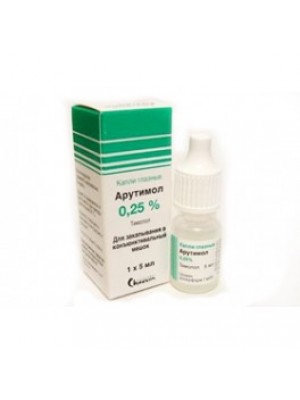
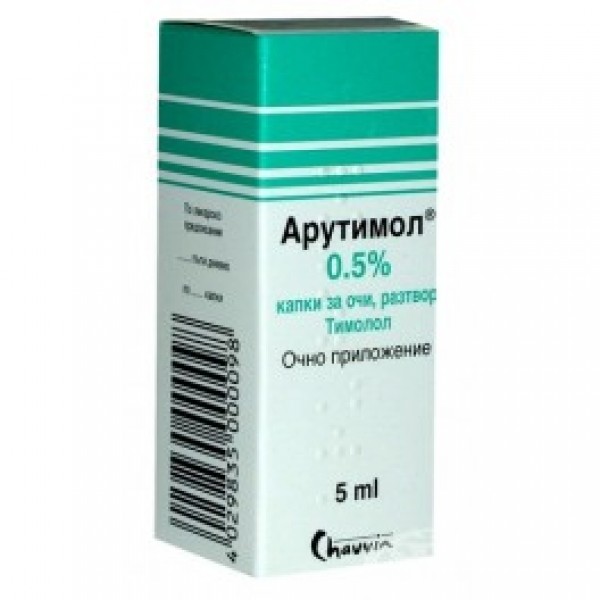
ARUTIMOL drops 0.50% 5 ml.
Product Code: ARUTIMOL drops 0.50% 5 ml.
Availability: In Stock
Product viewed: 1106


ARUTIMOL drops 0.50% 5 ml.

Qualitative and quantitative composition
1 ml of eyedrops Arutimol 0.25% comprising as active substance :
Timolol hydrogen mateate 3,42 mg ( corresponding to 2,5 mg Timolol)
1 ml of eyedrops Arutimol 0.50% comprising as active substance :
Timolol hydrogen maleate 6,83 mg ( corresponding to 5,0 mg Timolol)
For excipients , see 6.1.
3 . formulation
Eye drops, solution
4 . clinical data
4.1.Pokazaniya
increased intraocular pressure ( ocular hypertension ) ; glaucoma (chronic open-angle glaucoma ) ; glaucoma , after removal of the lenses ( and aphakic glaucoma ) ; some patients with secondary glaucoma , juvenile glaucoma when other therapeutic measures are not enough.
4.2 . Dosage and method of administration
The usual initial dose is 1 drop Arutimol eye drop 0.25% in the eye / eye twice daily. If the clinical response is not satisfactory , the dose may be increased to 1 drop Arutimol eye drop 0.50% in the eye / eye twice daily.
Since , in some patients the effect of Arutimol associated with the reduction of intraocular pressure , it is possible to require several weeks to stabilize for approximately four weeks after initiation of treatment should be initiated a study to determine the intraocular pressure . If regular monitoring measured intraocular pressure reaches the desired value , the dosage may be changed to once a day 1 drop Arutimol eye drops 0.25% , resp. Arutimol eye drops 0.50% .
If necessary, together with Arutimol may be administered other agents for lowering intraocular pressure . Not recommended the use of two topical beta -adrenergic blocker .
When a patient moves from one antiglaucoma agent other than topical beta - adrenergic blocking agent , continue with used products and add 1 drop of 0.25% Arutimol in each affected eye twice a day. The next day in a row stop completely used before this anti- glaucoma product and proceed with Arutimol . If you need a higher dose Arutimol , place 1 drop Arutimol 0.5% in the affected eye twice a day.
Pediatric use :
The usual starting dose is one drop of 0.25% Arutimol in the eye / eye every 12 hours , in addition to other antiglaucoma agent . If necessary , the dose may be increased to a drop of 0.5% solution in the affected eye / eyes every 12 chasa.Ne recommended for use Arutimol in neonates and premature infants . Eye drops were spotted in the lower conjunctival sac.
Arutimol drops 0.25% , respectively . Arutimol eye drops 0.50% as all antiglaucoma drugs are intended for long term use .
4.3 . Contraindications :
Arutimol eye drops 0.25% , 0.50 % should not be applied to bronchial hyperreactivity , bronchial asthma or a history of bronchial asthma, chronic obstructive pulmonary disease, sinus bradycardia , atrioventricular block second or third degree , uncompensated heart failure , cardiogenic shock, known hypersensitivity to the drug or any of the excipients of the medicinal product, severe allergic rhinitis and dystrophic disorders of the cornea.
4.4 . Special warnings and precautions for use
Like other topically applied ophthalmic products may be expected systemic absorption of timolol. When topically applied , may result in the same adverse reactions , known in the systemic administration of beta-adrenergic blockers .
In the case of heart failure, the patient tryabvva be adequately controlled before beginning therapy with Arutimol . Patients with a history of severe cardiac disease should be monitored for symptoms of heart failure and should be monitored their pulse .
Instructions for switching from treatment with other medicines to treat with Arutimol : When you need to make such a change , the corresponding locally acting ophthalmic beta- adrenergic blocking agent should be discontinued after proper dosing in selected day, and therapy Arutimol start next consecutive days at a dosage of one drop of 0.25% Arutimol affected eye twice-daily . If the clinical effect is unsatisfactory , the dose may be increased to one drop Arutimol 0.5% in the affected eye twice a day.
After using timolol reported observed reactions of cardiovascular and respiratory system, including death due to bronchospasm in patients with asthma, and rarely death in association with cardiac failure.
Patients already receiving a beta - adrenergic blocker , and which is administered Arutimol should be monitored for possible additive effects on intraocular pressure as , and in terms of the known systemic effects of beta - blockade . Not recommended the use of two topical beta -blockers.
In patients with angle-closure glaucoma, the immediate objective of treatment is to reopen the angle . This requires constriction of the pupil with a miotic . Arutimol has little or no effect on the pupil . Therefore , when Arutimol apply in order to decrease the increased intraocular pressure in glaucoma it would be used in combination with a miotic and not samostoyatelno.Kakto whenever treatment of glaucoma , with the use of eye drops Arutimol 0.25% / 0.50 % require regular monitoring of intraocular pressure and the cornea. Patients should be instructed that if they develop any ocular adverse reactions , particularly conjunctivitis and eyelid reactions to seek immediate medical advice .
During the treatment with eye drops Arutimol 0.25% / 0.50% do not have to wear soft contact lenses , eye drops as timolol contain a preservative such as benzalkonium chloride . Arutimol tolerated when administered to patients with glaucoma wearing hard contact lenses of polymethylmethacrylate . Hard contact lenses should be removed prior to instillation of the drug and placed back at the earliest after 15 minutes.
Risk of anaphylactic reactions :
During the use of beta -blockers , patients with a history of atopy or severe anaphylactic reaction to a variety of allergens may exhibit hypersensitivity to reunion with the same allergens as accidental and in diagnostic or therapeutic procedures. Such patients may not respond adequately to the usual doses of epinephrine, used for treatment of anaphylactic reactions.
Premature newborns and infants
In isolated cases of apnea in infants , probably due to the immaturity of these patients. Because of the potential effects on the central nervous system , is not recommended in premature and newborn infants . With topical application of timolol in premature neonates and infants , in some cases there is a relatively high concentration of timolol in the blood compared to adults . Therefore, newborns and infants should be done precisely appointment of timolol and patients should be monitored closely after initiation of treatment for symptoms of systemic B- blockade.
4.5 . Interactions
When co-administered with eyedrops containing adrenaline may cause expansion of zenitsata.Ponizhavashto intraocular pressure effect of timolol is potentiated by adrenaline or pilocarpine eye drops . Upon systemic administration of both (B -blockers possible a mutual enhancing of the effect , as in the eye ( intraocular pressure lowering agent ) , and the cardiovascular sistema.Saobshtena potentiate systemic blockade (e.g., slow heart rate ) during the combined treatment of quinidine and timolol, possibly because quinidine inhibited the metabolism of timolol through P-450 enzyme , CYP2D6.
As adverse reactions may occur hypotension and / or bradycardia, if timolol is administered concomitantly with calcium antagonists, with medicinal products that affect the storage and release of catecholamines or B- blockers.
When applied to a beta-blocker , in patients receiving products kateholaminoizcherpvasht effect as reserpine, closer monitoring is recommended to the patient because of the possibility of potentiation of effects such as hypotension and / or significant bradycardia , which may result in dizziness , syncope , or postural hypotension.
Oral calcium antagonists may be used in combination with beta-adrenergic blockers , where the cardiac function is normal , but it should be avoided in patients with compromised cardiac function.
There is the potential for the occurrence of hypotension, AV conduction and left-sided heart failure in patients receiving beta-blockers, when to the treatment regimen were added calcium antagonists.
The origin of all adverse cardiovascular effects appears to depend on the types of calcium antagonist. Derivatives of dihydropyridine, such as nifedipine, may lead to hypotension , whereas verapamil or diltiazem are more likely to lead to violations of the AV- conduction or left-sided heart failure when used with a beta- blocker.
Intravenous calcium channel blockers should be used with caution in patients receiving beta -adrenergic blockers.
Co-administration of beta- blockers and digitalis , diltiazem or of verapamil may have a synergistic effect with respect to an extension of the AV- conduction time .
4.6 . Pregnancy and lactation
Since medical experience regarding the administration of Arutimol eye drops 0.25% and 0.50% during pregnancy and lactation is insufficient Arutimol eye drops 0.25% and 0.50% should not be used during these periods unless the potential benefits outweigh the potential risks (see also section 5.3. " Predlinichni data ".) Timolol has not been studied in pregnant women. When used during pregnancy , the potential expected benefit must justify the potential risk .
lactation
Even applied to the eye , timolol penetrates into breast milk and may reach there in higher concentrations than in maternal plasma . Although the assumed amount of breast milk drug probably does not represent a danger to the child, infants should be monitored for signs of B- blockade. It is necessary to decide whether to discontinue nursing or to discontinue therapy with timolol.
4.7 . Effects on ability to drive and use machines
Even if taken as prescribed , the product also can affect vision that weaken the ability to actively participate in traffic , use machines or work without safe support. This applies with even greater force , who together with the application of the product is accepted and alcohol.
4.8 . Undesirable effects
eyes
Signs and symptoms of eye irritation as conjunctivitis , blepharitis , keratitis , ptosis and feeling of dry eyes . Visual disturbances such as changes in refraction , diplopia, choroidal detachment .
Systemic adverse reactions
Cardiovascular system :
Bradycardia , arrhythmia , hypotension, syncope , atrioventricular block , cerebral vascular accident , cerebral ischemia, heart failure , palpitations , cardiac arrest , edema, Raynaud's phenomenon .
Respiratory tract :
Bronchospasm ( predominantly in patients with pre-existing bronchoconstrictive disease) , respiratory failure , dyspnea , cough
skin:
Alopecia, psoriasiform rash or exacerbation of psoriasis.
Hypersensitivity reactions :
Signs and symptoms of allergic reactions including anaphylaxis , angioedema , urticaria, localized and generalized rash.
CNS :
Dizziness , depression, insomnia , nightmares, memory loss, amplification Early symptoms of myasthenia gravis, paresthesia
Gastrointestinal reactions :
Nausea, diarrhea , dyspepsia , dry mouth
Urogenital System:
decreased libido
Immunological reactions :
Systemic lupus erythematosus
General undesired effects:
Headache, asthenia / fatigue , nausea , weakness, depression.
As is true for other beta-blockers , administration of timolol, when approaching date of birth , leads to the possibility of bradycardia , hypoglycemia , and respiratory depression ( neonatal asphyxia ) in neonates; There are reports of beta- blockade in neonatal , other beta- blockers. This requires careful monitoring in newborns during the first days after birth.
Potential side effects
Known from clinical experience side effects when administered systemically can be perceived as potential side effects of ocular administration :
General :
Limb pain , decreased endurance during exercise Cardiovascular reactions : AV- block ( 2-3 degrees ), SA- block , pulmonary edema , worsening of arterial insufficiency , worsening of angina pectoris, vasodilation
Gastrointestinal Reactions : Vomiting
Endocrine effects: hyperglycemia, hypoglycemia
Skin reactions : itching, sweating , exfoliative dermatitis
Musculoskeletal effects: Arthralgia
Neurological effects: Vertigo, local weakness
Psychiatric effects: decreased concentration , tendency to dreaming
Hematologic effects: thrombocytopenic purpura
Respiratory effects: Wheezing
Genitourinary effects: impotence , difficulty in micturition
Changes in laboratory values : A slight increase in serum urea , serum potassium , uric acid and triglycerides, small reductions in hemoglobin , hematocrit , HDL- cholesterol , non- clinical manifestations
Systemic effects of the beta -adrenergic blockers
Heart failure: The continued depression of the myocardium with beta blockers over a specified time period may, in some cases , can lead to heart failure and signs of such Arutimol should be stopped . Major surgery: A questionable is necessary to stop a beta blocker before major surgery. During surgery , if necessary , the effects of beta- blockers may be outweighed by sufficient doses of agonists such as isoproterenol, dopamine, dobutamine.
Diabetes mellitus :
Beta- blockers adrenerichnite should be used with caution in patients prone to spontaneous hypoglycaemia or to diabetic patients (especially labile diabetes) who are receiving insulin or oral hypoglycaemic agents . Blockers beta- adrenergic receptors and may mask symptoms of acute hypoglycemia.
thyrotoxicosis :
Beta- blockers adrenerichnite may mask certain clinical signs of hyperthyroidism , such as tachycardia. Patients suspected of developing hipertireotoksikoza should be treated with caution in order to prevent a sudden interruption of the beta -blockers , which may produce thyrotoxic crisis .
Muscle weakness :
There are reports that beta- adrenergic blockade increases muscle weakness corresponding to certain myasthenic symptoms ( eg diplopia, ptosis or generalizrana stiffness) . Reported that timolol sharply increased muscle weakness in patients with myasthenic symptoms.
General :
Because of potential effects of beta -adrenergic blockers associated with blood pressure and pulse , these agents should be used with caution in patients with cerebrovascular disease . If after initiation of treatment with timolol signs or symptoms suggestive of decreased cerebral blood flow , it should be given the alternative treatment.
4.9 . overdose
a) Signs and symptoms of overdose :
Overdose may cause severe hypotension , heart failure , cardiogenic shock , bradycardia and even cardiac arrest. Additionally can occur breathing difficulties and bronchospasm , vomiting, impaired consciousness and generalized seizures.
b) remedial measures in case of overdose :
Along with taking general measures should be monitored and vital signs in intensive medical conditions and they shall, if necessary, corrected. As an antidote can be given : Atropine : 0,5-2 mg intravenous bolus .
Glucagon initially 1-10 mg intravenously , then 2-2,5 mg per hour as a continuous infusion .
(S- Sympathomimetics according to body weight and effect : dobutamine, isoprenaline, adrenaline or orciprenaline .
Upon failure to submit to treatment bradycardia may consider using nasardechen peysmeykar.Pri bronchospasm may be given { 32 simlatikomimetitsi (such as aerosol , while the effect is insufficient and intravenous) or aminophylline intravenously.
When seizures are a slow intravenous infusion of diazepam .
5 . pharmacological
5.1. Pharmacodynamic properties
ATC code : S01ED01
Timolol is a non-selective beta -blocker with no significant intrinsic sympathomimetic activity or local anesthetic (membrane - stabilizing ) properties. Timolol blocks as ( Vgretseptorite located mainly in the heart muscle and B2 receptors .
Timolol reduces the stimulatory effect on the heart to catecholamines . Consequently slows down the transmission of the excitement of the AV- node and namalyaava heart rate and pulse . The blockade of beta receptors in the bronchi and bronchioles leading to increased airway resistance due to lack of opposing parasympathetic activity.
Effect on eye:
Arutimol eye drops 0.25% / 0.50% lower , both elevated and normal intraocular nalyagane.Tochniyat mechanism of action by which timolol reduces intraocular pressure is not yet known . Based on fluorofotometrichni and topographic surveys can be assumed that the effect is mainly due to the reduction of aqueous secretion. Some research has been a slight improvement in the drainage of aqueous humor .
The effect of intraocular pressure on timolol occurs rapidly , within 20 minutes after topical ocular administration . Maximum reduction of the intraocular pressure is achieved after one to two hours . A significant reduction of intraocular pressure due to Arutimol drops 0.25% / 0.50% , continuing until 24 hours. As with other drugs that lower the intraocular pressure , and when timolol after prolonged therapy has been observed a diminished response of the patient to the treatment. With prolonged clinical trial in which 164 patients were seen at least three years were not substantially altered after it has been stabilized intraocular pressure with eye drops timolol 0.25% and 0.5 %. Unlike mitotic drugs , timolol lowers intraocular pressure without affecting significantly accommodative or pupil size . Particularly in patients with cataract , the absence of myosis advantageous. If patients treated with mitotic drugs , undergo therapy with timolol , after resolution of the miotic effect may be necessary to adjust the refraction .
5.2 . pharmacokinetics
Level of timolol in the fluid chamber 60 minutes after ocular application of 1 drop of 1% solution of timolol in rabbits was measured maximum availability in the aqueous humor 461ng/100mg. The availability in the aqueous humor in a human in the first and second time after administration of 2 drops of a 0.5 % solution of timolol was 150ng/100mg. After the expiry of seven hours availability fell to 10ng/100mg.
Availability in the ocular tissue : After application to the eye of a rabbit at 1 drop of 0,25% solution of 14C-labeled timolol in the different ocular tissues was achieved maximum radioactivity after 15 to 60 minutes. In the cornea, the nictitating membrane and the iris / ciliary body was measured radioactivity , corresponding to 1 to 10 ng timolol / 100mg tissue .
Systemic absorption : Studies have shown that after topical ocular administration , timolol is absorbed systemically . In one test in all healthy volunteers and patients was proven timolol in urine. (Timolol hydrogen maleate and its metabolites are mainly eliminated via the kidneys. )
Availability blood : After topical application to the human eye, of the recommended therapeutic dose is usually not demonstrate any of timolol in the blood ( less than 2ng/ml) or after single dose or after two weeks of treatment . Measured maximum kontsentaratsiya in plasma 9,6 ng / ml after dose 2 times 2 drops . Maximum availability in plasma is reached after 30-90 minutes.
In some cases it appears that the availability of timolol in plasma following administration of timolol eye drops in the recommended therapeutic dose in infants and young children is much higher than in adults . Availability of plasma timolol infant three weeks after use 2 times a day 1 drop of 0.25% solution of timolol eye drops amounted to 34ng/ml.
5.3 . Preclinical safety data
Acute toxicity: See t.4.9.Predozirane
Chronic toxicity:
In tests on rabbits and dogs for 1 resp. 2 years of topically applied timolol hydrogen maleate were no adverse reactions okoto.I after prolonged oral administration at high doses in dogs and rats there were no serious side effects except bradycardia and increased the weight of certain organs such as heart, kidney and liver .
mutagenicity:
There are not enough detailed mutagenicity studies . Previous tests gave negative results.
Tumor potential:
During the two-year study in rats after oral administration of timolol hydrogen maleate led to a statistically significant increase ( p < 0.05) the incidence of adrenal pheochromocytoma , male rats that received 300 times the recommended maximum dose of oral human dose (lmg / kg / day ) . In rats receiving 25 to 100 times higher doses than the recommended maximum oral dose in humans , such changes are not expressed . In studies on mice using orally administered timolol throughout their life behaved statistical singifikantno ( p < 0.05) increase in benign and malignant lung tumors , and benign uterine polyps in female mice treated with 500td/kd / days . Such an increase was not observed at doses of 5 to 50gpd/kd/den.Povishen number mammary adenocarcinomas were observed for doses 500td/kd/den . This was associated with increases in serum prolactin found in female mice that have been administered in doses of timolol 500td/kd/den but not at doses of between 5 to 50 mg / kg / day . An increased incidence of mammary adenocarcinomas in rodents has been associated with the use of several other teratevtichni agents that increase serum prolactin . Older women taking oral timolol hydrogen maleate at doses up to 60 mg, which is the recommended maximum oral dose in humans has not been established clinically meaningful changes in serum prolactin . In female mice at doses of 500mg/kg/den , a statistically significant increase (p < 0.05) in frequency of neoplazmi.Toksichnost on the reproductive system : Evaluation of reproductive function and fertility in rats gave no evidence of a negative impact on male or female fertility at doses in excess of 150 times the recommended maximum dose in the oral studies hora.Teratologichni timolol in rabbits and mice at doses up to 50td/kd/den (50 times higher than the maximum recommended oral dose in humans ) did not show any signs of malformation of the fetus. Although at this dose delayed ossification in rats showed no other effects on postnatal development of offspring. Doses of 1000 mg / kg / day (1000 -fold higher than the recommended maximum dose oral human dose ) in mice have proved to be toxic to the mothers , leading to resorption of the fetus. It was found in rabbits subjected to doses 100 -fold higher than the recommended maximum dose oral dose in humans , but this is not to be toxic only to the dams .
6 . pharmaceutical particulars
6.1. List of excipients
benzalkonium chloride ( as a preservative ), povidon ( iso ), disodium edetate, sodium dihydrogen phosphate dihydrate, disodium phosphate dodecahydrate, water for injections.
6.2 . Incompatibilities
Benzalkonium chloride has the ability to accumulate in soft contact lenses , and then is released continuously and can damage the cornea .
6.3. Expiration date
Arutimol eye drops 0.25% / 0.50% have a shelf life of 3 years, but after first opening should not be used more than 6 weeks. Eye drops should not be used after their expiry date.
6.4 . Special precautions for storage
Do not store above 25 ° C.
Protect from light!
Drug store out of reach of children!
6.5. Packaging Data
5 ml plastic bottle
6.6 Recommendations for use
Then gently draw the lower lid , the product is dropped into the conjunctival sac by gently pressed the wall of the plastic bottle.
Write a review
Your Name:Your Review: Note: HTML is not translated!
Rating: Bad Good
Enter the code in the box below:
Related Products