
Your shopping cart is empty!
Welcome visitor you can login or create an account.
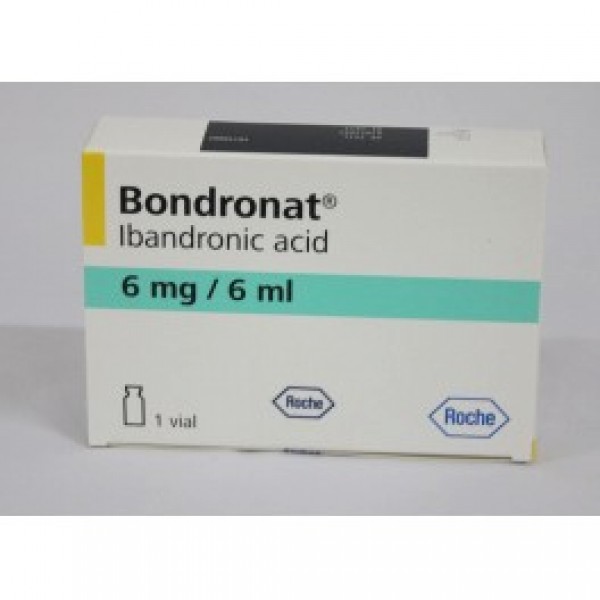
BONDRONAT 6 mg. / 6 ml.
Product Code: BONDRONAT 6 mg. / 6 ml.
Availability: In Stock
Product viewed: 1224


BONDRONAT 6 mg. / 6 ml.
What Bondronat is and what it is used
Bondronat contains the active substance ibandronic acid. It belongs to a group of medicines called bisphosphonates.
Bondronat is used in adults and is prescribed to you if you have breast cancer that has spread to your bones (called bone "metastases").
It helps to prevent your bones from breaking (fractures);
It helps to prevent other bone problems that may require surgery or radiotherapy.
Bondronat can you prescribe if you have high levels of calcium in the blood because of a tumor.
Bondronat works by reducing the amount of calcium that is lost from bones. This helps to stop the weakening of your bones.
2. What you need to know before you get Bondronat
Do not take Bondronat:
if you are allergic to the active substance or any of the other ingredients of this medicine listed in Section 6;
if you have or have had low levels of calcium in the blood.
Do not use this medicine if any of the above applies to you. If you are not sure, talk to your doctor or pharmacist before you are given Bondronat.
Warnings and Precautions
if you are allergic to any other bisphosphonates;
if you have high or low levels of vitamin D, calcium or some minerals;
if you have kidney problems;
If you have problems with your heart and your doctor has recommended to limit your daily fluid intake.
If any of the above applies to you (or are not sure), talk to your doctor or pharmacist before you are given Bondronat.
If you are having dental treatment or surgery or know that you will have need of such treatment in the future, tell your dentist that you are being treated with Bondronat.
There have been reports of serious allergic reaction, sometimes with fatal outcome, in patients treated with ibandronic acid intravenously.
If you receive one of the following symptoms, eg. shortness of breath / difficulty breathing, feeling of tightness in the throat, swelling of the tongue, dizziness, fainting, redness or swelling of the face, rash on the body, nausea and vomiting, you should immediately notify your doctor or nurse (see section 4).
Children and adolescents
Bondronat should not be used in children and adolescents under 18 years of age.
Other medicines, Bondronat
Tell your doctor or pharmacist if you are taking, have recently taken or might take any other medicines. This is because Bondronat can affect the way some other medicines. Also, some other medicines can affect the way of Bondronat.
Tell your doctor or pharmacist, especially if you get a type of antibiotic injection called "aminoglycoside", eg. gentamicin. This is because both drugs, aminoglycosides and Bondronat, can reduce the amount of calcium in your blood.
Pregnancy and lactation
You should not receive Bondronat, if you are pregnant, planning to become pregnant or are breast-feeding.
Ask your doctor or pharmacist before taking this medicine.
Driving and using machines
You can drive and use machines, since it is considered that Bondronat no or negligible influence on your ability to drive or operate machinery. Talk to your doctor first if you want to drive or operate any tools or machines.
Bondronat contains less than 1 mmol sodium (23 mg) per vial, i.e., contains virtually no sodium.
3. How to receive Bondronat
Application of this medicine
Bondronat is usually administered by a doctor or other health professional who has experience with the treatment of cancer;
It is administered as an infusion into a vein.
Your doctor may want to test your blood regularly while receiving Bondronat. This is done to check whether you are not given the proper amount of this drug.
How you apply
Your doctor will decide how much Bondronat you will be given depending on your illness. If you have breast cancer that has spread to your bones, then the recommended dose is 1 vial (6 mg) every 3-4 weeks by intravenous infusion for at least 15 minutes.
If the level of calcium in your blood is increased because of a tumor, then the recommended dose is a single administration of 2 mg or 4 mg depending on the severity of your illness. The drug should be administered as an intravenous infusion over two hours. Can be given a second dose in case of insufficient response or recurrence of your disease.
Your doctor may adjust your dose and duration of intravenous infusion if you have kidney problems.
If you have any further questions on the use of this medicine, ask your doctor or pharmacist.
4. Possible side effects
Like all medicines, this medicine can cause side effects, although not everybody gets them.
Turn immediately to the nurse or doctor if you notice any of the following serious side effects - you may need urgent medical treatment:
Common (may affect up to 1 in 10 people):
flu-like symptoms, including fever, chills and shivering, feeling of discomfort, fatigue, bone pain and aching muscles and joints. These symptoms usually disappear within a few hours or days. Talk to the nurse or your doctor if any of these effects bother you or lasts more than two days.
Rare (may affect up to 1 in 1000 people):
prolonged ocular pain and inflammation;
emerging pain, weakness or discomfort in your thigh, hip or groin. You may be early signs of a possible atypical femur fracture.
Very rare (may affect up to 1 in 10,000 people):
pain or irritation in the mouth or jaw. You may be early signs of serious problems with the jaw (necrosis (dead bone tissue) in the jaw bone);
itching, swelling of the face, lips, tongue and throat, with difficulty breathing. You can have a serious, potentially life-threatening allergic reaction (see section 2).
Other possible side effects
Common (may affect up to 1 in 10 people):
rise in body temperature;
stomach and abdominal pain, indigestion, nausea, vomiting or diarrhea (loose bowel);
low levels of calcium or phosphate in the blood;
changes in blood test results such as gamma GT or creatinine;
heart rhythm problem called "bundle branch block";
pain in the bones or muscles;
headache, dizziness, or weakness;
thirst, sore throat, changes in taste;
swelling of the legs or feet;
joint pain, arthritis or other joint problems;
problems with the parathyroid gland;
bruising;
infections;
an eye problem called "cataract"
skin problems;
dental problems.
Uncommon (affects less than 1 in 100 people):
shivering or tremors;
excessive fall in body temperature (hypothermia);
condition affecting the blood vessels in the brain called "cerebrovascular disorder" (stroke or cerebral haemorrhage);
problems with the heart and circulation (including palpitations, heart attack, hypertension (high blood pressure) and varicose veins);
changes in blood cells (anemia);
a high level of alkaline phosphatase in the blood;
fluid accumulation, and swelling ("lymphoedema");
fluid in the lungs;
stomach problems such as "gastroenteritis" or "gastritis";
gallstones;
inability to pass urine, cystitis (bladder inflammation);
migraine;
pain nerves, nerve root damage;
deafness;
increased sensitivity of sound, taste or touch or changes in smell;
difficulty swallowing;
mouth ulcers, swollen lips ("cheilitis"), oral thrush;
itching or tingling of the skin around the mouth;
pelvic pain, discharge, itching or pain in the vagina;
expansion of skin, called "benign neoplasm of skin";
memory loss;
sleep problems, anxiety, emotional instability, or mood changes;
skin rash;
hair loss;
injury or pain at the injection site;
weight loss;
renal cyst (fluid-filled sac in the kidney).
If you get any side effects, tell your doctor or pharmacist. This includes any possible effects not listed in this leaflet.
5. How to store Bondronat
Keep out of the reach and sight of children.
Do not use this medicine after the expiry date stated on the carton and label accordingly after "EXP" and "EXP". The expiry date refers to the last day of that month.
After dilution the infusion solution is stable for 24 hours at 2-8 ° C (in a refrigerator).
Do not use this medicine if you notice that the solution is not clear or contains particles.
6. Contents of the pack and other information
What Bondronat contains
The active substance is ibandronic acid. One vial with 6 ml concentrate for solution for infusion contains 6 mg of ibandronic acid (as sodium monohydrate).
The other ingredients are sodium chloride, acetic acid, sodium acetate, and water for injection.
Bondronat looks like and contents of the pack
Bondronat is a colorless, clear solution. Bondronat is available in packs containing 1, 5 and 10 vials (6 ml glass type I with bromobutyl rubber stopper).
Not all pack sizes may be marketed.
Write a review
Your Name:Your Review: Note: HTML is not translated!
Rating: Bad Good
Enter the code in the box below:
Related Products
ZOLEDRONIC acid 4 mg. / 5 ml.What Zoledronic acid Sandoz and..
199.00€
OSSICA 3 mg. / 3 ml. 1 ampoule WHAT OSICCA AND WHAT IT IS US..
89.00€
IBANDRONIC Acid 3mg. / 3 ml. 1 vialWhat is Ibandronic acid T..
57.00€