Your shopping cart is empty!
Welcome visitor you can login or create an account.
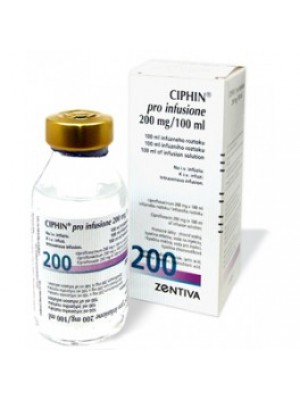
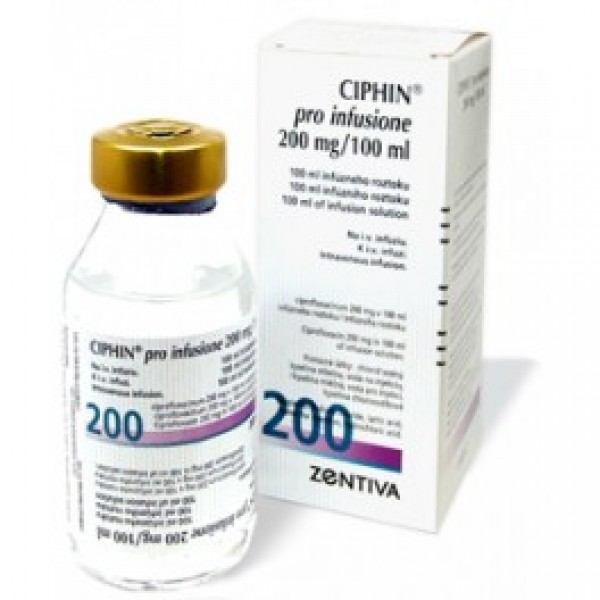
CIPHIN 200 mg. 100 ml.
Product Code: CIPHIN 200 mg. 100 ml.
Availability: In Stock
Product viewed: 1018


CIPHIN 200 mg. 100 ml.
What is CIPHIN infusion and what it is used
CIPHIN infusion is an antibiotic of the fluoroquinolone. The active substance is ciprofloxacin. Ciprofloxacin works by killing the bacteria that caused the infection. Only works on certain types of bacteria.
adults
CIPHIN infusion is used in adults to treat the following bacterial infections:
respiratory tract infections;
prolonged or repeated ear infections or sinus;
urinary tract infections;
infection of the testicles;
infections of genital mutilation;
infections of the gastrointestinal tract, and abdominal infections;
infections of skin and soft tissues;
infections of bones and joints;
for treatment of infections in patients with a very low number of leukocytes in the blood (severe neutropenia);
to prevent infections in patients with a very low number of leukocytes in the blood (severe neutropenia);
inhalation of anthrax spores.
If you suffer from a severe infection or one caused by more than one type of bacteria you may be given additional antibiotic treatment than CIPHIN infusion.
Children and adolescents
CIPHIN infusion be used in children and adolescents under specialist medical supervision, to treat the following bacterial infections:
acute pulmonary infections in children and adolescents suffering from cystic fibrosis;
complicated urinary tract infections, including infections that have reached the kidneys (pyelonephritis);
inhalation of anthrax spores.
CIPHIN infusion can also be used to treat other specific severe infections in children and adolescents when your doctor deems it necessary.
2. What you should know before using CIPHIN infusion
Do not use CIPHIN infusion:
are allergic (hypersensitive) to the active substance or to any of the ingredients of CIPHIN infusion (see. point 6);
taking tizanidine (see. Section 2: Taking other medicines).
Before you take CIPHIN infusion
Tell your doctor if:
you have ever had kidney problems because your treatment needs to be corrected;
suffer from epilepsy or other neurological diseases;
have a history of tendon problems during previous treatment with antibiotics such CIPHIN infusion;
have myasthenia gravis (a type of muscle weakness);
have a history of abnormal heartbeat (arrhythmias);
you have ever had heart problems, it is necessary caution when using this type of medication, if you were born with or have a family history of QT prolongation (seen on ECG, electrical recording of the heart), you have an imbalance of salts in the blood (especially low of potassium or magnesium in the blood), have a very slow heart rhythm (called 'bradycardia'), have a weak heart (heart failure), have a history of heart attack (myocardial infarction), you are a woman or if you are elderly or taking other medicines leading to abnormal ECG changes (see section Taking other medicines).
While taking CIPHIN infusion
Tell your doctor immediately if you experience any of the following symptoms while taking CIPHIN infusion. Your doctor will decide whether treatment with CIPHIN infusion should be discontinued.
Severe, sudden allergic reaction (anaphylactic reaction / shock, angioedema). Even with the first dose, there is a small chance that you may experience a severe allergic reaction with the following symptoms: tightness in the chest, feeling dizzy, sick or faint, or experiencing dizziness when standing up. If you this happens, tell your doctor as infusion CIPHIN infusion should be discontinued;
Pain and swelling in the joints and tendinitis may occur occasionally, particularly if you are elderly and are also being treated with corticosteroids. At the first sign of pain or inflammation, applying CIPHIN infusion should be discontinued and let rest the painful area. Avoid any unnecessary exercise, as this may increase the risk of tendon rupture;
If you suffer from epilepsy or other neurological conditions such as cerebral ischemia or stroke, you may experience reactions associated with the central nervous system. If this happens to you, tell your doctor as infusion CIPHIN infusion should be stopped;
The first time you take CIPHIN infusion is possible to get psychiatric reactions. If you suffer from depression or psychosis, possibly your symptoms get worse during treatment with CIPHIN infusion. If this happens to you immediately contact your doctor as CIPHIN infusion should be stopped;
When you can experience symptoms of neuropathy such as pain, burning, tingling, numbness and / or weakness. If this happens to you immediately contact your doctor, because CIPHIN infusion should be stopped;
You may develop diarrhea while taking antibiotics, including CIPHIN infusion, or even several weeks after you stop taking them. If it becomes severe or persistent or you notice that your stool contains blood or mucus tell your doctor immediately CIPHIN infusion should be stopped, because this condition can be life threatening. Do not take medicines that stop or slow down bowel movements;
Tell the doctor or laboratory staff that you are taking CIPHIN infusion, if you take a sample of blood or urine;
CIPHIN infusion may cause liver damage. If you notice symptoms such as loss of appetite, jaundice (yellowing of the skin extraction), dark urine, itching, or tenderness of the stomach immediately contact your doctor as CIPHIN infusion should be stopped;
CIPHIN infusion can reduce the number of white blood cells and your resistance to infection may be decreased. If you have an infection with symptoms such as fever and serious deterioration of your general condition, or fever with local infection symptoms such as sore throat / pharynx / mouth or urinary problems, you should immediately see your doctor. A blood test will check possible reduction of white blood cells (agranulocytosis). It is important to tell your doctor about your medicine;
Tell your doctor if a member of your family have glucose-6-phosphate dehydrogenase (G6PG), since you may experience a risk of anemia with ciprofloxacin;
When taking CIPHIN infusion your skin becomes more sensitive to sunlight and ultraviolet rays. Avoid exposure to strong sunlight or artificial sources of UV light such as sunbeds.
Other medicines and Tsifin infusion
Tell your doctor or pharmacist if you are taking, have recently taken or might take any other medicines.
Do not take CIPHIN infusion together with tizanidine, because this may lead to side effects such as low blood pressure and sleepiness (see. M, 2 "Do not take CIPHIN infusion").
It is known that these drugs interact with CIPHIN infusion in your body. If you take CIPHIN infusion together with this medicine, it is possible to change their curative effects. Also, it can increase the probability of experiencing side effects.
Tell your doctor if you take:
warfarin or other anticoagulants (blood thinners);
probenecid (gout);
methotrexate (for certain types of cancer, psoriasis, rheumatoid arthritis);
theophylline (for breathing problems);
tizanidine (for muscle spasms in multiple sclerosis);
clozapine (an antipsychotic);
ropinirole (for Parkinson's disease);
phenytoin (for epilepsy).
CIPHIN infusion may increase the levels of these medicines in your blood
pentoxifylline (for circulatory disorders);
caffeine.
Tell your doctor if you take other medicines that can disrupt your heart rhythm: medicines that belong to the group of anti-arrhythmics (eg. Quinidine, hydroquinidine, disopiramid, amiodarone, sotalol, dofetilide, ibutilide), tricyclic antidepressants, some antimicrobials (belonging to the group of macrolides), some antipsychotics.
CIPHIN infusion with food and drink
Food and drink do not affect your treatment with CIPHIN infusion.
Pregnancy, lactation and fertility
If you are pregnant or breast-feeding, think you may be pregnant or planning to become pregnant, ask your doctor or pharmacist before taking this medicine.
It is preferable to avoid the use of CIPHIN infusion during pregnancy. Tell your doctor if you are planning to become pregnant.
Do not take CIPHIN infusion during breast-feeding because ciprofloxacin is excreted in breast milk and may harm your child.
Driving and using machines
CIPHIN infusion can reduce your attention. Some neurological adverse events can occur. So check how you react to CIPHIN infusion before driving a vehicle or operating machinery. If in doubt, consult your doctor.
CIPHIN infusion contains sodium
This medicinal product contains 15,4 mmol sodium 200 mg. This information should be considered in patients on a controlled sodium diet.
3. How to use CIPHIN infusion
Your doctor will tell you how much CIPHIN infusion will be administered, how often and for how long. This depends on the type of infection and the weight of it. Tell your doctor if you suffer from kidney problems because they may require dose adjustment. Treatment usually lasts 5 to 21 days but may be longer for severe infections.
Your doctor will apply each dose by slow infusion through a vein into your bloodstream. For children the infusion time is 60 minutes. For adult patients, infusion time is 30 minutes for 200 mg CIPHIN infusion. The infusion slowly helps to avoid the immediate effects of the site of application.
Remember to drink plenty of fluids when taking CIPHIN infusion.
If you stop taking CIPHIN infusion
It is important to complete the course of treatment even if after a few days you are already better. If you stop taking the drug too early your infection may not be completely cured and it is possible the symptoms reappear or worsen. It is possible to develop resistance to the antibiotic.
If you have any further questions on the use of this medicine, ask your doctor or pharmacist.
4. Possible side effects
Like all medicines, this medicine can cause side effects, although not everybody gets them.
If you get any side effects, tell your doctor or pharmacist. This includes any possible effects not listed in this leaflet.
Common side effects (between 1 and 10 in every 100 patients may get these):
nausea, diarrhea, vomiting;
joint pain in children;
local irritation at the application site rash;
temporarily increase the amount of certain substances in the blood (transaminases).
Uncommon side effects (between 1 and 10 in every 1,000 patients can receive them):
fungal superinfection;
high levels of eosinophils, a type of white blood cells, increased or decreased blood clotting factors (platelets);
loss of appetite (anorexia);
hyperactivity, agitation, confusion, disorientation, hallucinations;
headache, dizziness, trouble sleeping, abnormal taste sensations, pins and needles, unusual sensitivity to sensory stimuli, seizures (see Section 2: Take special care with CIPHIN infusion);
dizziness;
vision problems;
hearing loss;
increase in heart rate (tachycardia);
dilation of blood vessels (vasodilation), low blood pressure;
abdominal pain, digestive problems such as stomach disorders (indigestion / heartburn), flatulence;
liver disorders, increased levels of certain substances in the blood (bilirubin), jaundice (cholestatic jaundice);
rash, itching;
joint pain in adults;
impaired renal function, renal failure;
pain in the muscles and bones, feeling unwell (asthenia), fever, fluid retention;
elevations of alkaline phosphatase in the blood (a substance in the blood).
Rare side effects (between 1 and 10 in every 10,000 patients may get these):
inflammation of the colon (colitis) associated with the use of antibiotics (in very rare cases can be fatal) (see. Section 2: Take special care with CIPHIN infusion);
changes in the blood count (leukopenia, leukocytosis, neutropenia, anemia), low number of red and white blood cells and platelets (pancytopenia), which may be fatal; Bone marrow suppression, which can also be fatal (see. Section 2: Take special care with CIPHIN infusion);
allergic reactions, allergic swelling (edema), or rapid swelling of the skin and mucosa (angioedema), severe allergic reactions (anaphylaxis), which can be life-threatening (see. Section 2: Take special care with CIPHIN infusion);
high blood sugar (hyperglycemia);
reaction of anxiety, abnormal dreams, depression, mental disorders (see. point Take special care with CIPHIN infusion);
decreased skin sensitivity, tremors, migraine, impaired sense of smell (olfactory nerve disorders);
tinnitus, hearing impairment;
seizures, inflammation of the wall of blood vessels (vasculitis);
shortness of breath, including asthmatic symptoms;
pancreatic;
hepatitis, death of liver cells (liver necrosis) very rarely leading to life-threatening liver failure;
sensitivity to light (see. Section 2: Take special care with CIPHIN infusion), small petechial hemorrhages under the skin (petechiae);
muscle pain, inflammation of the joints, increased muscle tone, cramping, tendon rupture - especially of the large tendon at the back of the ankle (Achilles tendon) (see. Section 2: Take special care with CIPHIN infusion);
blood or crystals in the urine (see. Section 2: Take special care with CIPHIN infusion), urinary tract inflammation;
excessive sweating;
abnormalities of one of the clotting factors (prothrombin) or increased levels of the enzyme amylase.
Very rare side effects (less than 1 in every 10,000 patients may get these):
certain type of reduction in the number of red blood cells (hemolytic anemia);
a dangerous decrease in the number of white blood cells (agranulocytosis);
severe allergic reactions (anaphylactic reaction, anaphylactic shock, serum sickness) which can be fatal (see. Section 2: Take special care with CIPHIN infusion);
disorders of coordination, unsteady walk (gait disturbance), increased pressure in the brain (intracranial pressure);
changes in perception of colors;
various skin rashes (eg the potentially fatal Stevens-Johnson and toxic epidermal necrolysis);
muscle weakness, inflammation of the tendons, worsening of symptoms of myasthenia gravis (see. Section 2: Take special care with CIPHIN infusion).
Not known (from the available data can not be estimated):
problems with the nervous system such as pain, burning, tingling, numbness and / or weakness in the limbs;
severe heart rhythm disorders, irregular heartbeat (Torsades de Pointes);
Abnormally fast heart rate, life-threatening irregular heartbeat, variation in heart rate (called "QT prolongation" which is seen in ECG, electrical activity of the heart).
5. How to store CIPHIN infusion
Keep out of reach of children.
Do not use this medicine after the expiry date stated on the carton after "EXP". The expiry date refers to the last day of that month.
Do not store above 25 ° C. Protect from moisture and light.
When mixing Tsifin 200 mg / 100 ml solution for infusion with other compatible solutions, the resulting solutions remain stable for 24 hours if kept at 5 ° C.
Do not dispose of medications in wastewater or household waste. These measures will help to protect the environment.
6. Contents of the pack and other information
What CIPHIN infusion
The active substance is ciprofloxacin 200 mg in 100 ml solution.
The excipients are sodium chloride, lactic acid, water for injections, hydrochloric acid.
Looks CIPHIN 200 mg / 100 ml solution for infusion and contents of the pack
Tsifin infusion is a clear, colorless or slightly yellow solution.
Contents of 1 package: 100 ml solution for infusion.
Write a review
Your Name:Your Review: Note: HTML is not translated!
Rating: Bad Good
Enter the code in the box below:
Related Products