
Your shopping cart is empty!
Welcome visitor you can login or create an account.
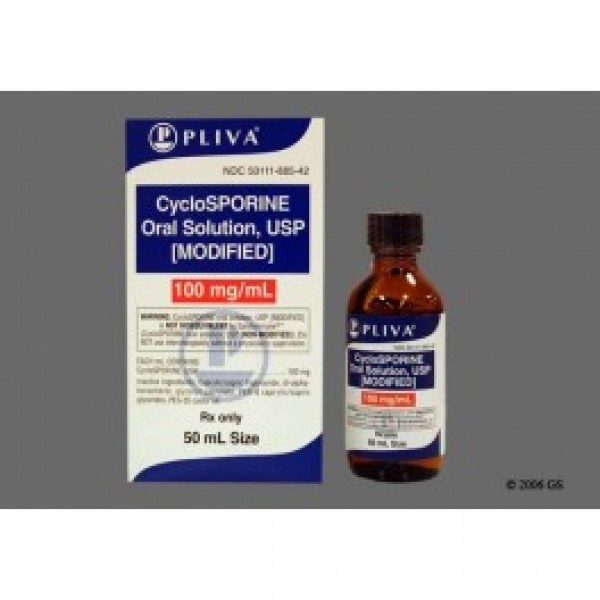
Cyclosporin solution of 100 mg. / Ml. 50 ml.
Product Code: Cyclosporin solution of 100 mg. / Ml. 50 ml.
Availability: In Stock
Product viewed: 1060


Cyclosporin solution of 100 mg. / Ml. 50 ml.

WHAT cyclosporine alkaloids AND WHAT IT IS USED
Cyclosporine is an immunosuppressant . It suppresses the immune system and reduces inflammation .
Cyclosporine is prescribed to prevent rejection of novotransplantirani organs or bone marrow. Cyclosporine is also used to treat severe psoriasis , kidney disease (nephrotic syndrome) , severe arthritis and severe eczema ( atopic dermatitis) .
2 . BEFORE receiving cyclosporine alkaloids
Do not take Cyclosporine Alkaloid :
If you are allergic (hypersensitive) to cyclosporine or to any of the ingredients of Cyclosporine Alkaloid (listed under " Further information") ;
If you take this drug for the treatment of psoriasis and other skin conditions or severe rheumatoid arthritis and have kidney problems. If you are taking this medicine for the treatment of nephrotic syndrome , continue treatment under very close supervision of your doctor ;
If you have other kidney diseases other than nephrotic syndrome;
If you have psoriasis and are treated with PUVA ( psoralen and UV- A), UVB ( UV- B), tar , radiotherapy or other immunosuppressants ;
If you have uncontrolled high blood pressure;
If you suffer from uncontrolled infection ;
If you have reported having some type of tumor;
If you are taking medicines / herbal products containing Hypericum perforatum ( St. John's wort ) ;
If you have rheumatoid arthritis and you are under 18 years of age;
If you are taking tacrolimus ;
If you are taking rosuvastatin ;
If you are breastfeeding .
Take special care with Cyclosporin Alkaloid :
Tell your doctor if any of these apply to you:
If you are treated with other immunosuppressants (eg methotrexate) ;
If your diet includes large amounts of potassium , or are taking medicines that contain potassium ( ask your doctor ) ;
If you suffer from low blood magnesium levels ;
If you have a high content of uric acid in the blood (eg if you have kidney disease or certain type of arthritis) ;
If you suffer from an increased amount of lipids in the blood ;
If you have impaired renal and / or hepatic function ;
If you have high blood pressure or if you are treated for high blood pressure ( potassium- sparing diuretics, ACE inhibitors, antagonists of angiotensin II).
Cyclosporin alkaloids are prescribed by a doctor , a specialist in organ transplantation , dermatology (skin diseases) , nephrology ( kidney disease ) or rheumatology.
Patients treated with cyclosporine should avoid excessive unprotected sun exposure.
Patients treated with cyclosporine, should regularly monitor the blood pressure and renal function. By regularly taking blood control the concentration of cyclosporine and blood lipids , and liver function. Concentration of cyclosporine in the blood is monitored when taking other drugs or when drug treatment was discontinued . Please tell your doctor if you suffer from acute untreated infection with drugs .
Recommended regular dental checkups.
Taking other medicines
Please tell your doctor or pharmacist if you are taking or have recently taken any other medicines, including medicines obtained without a prescription.
The following medicines may decrease the effect of cyclosporine :
Barbiturates , carbamazepine , phenytoin , phenobarbital ; primidone ( for epilepsy ) , nafcillin , rifampicin, griseofulvin, sulfadiazine , trimethoprim and sulfadimidine intravenous ( antibiotic) ; octreotide ( a drug that inhibits the release of certain hormones) ; probucol (for the treatment of high cholesterol ) , orlistat (for the treatment of obesity) ; troglitazone (for the treatment of diabetes mellitus type II ) ; ticlopidine (to prevent blood clotting) , metamizol ( analgesic ), Hypericum perforatum ( St. John's wort ) .
These drugs increase the effect of cyclosporine :
Macrolide antibiotics such as erythromycin, doxycycline , dzhosamitsin , roxithromycin , clarithromycin and pristinamycin (antibiotics ) ; ketoconazole , fluconazole, itraconazole ( antifungal agents ) ; diltiazem, nicardipine, verapamil ( used to treat high blood pressure and heart disease ) ; metoclopramide ( an antiemetic ) ; oral contraceptives ; danazol ( for conditions associated with pain ) ; bromocriptine ( for treating Parkinson's disease and infertility ) ; high doses of methylprednisolone ( anti ) ; allopurinol ( for treating arthritis ) ; amiodarone, propafenone (for the treatment of cardiac arrhythmia ) ; cimetidine , ranitidine ( lowering the acidity in the stomach ) ; Chloroquine ( malaria ) ; protease inhibitors (for the treatment of HIV- infection ) .
Cyclosporine may increase the effect of the following medicines:
Diclofenac ( for rheumatic pain ) ; digoxin (for the treatment of cardiac arrhythmia ) ; colchicines ( for treating arthritis ) ; Lovastatin , pravastatin , simvastatin , atorvastatin (for the treatment of high cholesterol ) ; prednisolone ; nifedipine ( for high blood pressure and heart disease ) .
Other drugs that may interact with cyclosporine : aminoglycosides ( such as gentamicin and tobramycin ) ciprofloxacin , vancomycin ( an antibiotic) ; amphotericin B ( antifungal ) ; sulfamethoxazole ( for urinary infections) ; NSAIDs ( for rheumatic pain) ; melphalan ( cytostatic ) ; tacrolimus and sirolimus ( immunosuppressants) .
Vaccines may be less efficient during the treatment with cyclosporin .
Ciclosporin Alkaloid with food and drink
Cyclosporine can be taken regardless of meals.
Grapefruit juice should be avoided because it may increase the effect of cyclosporine .
Pregnancy and lactation
Ask your doctor or pharmacist before taking any medicine .
pregnancy
If you are pregnant , planning to become pregnant or if you become pregnant during treatment with cyclosporine, tell your doctor immediately . Cyclosporine should not be taken during pregnancy unless your doctor has discussed this before.
breastfeeding
Cyclosporine should not be taken during breastfeeding .
Driving and using machines
Cyclosporine did not affect the ability to drive and use machines. Cyclosporin contains ethanol and if it has an effect on you , you should not drive or operate machinery.
Important information about some of the ingredients of Cyclosporine Alkaloid
Cyclosporin Alkaloid contained 12.7 vol. % Ethanol ( alcohol ), i.e. to 525 mg per dose , which is equivalent to 13 ml of beer or wine 6 ml per dose. This may be harmful to people suffering from alcoholism . To be considered for pregnant and lactating women in high - risk groups of patients with liver disease or epilepsy, if this drug is prescribed to a child.
3 . HOW TO TAKE cyclosporine alkaloids
Always take Cyclosporine Alkaloid exactly as your doctor tells you . If you are not sure, ask your doctor or pharmacist.
The daily dose of cyclosporine should always be in two divided doses , morning and evening respectively .
1. Lift the cover at the center of the metal sealing ring .
2 . Tear the metal sealing ring.
3 . Carefully remove the black rubber seal and discard.
4 . Sondichkata dispensed from the package with the attached white stop and put it in the bottle by attaching the restrictor firmly into the neck of the bottle.
5 . Insert the syringe nozzle ( dispenser ) in the white limiter .
6 . Pull the plunger until the drug filled syringe to the level prescribed by the physician.
7 . If the syringe appear large air bubbles , push the plunger all the way down and aspirate the solution several times to expel bubbles . Once you get rid of large air bubbles weighed again prescribed amount . The presence of several tiny air bubbles does not affect the dose.
8 . After use, clean the outside of the syringe with a clean dry cloth and place it back in its protective shell. White sondichkata stop and remain permanently in the bottle. Close the bottle .
The next time you use this medicine , start from point 5 .
Alkaloid cyclosporine can be taken with water. To enhance the flavor solution may be diluted with a orange or apple juice. Should never be used grapefruit juice. Moreover , eat or drink grapefruit , grapefruit juice , at least one hour prior to dosing, as this may result in reaction with your medicine .
Organ transplantation :
Individual dosage . It is very careful to follow the doctor's prescription .
Bone marrow transplantation :
Individual dosage . It is very careful to follow the doctor's prescription .
Nephrotic syndrome (kidney disease):
The recommended starting dose for adults is 5 mg / kg weight per day in two divided doses , and 6 mg / kg weight for children. Should regularly monitor the concentration of cyclosporine . In patients with impaired renal function, the initial dose should not exceed 2,5 mg / kg body weight per day.
Rheumatoid arthritis :
The recommended initial dose is 2,5-5 mg / kg body weight per day in two divided doses . To achieve full therapeutic effect , treatment with cyclosporine may last up to 12 weeks.
psoriasis:
The recommended oral starting dose 2,5 mg / kg body weight per day in two divided doses . After one month , the daily dose can be gradually increased to a maximum of 5 mg / kg bodyweight. For maintenance treatment, the dose will be adjusted individually to achieve the lowest clinically effective dose.
Atopic dermatitis :
Treatment of this condition is determined individually, as the severity of the disease varies greatly . The recommended dose is 2,5-5 mg / kg body weight per day, in two divided doses orally .
Elderly :
No special dosage adjustment . Consult with your doctor.
children:
Experience in children is limited. However, cyclosporine is appointed to children over 1 year old at the recommended dose without being noticed particular problems.
If you take more dose Cyclosporin Alkaloid
Immediately contact your doctor or the emergency room .
If you forget to take Cyclosporine Alkaloid
Take the missed dose as soon as you remember unless it is almost time for your next dose . In this case proceed as directed by the missed dose.
Do not take a double dose to make up for a missed dose.
If you have any questions about using this medicine , consult your doctor or pharmacist.
4 . POSSIBLE SIDE EFFECTS
Like all medicines Alkaloid Cyclosporine can cause side effects, although not everybody gets them .
Very common (affects more than 1 in 10 users of the product) :
Elevated blood lipids ( e.g. cholesterol) , tremor, headache , hypertension , renal troubles.
Common (affects 1 to 10 out of 100 users of the product) :
Increased uric acid , blood potassium levels, low blood magnesium , numbness, tingling , abnormal skin sensation (paraesthesia), loss of appetite , nausea, vomiting, stomach pain , diarrhea , swelling of the gums, liver problems , excessive hair growth , muscle cramps or pain , fatigue .
Uncommon ( affects 1 to 10 out of every 1,000 users of the product) :
Anemia , low platelet count, signs of neurological disorder (eg, seizures , confusion, a sense of disorientation , decreased reactivity , anxiety, insomnia , blurred vision , blindness , partial muscle paralysis , impaired muscular coordination , coma ), rash, fluid retention, weight gain and development of malignant tumors.
Rare (affects 1 to 10 users in 10,000 users of the product) :
Anemia in small blood vessels, haemolytic uraemic syndrome (acute renal failure and anemia) , menstrual disorders, breast enlargement in men , increased blood glucose, progressive muscle weakness , pancreatitis, muscle weakness or stiffness and spasms .
Very rare (affects less than 10,000 of each user of the product) :
Swelling of the optic nerve with possible visual impairment in cases of benign intra cranial pressure rise ( increased pressure in the brain) .
If any of the side effects gets serious, or you notice other effects not listed in this leaflet , please tell your doctor or pharmacist.
5 . HOW TO STORE cyclosporine alkaloids
Keep out of reach of children.
Do not store above 25 ° C.
Cyclosporin Alkaloid not use after the expiry date stated on the label . The expiry date refers to the last day of that month.
The oral solution can be used two months after opening the bottle.
Medicines should not be disposed of via wastewater or household waste. Ask your pharmacist how to dispose of medicines no longer required . These measures will help to protect the environment.
6 . FURTHER INFORMATION
Alkaloid contents of Cyclosporine
The active ingredient is cyclosporine .
One ml of oral solution contains 100 mg of cyclosporine .
Other ingredients are: ethanol, anhydrous ; tokoferilatsetat ; diethylene glycol monoethyl ether ; oleoyl macrogolglycerides ; makrogolglitserolov Hydroxystearate .
Cyclosporin Alkaloid looks like and contents of pack
Alkaloid cyclosporine 100 mg / ml oral solution is clear and colorless solution in amber bottle with plastic cover and aluminum cap. In the pack includes kits dosage for adults and children.
Alkaloid cyclosporine 100 mg / ml oral solution is supplied in a pack of a bottle of 50 ml.
Write a review
Your Name:Your Review: Note: HTML is not translated!
Rating: Bad Good
Enter the code in the box below:
Related Products
Cyclosporine. 100 mg. 50 capsules WHAT cyclosporine alkaloi..
129.00€
Cyclosporine. 100 mg. / Ml. 50 ml.WHAT cyclosporine alkaloid..
129.00€