
Your shopping cart is empty!
Welcome visitor you can login or create an account.
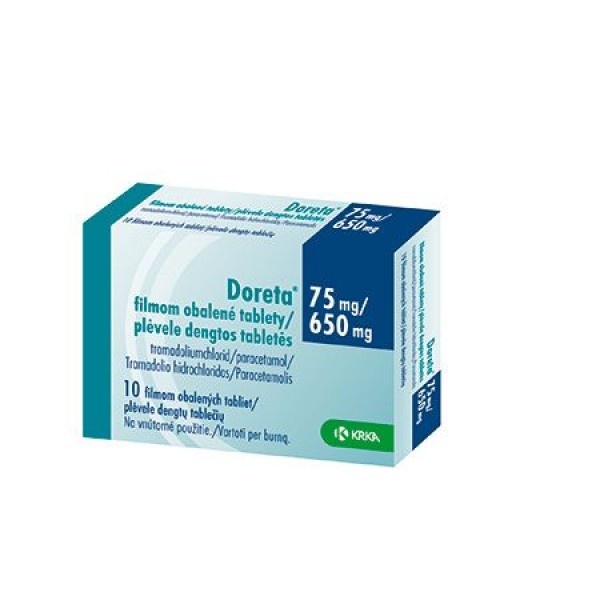
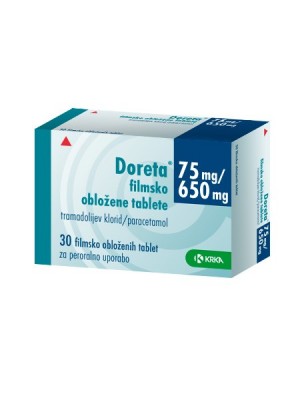
DORETA 75 mg. / 650 mg. 10 tablets
Product Code: DORETA 75 mg. / 650 mg. 10 tablets
Availability: In Stock
Product viewed: 4989


WHAT DOES DO DORETA AND WHAT IT IS USED FOR?
Doreta is a combination of two analgesics (analgesics) - tramadol and paracetamol that work together to relieve your pain.
The Doreta is intended for the treatment of moderate to severe pain when your doctor thinks you need the combination of tramadol and paracetamol.
2. BEFORE YOU TAKE THE DORETA
Do not take Doreta if:
Are allergic (hypersensitive) to paracetamol, tramadol or any of the other ingredients of this medicine (listed in section 6);
Drink alcohol;
Take any medication that makes you sleepy or lowers your concentration, such as opiate drugs that relieve pain like morphine and codeine;
Take monoamine oxidase inhibitors (MAO) for treatment, e.g. Of depression or have received it in the last 2 weeks;
You suffer from a severe liver disorder;
You have epilepsy that is not well controlled with the medicines you are taking.
Warnings and precautions
Talk to your doctor or pharmacist before using Doretta.
Take special care with Doreta if:
You have kidney problems;
You have liver problems or alcoholic liver disease, or if you notice yellowing of your eyes and skin. This may be due to jaundice or biliary tract problems;
You have difficulty breathing, for example asthma or lung problems;
You have dependence on any medicines, including those used to relieve pain, such as morphine;
You have epilepsy or have had seizures or seizures;
You have suffered from head trauma, shock or severe headache, which may or may not be associated with vomiting;
Take other medicines containing tramadol and paracetamol.
Other Drugs and Dorae
Please tell your doctor or pharmacist if you are taking, have recently taken or might take any other medicines.
The risk of side effects is increased:
If you are taking medicines that can cause convulsions (seizures), such as certain antidepressants and antipsychotics. The risk of getting a seizure may increase if you take Doretha at the same time. Your doctor will tell you if Dorothea is suitable for you;
If you take some antidepressants, Dorea can interact with these medicines and you may experience symptoms like unconscious, rhythmic contractions of the muscles, including muscles that control eye movement, agitation, excessive sweating, tremor, exacerbation of reflexes, increased muscle tension, Body temperature above 38 ° C.
The dorset should not be taken at the same time as the following medicines:
Monoamine oxidase inhibitors (MAOIs);
Pulmonary drugs that contain opiates like morphine and codeine.
Dorset is not recommended for use with the following medicines:
Carbamazepine - used to treat epilepsy or facial neuralgia (strong facial pain attacks);
Opioid analgesics used to treat moderate to severe pain, e.g. Buprenorphine, nalbuphine and pentazocine.
Under certain circumstances, the Dora may be taken with the following medicines:
Serotonin Reuptake Inhibitors (SSRIs) used to treat depression. Serotonin syndrome has been reported in association with the therapeutic use of tramadol in combination with other serotonergic drugs, such as selective serotonin reuptake inhibitors and tryptans. Signs of serotonin syndrome may be, for example, confusion, agitation, fever, sweating, ataxia, hyperreflexia, myoclonus and diarrhea;
Some morphine-like drugs that are used, for example, to prevent or alleviate cough;
Sedatives, for example benzodiazepines;
Sleeping pills, eg barbiturates;
Some medicines used to lower blood pressure;
Thalidomide;
Baclofen used as a muscle relaxant;
Warfarin used to dilute blood;
CYP3A4 inhibitors, eg ketoconazole (antifungal) or erythromycin (antibacterial);
Bupropion used to help people stop smoking;
Tricyclic antidepressants;
Soothing.
Taking the following medicines together with the Doretha may affect the effect of the Doreto in your body:
Metoclopramide and domperidone used for nausea and vomiting;
Cholestyramine used to lower cholesterol levels in the blood.
Surgery and tests
Tell your doctor or dentist that you are taking Doretha before being subjected to general anesthesia.
Doreta's intake of food, drink, and alcohol
The duoden can be taken with or without food.
The downy can cause drowsiness. Alcohol can make you feel drowsy. Alcohol enhances the sedative effect of opioid analgesics, may affect concentration when driving and operating machinery, and thus make it dangerous. Avoid taking alcohol or other products containing alcohol.
Pregnancy and breastfeeding
If you are pregnant or breast-feeding, think you may be pregnant or planning to become pregnant, ask your doctor or pharmacist for advice before taking this medicine.
Because Dorreta is a fixed combination of active substances including tramadol, you should not take this medicine during pregnancy and lactation.
Driving and using machines
Do not drive, operate machinery or perform any other activities requiring attention until you know how your Doe works. The dove may make you feel drowsy.
3. HOW TO ACCEPT THE DORETA
Always take Doreta exactly as your doctor has told you. If you are not sure, ask your doctor or pharmacist.
The usual starting dose is one tablet. If necessary, additional doses may be taken as recommended by your doctor.
Do not take more than 4 tablets daily (equivalent to 300 mg tramadol hydrochloride and 2600 mg paracetamol).
The dosage should be determined by the intensity of your pain and your individual pain tolerance. In principle, the lowest pain relief dose should be taken.
Severe hepatic impairment (deficiency)
Patients with severe hepatic insufficiency should not take Doretha. If your injury is mild to moderate, your doctor may recommend you to extend the time between doses.
Use in children
The dowry is not recommended for use by children under the age of 12 years.
Elderly patients
In the elderly (over 75 years), tramadol excretion may be delayed. If this applies to you, your doctor may recommend an extension of the time between doses.
The tablets should be swallowed with sufficient fluid. They can be divided into two equal doses. However, they should not break or chew.
The tablets should be taken for the shortest possible time.
If you think that the effect of Doretha is too strong (eg it results in severe drowsiness or difficulty in breathing) or too weak (eg your pain is not relieved enough), contact your doctor or pharmacist. If you do not get the symptoms, you should consult your doctor.
If you take more Doreta than you should
Immediate medical attention should be sought in case of overdosage, even if you feel good due to the risk of delayed, severe liver damage.
If you have taken more Droughts than you should, you may experience severe organ disorders, conscious coma, convulsions, or you may have difficulty breathing, feeling sick, vomiting, weight loss, or feeling sore in the stomach.
If you fail to take Doreha
Do not take a double dose to make up for a forgotten tablet.
If you miss a dose of Doreta, take the next tablet at the usual time.
If you stop taking Doreta
If you have been taking the Doreta for a while, you should talk to your doctor if you want to stop it because your body may be accustomed to it. If you suddenly stop taking Dorea, you may feel sick. You may experience anxiety, agitation, nervousness, insomnia, hyperactivity, tremor and / or stomach upset.
If you have any further questions on the use of this product, ask your doctor or pharmacist.
4. POSSIBLE ADVERSE PERSPECTIVES
Like all medicines, Doreta can cause side effects, although not everyone gets them.
Very common side effects (occurring in more than 1 in 10 treated patients):
Nausea;
Dizziness;
Drowsiness.
They are usually light and do not cause problems.
Common side effects (occurring in up to 1 in 10 treated patients):
Vomiting;
Problems with digestion (constipation), gas (flatulence), diarrhea;
Tummy ache;
Dry mouth;
Headache;
Shaking;
Confusion;
Sleep disturbances;
Changes in mood (anxiety, nervousness, euphoria (mood up all the time));
Increased sweating;
Pruritus.
Uncommon side effects (occurring in up to 1 in 100 treated patients):
High blood pressure, abnormal heart rate and heart rate;
Difficulty or pain in urine / protein release in the urine;
Skin reactions (hives, rash);
Noise in the ears;
Depression;
Nightmares;
Hallucinations (hearing, seeing or feeling of things that do not exist);
Memory loss;
Difficulty swallowing;
Blood in the stool;
Shaking;
Hot waves;
Chest pain;
Unconscious muscle twitching;
Muscle spasms;
Unusual tingling ("needles");
Shortness of breath;
Elevated liver enzymes.
Rare side effects (occurring in less than 1 in 1000 treated patients):
Drug dependence;
Seizures, difficulties in implementing coordinated movements;
Blurred vision;
Temporary loss of consciousness.
Very rare side effects (occurring in up to 1 in 10,000 treated patients):
Drug Abuse.
Adverse reactions of unknown frequency (frequency can not be estimated from the available data):
Lowering blood sugar levels.
The following are listed as side effects that have been reported by people using drugs that only contain tramadol hydrochloride or paracetamol. However, if you experience any of these side effects while taking Dorea, you should tell your doctor:
Feeling dizzy from standing or sitting, heart rhythm retardation, seizures, appetite changes, muscle weakness, delayed or superficial breathing, mood swings, change in activity, changes in perceptions, worsening of asthma;
In some rare cases, a skin rash showing an allergic reaction may develop with a sudden swelling of the face and neck, difficulty in breathing or dropping blood pressure and seizure. If this happens to you, stop the treatment and seek a doctor immediately. You should not take the medicine again.
In rare cases, using a tramadol-type drug can make you dependent on it, making it difficult to stop taking it.
In rare cases, people taking tramadol for some time may feel unwell if they stop taking it suddenly. They may feel overwhelmed, anxious, nervous or insecure. They may be hyperactive, have difficulty falling asleep, have stomach or intestinal malaise. Very few people could also experience a panic attack, hallucinations, unusual sensations such as itching, tingling, numbness and tinnitus (tinnitus). If you notice any of these effects or any other unusual symptoms, please tell your doctor or pharmacist immediately.
Exceptionally, blood tests may reveal certain deviations from the norm, such as a low platelet count in the blood, which may cause bleeding from the nose or gums.
The use of Doceta plus medicines used to thin the blood (eg phenoprocouumone, warfarin) may increase the risk of bleeding. Any prolonged or unexpected bleedings should be reported to your doctor immediately.
5. HOW TO STORE Doreta
Keep out of the reach and sight of children.
Do not use Doreta after the expiry date which is stated on the carton and blister.
The expiry date refers to the last day of that month.
This medicinal product does not require any special storage conditions.
Do not dispose of any medication in the sewers or the household waste container. Ask your pharmacist how to dispose of medicines you no longer use. These measures will help to protect the environment.
6. ADDITIONAL INFORMATION
What Doreta contains
The active substances are: tramadol hydrochloride and paracetamol. Each film-coated tablet contains 75 mg tramadol hydrochloride equivalent to 65.88 mg tramadol and 325 mg paracetamol.
The other ingredients are:
Tablet core: pregelatinized maize starch, sodium starch glycolate (type A), microcrystalline cellulose (E460) and magnesium stearate (E572).
Film Coating: Hypromellose (E464), Macrogol 400, Polysorbate 80, Titanium Dioxide (E171), Yellow Iron Oxide (E172), and Red Iron Oxide (E172).
What Doreta looks like and what the package contains
The film-coated tablets are pale orange, oval, convex, with a wide dividing line on both sides, dimensions: 20 mm x 8 mm. The tablet can be divided into 2 equal halves.
Packs of 10, 20, 30, 40, 50, 60, 70, 80, 90, and 100 film-coated tablets (10-tablet blisters) are available.
Not all pack sizes may be marketed.
Write a review
Your Name:Your Review: Note: HTML is not translated!
Rating: Bad Good
Enter the code in the box below:
Related Products
WHAT DOES DO DORETA AND WHAT IT IS USED FOR?
Doreta is a co..
45.00€