Your shopping cart is empty!
Welcome visitor you can login or create an account.
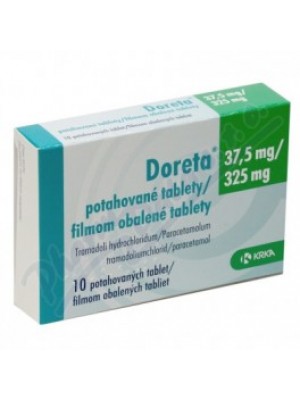
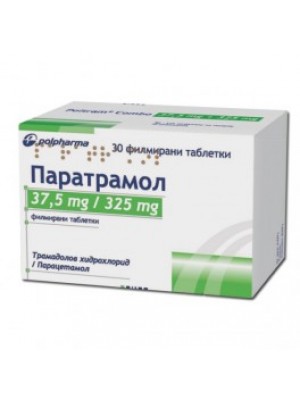
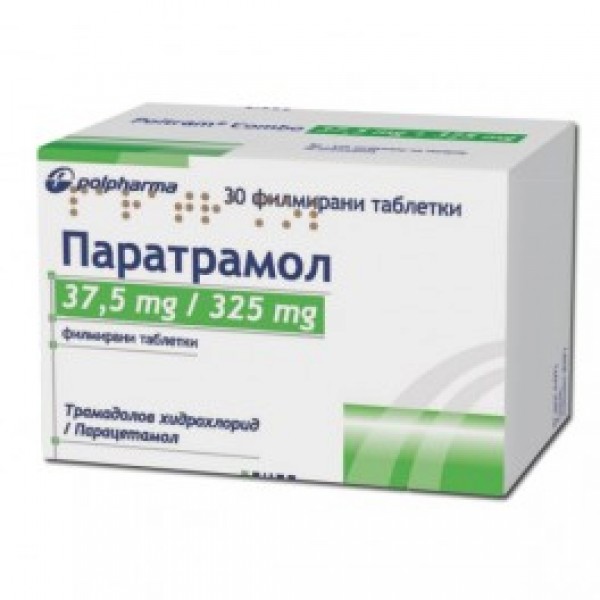
PARATRAMOL. 37.5 mg. / 325 mg. 10 tablets
Product Code: PARATRAMOL. 37.5 mg. / 325 mg. 10 tablets
Availability: In Stock
Product viewed: 4604


PARATRAMOL. 37.5 mg. / 325 mg. 10 tablets

PARATRAMOL WHAT IS AND WHAT IT IS USED
Paratramol is a combination of two pain - tramadol and paracetamol, which act together to relieve your pain.
Paratramol is indicated for the treatment of moderate to severe pain, your doctor determines that you need a combination of tramadol and acetaminophen.
Paratramol should be taken only by adults and adolescents 12 years of age.
2. BEFORE YOU TAKE PARATRAMOL
Do not take Paratramol if:
You have had an allergic reaction (eg, skin rash, facial swelling, wheezing, or difficulty breathing) after taking tramadol or paracetamol or any of the other ingredients of Paratramol;
If you are taking MAO inhibitors (certain medicines used to treat depression or Parkinson's disease) or have taken them within the last 14 days before starting treatment with Paratramol;
Suffer from severe hepatic impairment;
Have epilepsy that is not adequately controlled with medicines you are taking.
Do not take Paratramol in case of acute poisoning with alcohol, sleeping pills, painkillers or other psychotropic drugs (drugs that affect mood and emotions).
Take special care with Paratramol if:
Taking other medicines containing paracetamol or tramadol;
Have liver problems or liver disease, or if you notice yellowing of the eyes and skin. This may be due to problems with jaundice or biliary tract;
Have kidney problems;
Have severe breathing difficulty, such as asthma or severe lung problems;
Have epilepsy or have had seizures or convulsions;
Have recently had a head injury, shock or severe headache, accompanied by vomiting;
Do according to any medication, including those used for the relief of pain such as morphine;
Taking other medicines for pain, which contain buprenorphine, nalbuphine or pentazocine;
You are anesthesia (anesthesia). Tell your doctor or dentist that you are taking Paratramol.
If any of the above is true or applies to you during the intake Paratramol, please make sure that your doctor knows about it. He / she will decide if you should continue taking this medicine.
Taking other medicines
Please tell your doctor or pharmacist if you are taking or have recently taken any other medicines, including medicines obtained without a prescription.
Important: This medicine contains acetaminophen and tramadol. Tell your doctor if you are taking any other medicine containing paracetamol or tramadol (including medicines that you buy yourself without a prescription) may not exceed the maximum daily dose.
You should not take Paratramol with monoamine oxidase ("MAO inhibitors") or if you have passed less than two weeks before the termination of their admission (see section "Do not take Paratramol").
Paratramol not recommended for use with:
Carbamazepine (drug commonly used to treat epilepsy and certain types of pain, such as severe episodes of pain in the area of the face, known as trigeminal neuralgia);
buprenorphine, nalbuphine or pentazocine (opiate painkillers). The analgesic effect can be reduced.
The risk of side effects increases if you take:
some medicines called "serotonergic" they may increase the risk - as tryptophan (migraine), antidepressants, anti-Parkinson drugs, some drugs for weight loss. If you get any confusion, anxiety, fever (fever), sweating, uncoordinated movements of the limbs or eyes, uncontrollable muscle twitching or diarrhea. You should immediately contact your doctor;
tranquilizers, sleeping pills, other pain killers such as morphine and codeine (also medicines to treat cough), baclofen (muscle relaxant) drugs to lower blood pressure, antidepressants or medicines to treat allergies. You may experience drowsiness or weakness. If this happens to you, tell your doctor;
antidepressants, anesthetics, neuroleptics (drugs that affect thinking) or bupropion (to help quit smoking). The risk of seizures may be increased. Your doctor will tell you whether you should take Paratramol;
warfarin or fenoprokumon (blood thinners). The effectiveness of these drugs may be altered and bleeding occurs. Any prolonged or unexpected bleeding should be immediately reported to your doctor.
Effectiveness of Paratramol can be affected if you also take:
metoclopramide, domperidone or ondansetron (medicines for the treatment of nausea and povrashtane);
cholestyramine (a drug used to lower cholesterol in the blood);
ketoconazole or erythromycin (drugs for treating infections ma).
Your doctor will tell you which medicines are safe to use with Paratramol.
Taking Paratramol with food and drink
Paratramol can cause drowsiness. Alcohol may increase drowsiness this, which is why you should not drink alcohol or products containing alcohol during treatment with Paratramol.
Pregnancy and lactation
Ask your doctor or pharmacist before taking any medicine. Since Paratramol contain tramadol You should not take this medicine during pregnancy. If you become pregnant during treatment with Paratramol, please consult your doctor before taking any more tablets.
Small amounts of tramadol may pass into breast milk.
Therefore, you should not take this medication during breastfeeding.
Driving and using machines
Paratramol can cause drowsiness, dizziness or blurred vision. Do not drive, operate machinery, or perform other activities that require attention until you know how you act Paratramol.
3. HOW TO TAKE PARATRAMOL
Always take Paratramol exactly as your doctor tells you. If you are not sure, ask your doctor or pharmacist.
You should take Paratramol shortest possible time.
Not recommended for children under 12 years of age.
If your doctor advises otherwise, the usual starting dose for adults and adolescents over 12 years is 2 tablets. If necessary, it can be adopted and additional dose according to your doctor's recommendations. The smallest interval between doses should be at least 6 hours.
Do not take more than 8 tablets Paratramol day.
Paratramol not take more often than your doctor tells you.
Your doctor may increase the time between doses:
if you are older than 75 years;
if you have kidney problems;
if you have liver problems.
Method of administration:
The tablets are intended for oral administration (p.o.).
The tablets should be swallowed whole with sufficient fluid. They should not be crushed or chewed.
If you think Paratramol is too strong (eg, leading to severe drowsiness or difficulty in breathing) or too weak (eg, your pain is not sufficiently relieved), contact your doctor.
If you take more dose Paratramol
After taking a very high dose tramadol possible contraction of the pupils, vomiting, low blood pressure, rapid heart beat, collapse, consciousness disorders up to coma (falling into unconsciousness), epileptic seizures and difficulty breathing to stop breathing. An overdose of paracetamol is dangerous and can cause severe lung damage and kidney.
Immediate medical attention in case of overdose of this medicine even if you feel better, as there is a risk of later severe hepatic impairment.
If you forget to take Paratramol
If you forget to take a tablet, pain usually occurs again. Do not take a double dose to make up for missed just resume normal tablets.
If you stop taking Paratramol
Usually no subsequent effects after discontinuation of Paratramol. However, in rare cases people taking some time tramadol may occur unwell after his abrupt discontinuation (see section 4. "Possible side effects"). If you have taken Paratramol awhile and want to stop its intake. You should consult your doctor, because of the possibility of the emergence of addiction.
If you have any further questions on the use of this medicine, ask your doctor or pharmacist.
4. POSSIBLE SIDE EFFECTS
Like all medicines, Paratramol can cause side effects, although not everybody gets them.
Assessment of adverse effects is to use the following frequencies:
very common: affects more than 1 in 10 patients;
common: affects 1 to 10 of 100 patients;
uncommon: affects 1 to 10 of 1000 patients;
rare: affects 1 to 10 of 10 000 patients;
very rare: affects less than 1 in 10,000;
not known from the available data can not be estimated.
Very common:
nausea;
dizziness, drowsiness.
Common:
vomiting, digestive problems (constipation, flatulence in the abdomen, diarrhea), abdominal pain, dry mouth;
itching, sweating;
headache, tremors;
confusion, sleep disorders, mood swings (anxiety, nervousness, elated).
Uncommon:
increase in heart rate or blood pressure, heart rate or heart rhythm disorders;
difficult or painful urination, the presence of protein in the urine;
skin reactions (eg rash or hives);
tingling, "pins and needles" feeling or "pins and needles" in the limbs, noise (ringing) in the ears, involuntary twitching of muscles;
depression, nightmares, hallucinations (hearing, seeing or sensing things that are) cheating memory;
difficulty swallowing, blood in the stool;
shivering, flushing, pain in the chest;
difficulty breathing;
changes in blood tests, checking of liver function.
rare:
seizures, difficulties with coordination of movements;
addiction;
blurred vision.
Below presents adverse effects reported in people taking medicines containing only tramadol or paracetamol only. However, if you notice any of these while taking Paratramol, you should tell your doctor:
feeling of weakness (malaise) when getting up from a lying or sitting position, slow heart rate, fainting, changes in appetite, muscle weakness, delayed or reduced breathing, mood changes, changes in activity, changes in perception, worsening of asthma;
In rare cases, skin rash, indicating an allergic reaction, a sudden swelling of the face and neck, difficulty breathing or drop in blood pressure and fainting (fainting). If this happens to you, stop treatment and seek immediate medical attention. You should not take this medicine again.
In rare cases, the use of drugs such as tramadol, may lead to the appearance of vulnerability to them, which makes it difficult to stop them.
Rarely, people taking tramadol for a period of time, you may feel worse abruptly stopping treatment. Possible emergence of agitation, anxiety, nervousness or shakiness. There may be hyperactivity, difficulty sleeping, stomach or intestinal disorders. Very rarely, and the occurrence of panic attacks, hallucinations, unusual perceptions such as itching, numbness and tingling, and ringing in the ears (tinnitus). If you experience any of these symptoms after you stop taking Paratramol, please consult your doctor.
Exceptionally, in blood tests may have been some variations, such as a low number of blood platelets, which may lead to bleeding of the gums, or nose or the absence of certain white blood cells (agranulocytosis), which may lead to infections, inflammation of the throat or fever (fever).
The use of Paratramol with medicines used to thin the blood (eg phenprocoumon, warfarin) may increase the risk of bleeding. Any prolonged or unexpected bleeding should be immediately reported to your doctor.
If any of the side effects gets serious, or you notice other effects not listed in this leaflet, please tell your doctor or pharmacist.
5. HOW TO STORE PARATRAMOL
Keep out of reach of children.
This medicinal product does not require any special storage conditions.
Paratramol not use after the expiry date stated on the carton and blister. The expiry date refers to the last day of that month.
Medicines should not be disposed of via wastewater or household waste. Ask your pharmacist how to dispose of medicines no longer required. These measures will help to protect the environment.
6. FURTHER INFORMATION
What does Paratramol
The active ingredients are tramadol hydrochloride and acetaminophen. One tablet contains 37,5 mg tramadol hydrochloride and 325 mg acetaminophen.
The other ingredients are:
Core: pregelatinised maize starch, microcrystalline cellulose, sodium starch glycolate (type A), silica colloidal anhydrous, magnesium stearate.
Film coating: hypromellose, polyethylene glycol, titanium dioxide (E171), yellow iron oxide (E 172).
Write a review
Your Name:Your Review: Note: HTML is not translated!
Rating: Bad Good
Enter the code in the box below:
Related Products