Your shopping cart is empty!
Welcome visitor you can login or create an account.
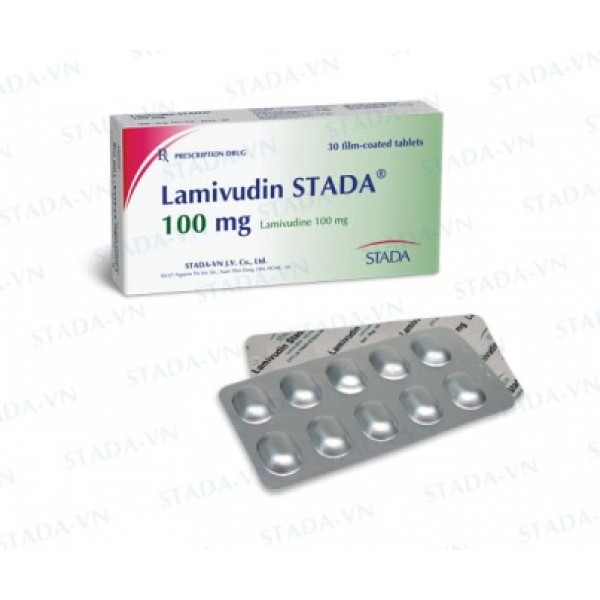
Lamivudine 100mg. 30 tablets
Product viewed: 2858


WHAT LAMIVUDINE TEVA IS AND WHAT IT IS USED FOR
Lamivudine Teva belongs to a group of medicines called antiviral. It is used to treat hepatitis B infection.
Lamivudine Teva is used to treat adults with long-standing (chronic) hepatitis B.
Hepatitis B is a virus that infects the liver and can cause hepatic damage. Lamivudine Teva treatment can reduce the amount of hepatitis B virus in your body. This would reduce liver damage and improve your liver function.
2. BEFORE YOU TAKE LAMIVUDINE TEVA
Do not take Lamivudine Teva:
if you are allergic (hypersensitive) to lamivudine or any of the other ingredients of Lamivudine Teva.
If you are not sure, please consult your doctor.
Take special care with Lamivudine Teva
Lamivudine Teva reduces the amount of hepatitis B virus in your body and keeps the liver function under control, thus reducing the health problems associated with your liver in the future. For treatment to be effective, you should take Lamivudine Teva every day. Patients respond differently to therapy, so the duration of treatment with this medicine is unknown.
Your doctor will control how your body responds to treatment by taking regular blood samples. The results of these studies will help him decide when Lamivudine Teva treatment can be stopped.
Before starting treatment with Lamivudine Teva, you should discuss with your doctor any other health problems you may have. If you have kidney disease, then this medicine is not suitable for you, as your kidneys are the primary responsible for cleansing your body from the medicine.
Do not stop taking Lamivudine Teva without instructions from your doctor as there is little risk that your hepatitis will get worse. When you stop taking Lamivudine Teva, your doctor will monitor you for at least four months to find out any problems. This means that you will be given blood samples to test for changes in liver enzymes showing hepatic impairment.
The active ingredient of this product is lamivudine. If you are already taking this medicine for HIV infection, your doctor will continue to treat you with a higher dose, usually 150 mg twice daily, because the lower dose of 100 mg is insufficient to treat the infection.
Because your medicine helps control hepatitis B and it is not yet known whether it will cure it, you are at risk of passing the virus to others through sexual contact or by blood, so you should use appropriate precautions to prevent it . There is an effective vaccine to protect people at risk of contracting hepatitis B.
Taking other medicines
Lamivudine Teva should not be taken with zalcitabine (used to treat HIV).
Some medicines may change the effect of Lamivudine Teva. Please tell your doctor or pharmacist if you are taking or have recently taken any other medicines, including medicines obtained without a prescription.
Taking Lamivudine Teva with food and drink
Lamivudine Teva can be taken during a meal or on an empty stomach.
Pregnancy and breastfeeding
Ask your doctor or pharmacist for advice before taking any medicine. Tell your doctor if you are pregnant or are planning a recent pregnancy or if you are breast-feeding. He will tell you whether to continue taking Lamivudine Teva during pregnancy. Do not stop taking Lamivudine Teva without a prescription.
As lamivudine and the virus pass into breast milk, it is recommended that mothers taking Lamivudine Teva do not breast-feed their infants.
Driving and using machines
No studies on the effect of Lamivudine Teva on the ability to drive and use machines have been performed.
3. HOW TO TAKE LAMIVUDINE TEVA
Always take Lamivudine Teva exactly as your doctor has told you. If you are not sure, ask your doctor or pharmacist.
The usual dose is one tablet (100 mg) once a day, taken orally with or without food.
If you take more Lamivudine Teva than you should
If you accidentally take too high a dose of Lamivudine Teva, the probability of causing serious problems is small. However, tell your doctor immediately or call the nearest emergency counseling center.
If you forget to take Lamivudine Teva
If you forget to take your medicine, take it as soon as you remember and then continue taking it as directed.
Do not take a double dose to make up for the missed tablet.
If you stop taking Lamivudine Teva
You should not stop taking Lamivudine Teva unless you have been consulted by your doctor or pharmacist.
If you have any further questions on the use of this product, ask your doctor or pharmacist.
4. POSSIBLE SIDE EFFECTS
Like all medicines, Lamivudine Teva can cause side effects, although not everyone gets them. The number and type of adverse drug reactions reported in patients receiving lamivudine in clinical trials were generally similar to those in non-active patients (placebo). The most commonly reported were tiredness, respiratory tract infections, throat inflammation, headache, pain and stomach discomfort, nausea, vomiting and diarrhea. However, sometimes elevations of liver enzymes and enzymes produced in the muscles have been reported more frequently in patients receiving lamivudine.
Adverse reactions considered to be caused by lamivudine are described below:
The frequency of side effects described below is defined using the following convention:
Very common (affects more than 1 user in 10)
Common (affects 1 to 10 users in 100)
Uncommon (affects 1 to 10 users in 1,000)
Rare (affects 1 to 10 users in 10,000)
Very rare (affects less than 1 in 10,000 users).
Very common:
Increase in enzymes produced by the liver called transaminases.
Common:
An increase in an enzyme called creatine phosphokinase produced in the muscles.
Very rare:
Decrease in the number of platelets, blood cells that matter to blood clotting. If you have low platelet counts, you may notice that it is easier to get blue spots on your skin;
Cramps, muscle aches and muscle rupture;
Expressed deterioration of liver disease after stopping lamivudine or during treatment if resistance develops. This may be fatal for some patients.
Some people may be allergic to medicines. If you get any of the following symptoms soon after taking Lamivudine Teva, stop the medicine and call your doctor immediately:
sudden onset of wheezing and chest pain or suffocation;
swelling of the eyelids, face or lips;
skin rash or hives fever anywhere on the body.
Several reports of worsening of the condition were received during treatment and after it was stopped, in the course of development of resistance. This may be fatal for some patients.
If any of the side effects gets serious, or if you notice any side effects not listed in this leaflet, please tell your doctor or pharmacist.
5. HOW TO STORE LAMIVUDINE TEVA
Keep out of the reach and sight of children.
Do not use Lamivudine Teva after the expiry date which is stated on the label and the carton. The expiry date refers to the last day of that month.
This medicinal product does not require any special storage conditions.
Do not use Lamivudine Teva if you notice any change in the appearance of the tablet.
Medicines should not be disposed of via wastewater or household waste. Ask your pharmacist how to dispose of your unnecessary medicines. These measures will help to protect the environment.
6. ADDITIONAL INFORMATION
What Lamivudine Teva contains
The active substance is lamivudine. Each film-coated tablet contains 100 mg lamivudine.
The other ingredients are:
Tablet core: Microcrystalline cellulose, sodium starch glycolate, magnesium stearate;
Tablet coat: Hypromellose, titanium dioxide (E171), macrogol, polysorbate 80, iron oxide, yellow (E172), iron oxide, red (E172).
What Lamivudine Teva looks like and contents of the pack
Orange, biconvex, capsule-shaped film-coated tablet - engraved with "L 100" on one side and smooth on the other.
Lamivudine Teva is available in aluminum blisters containing 28, 30, 84 or 100 tablets or high density polyethylene (HDPE) tablets containing 60 tablets.
Write a review
Your Name:Your Review: Note: HTML is not translated!
Rating: Bad Good
Enter the code in the box below:
Related Products
Desloratadine 5 mg. 30 tabletsWHAT DESLORATADINE TEVA AND WH..
14.00€