
Your shopping cart is empty!
Welcome visitor you can login or create an account.
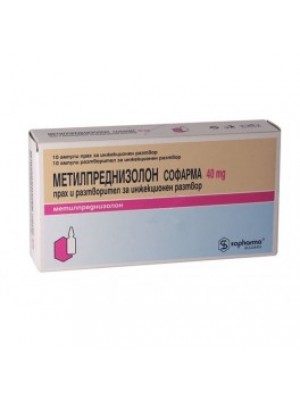
Methylprednisolone 6,31 mg. 10 ampoules
Product Code: Methylprednisolone 6,31 mg. 10 ampoules
Availability: In Stock
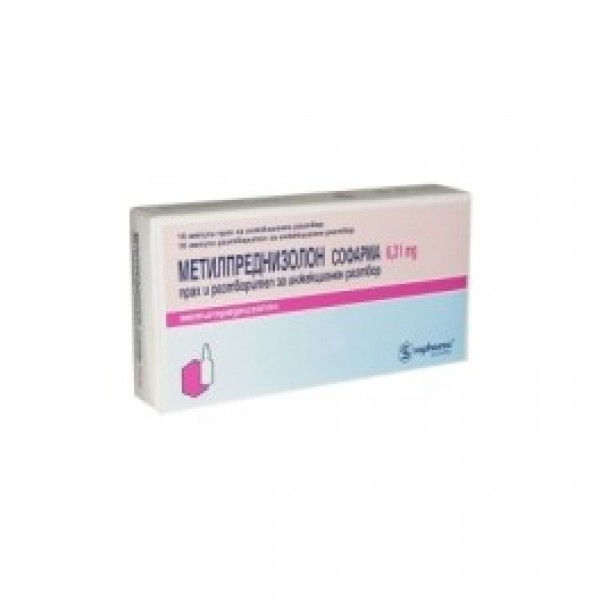
Product viewed: 892


Methylprednisolone 6,31 mg. 10 ampoules
WHAT methylprednisolone SOPHARMA AND WHAT IT IS USED
Methylprednisolone Sopharma medicine from the group of corticosteroids. These are hormones which under normal conditions are produced by the adrenal glands. They possess a strong anti-inflammatory, anti-allergic and immunosuppressive action and help the body under severe conditions associated with inflammation, allergy or other serious illnesses. Methylprednisolone Sofarma is a synthetic analogue of these hormones and holds their basic properties and action.
Methylprednisolone Sofarma used for treatment of:
Hormonal disorders: eg. If the adrenal glands are not working properly for some reason, so the body does not produce enough of its own natural steroids; shock adrenal insufficiency or shock unresponsive to standard treatment, which can have only failure of adrenal cortex; in patients who have surgery have severe trauma or other disease combined with adrenal insufficiency or adrenal suspicious reserves; hypercalcemia (elevated calcium levels in the blood) in relation to cancer; negnoen thyroiditis (inflammation of the thyroid); in congenital excessive growth of the adrenal gland, endocrine ophthalmopathy (protrusion of the eyeball);
Adjuvant therapy for a short period of time with exacerbation of diseases of the joints and soft tissues around them (rheumatoid arthritis, ankylosing spondylitis, acute and subacute bursitis, post-traumatic osteoarthritis, synovitis in osteoarthritis, epicondylitis, psoriatic arthritis, acute gouty arthritis, acute nonspecific tenosynovitis) ;
Collagen: systemic lupus erythematosus (a disorder of the immune system that causes joint pain, skin rashes and fever), systemic dermatomyositis, other diseases such as poliarteriitis nodosa or Goodpasture's syndrome; acute rheumatic carditis (inflammation of the cardiac structures due to rheumatism);
Skin diseases such as pemphigus (blisters on the skin), Stevens-Johnson (serious illness accompanied by blistering of the skin, mouth, eyes and genitals), exfoliative dermatitis, generalized neurodermatitis, severe psoriasis, severe of seborrheic dermatitis;
Refractory to other treatment diseases such as bronchial asthma, severe forms of hay fever and other allergies, accompanied by fever, atopic dermatitis, contact dermatitis, serum sickness, hypersensitivity (allergy) to drugs, swelling of edema;
Severe acute and chronic allergic and inflammatory processes involving the eye such as iritis or iridocyclitis (inflammation of the front of the eye); posterior uveitis (inflammation of the back of the eye); optic neuritis (inflammation of the optic nerve), inflammation of the anterior segment, allergic corneal ulcers edge and other ocular diseases (herpes zoster ophthalmicus, chorioretinitis, keratitis);
Serious respiratory diseases such as pulmonary sarcoidosis (inflammation of the tissues and the lymphatic glands of the lungs); Tuberculosis, which progresses rapidly or has spread to other areas (both with anti-tuberculosis drugs); inflammation caused by aspiration of gastric contents or vomit into the lungs when the unconscious; other pulmonary diseases (berylliosis, Loeffler's syndrome, exacerbated chronic obstructive pulmonary disease);
Blood disorders: idiopathic thrombocytopenic purpura (increased tendency to bruising and bleeding due to low number of blood cells that help blood to clot) in adults, secondary thrombocytopenic purpura, autoimmune hemolytic anemia (when the immune system attacks its own red blood cells) and other anemias;
Malignancies: Leukemia (excessive formation of white blood cells in the bone marrow); cancer of the lymphatic system, which usually affects the lymph nodes (glands), and spleen; improving the quality of life in cancer patients in the end stage;
Digestive system diseases: ulcerative colitis (inflammation and ulceration of the colon); Crohn's disease (inflammation of the different parts of the intestine);
To increase the flow of urine in nephrotic syndrome (kidney disease);
Other conditions: multiple sclerosis; brain edema caused by a tumor; Early treatment of spinal cord trauma; Prevention of nausea and vomiting in the treatment of malignant diseases; organ transplant - to prevent rejection by the body.
Your doctor could apply Methylprednisolone Sofarma to treat conditions other than those listed above. Ask your doctor if you are unsure of the reason why he giving it to you.
2. BEFORE YOU USE methylprednisolone SOPHARMA
Do not use Methylprednisolone Sopharma:
if you are allergic (hypersensitive) to methylprednisolone or any of the other ingredients of the product;
if you have a systemic fungal infections;
in premature infants.
Take special care with Methylprednisolone Sopharma
Before starting treatment Methylprednisolone Sopharma, tell your doctor:
if you have a non-declared or active tuberculosis;
if you currently have an infection or abscesses;
if you have or have had a mental illness in the past (eg. emotional instability, depression, hallucinations), or if you are being treated with steroids and it has caused psychosis (mental illness, which is supposed to be conducted ambulatory or hospitalization);
if you had herpes eye infection or disease of the cornea (keratitis);
if you have a stomach ulcer or bowel diseases of the gastrointestinal system (diverticulitis, fresh intestinal anastomoses);
if you have Cushing's syndrome (a disease state which is developed as a result of disease of the adrenal glands);
if you have osteoporosis (brittle bones);
if you had thromboembolic events;
if you have kidney failure;
if you have liver failure or cirrhosis;
if you or any member of your family has diabetes;
if you have high blood pressure or heart failure;
If you suffer from glaucoma (increased eye pressure);
if you have myasthenia gravis (a disease marked by muscle weakness);
if you had ever myopathy (muscle weakness or problems with pain, especially of the lower limbs and buttocks) when treated with steroids;
if you have local or general infections;
if you are pregnant and this medicine your appointment, your baby is subject to additional tests shortly after birth to determine whether his adrenal glands are working properly;
in conditions of suppressed immunity (AIDS, chickenpox);
if you suffer or have suffered from Kaposi's sarcoma stopping the drug may lead to remission.
Tell your doctor if you are or soon you a vaccination (including after vaccination against varicella).
Using other medicines
Please tell your doctor if you are taking or have recently taken any other medicines, including medicines obtained without a prescription.
Tell your doctor if you take:
cyclosporin (an immunosuppressant which is used to suppress the immune system);
barbiturates (sleeping pills), rifampicin (medicine to treat tuberculosis) and phenytoin (an antiepileptic drug);
certain antibiotics (eg. troleandomycin) or antifungal drugs (eg. ketoconazole) and some calcium antagonists (medicines to treat high blood pressure or angina pectoris);
cardiac glycosides (medicines to treat heart failure);
loop diuretics, thiazide diuretics (water resources);
antihypertensive drugs (used to treat high blood pressure);
hypoglycaemic agents (including insulin);
coumarin anticoagulants (anti-clotting);
salicylates and NSAIDs;
anticholinesterase agents (used in the treatment of myasthenia gravis);
neuromuscular blocking agents (eg. pancuronium).
Pregnancy and lactation
Ask your doctor or pharmacist before taking any medicine.
If you are pregnant, treatment Methylprednisolone Sopharma is performed only under medical supervision.
If treatment with methylprednisolone in pregnancy requires careful consideration of the benefit / risk ratio.
During the first three months of pregnancy should be avoided its use, except in exceptional testimony.
Corticosteroids are excreted in breast milk and may affect the infant, and therefore in need of treatment with methylprednisolone breast-feeding should be discontinued. Corticosteroids readily cross the placenta. Children born to mothers who received substantial doses of corticosteroids during pregnancy should be carefully observed and evaluated for signs of adrenal insufficiency.
Drive and use machines
Methylprednisolone Sopharma not affect your ability to drive and use machines.
Important information about some of the ingredients of Methylprednisolone Sopharma
Medicinal product containing sodium, less than 1 mmol (23 mg) per dose, i.e. contains virtually no sodium.
3. HOW TO USE methylprednisolone SOPHARMA
Sopharma methylprednisolone administered by a qualified medical personnel. If you have any questions, contact your doctor.
The dose is determined by the doctor and depends on the severity of your condition. Your doctor will always seek to apply the lowest possible dose that leads to a good result.
Your doctor may prescribe a higher dose for a few days to control your condition. If your condition is not controlled, it can change treatment. It is possible that your doctor makes frequent reviews to ensure that you feel better. The initial dose chosen by your doctor will be continued until he decides that your condition has improved. The usual starting dose ranges from 10 mg to 500 mg per day.
Children usually prescribed a lower dose than that of adults, but it depends on the severity of the condition and response to treatment.
With prolonged use of Methylprednisolone Sopharma discontinuation of treatment should be done by gradually reducing the dose.
The medicinal product may be administered intravenously as an infusion and intramuscular.
If you have any further questions on the use of this product, ask your doctor or pharmacist.
If you use more than the amount of Methylprednisolone Sopharma
The medicinal product is administered as an injection under medical supervision and the ability to miss a dose or get a larger dose is unlikely. If in doubt ask your doctor.
If you stop using Methylprednisolone Sopharma
The sharp reduction in the dose or suddenly stop corticosteroids after prolonged treatment can lead to acute adrenal insufficiency, low blood pressure and possibly fatal. This failure may continue for months after discontinuation of treatment, therefore the occurrence of stressful situation in this period (trauma, surgery, serious illness), corticosteroid therapy should be re-assigned or may be necessary to increase the applied dose. Discontinuation of treatment with corticosteroids, especially after prolonged use should be made slowly, with a gradual reduction in dose.
4. POSSIBLE SIDE EFFECTS
Like all medicines, Methylprednisolone Sopharma can cause side effects, although not everybody gets them.
The following side effects are typical for all systemic corticosteroids.
It is more likely to get side effects if you get a great deal for a long period of time. Your doctor will prescribe the lowest dose which relieves your symptoms, for the shortest possible time. This means that the risk of serious side effects is low, while the possibility of improving your condition is high.
If you are elderly, the side effects can be more serious. Your doctor will carefully monitor your condition.
Tell your doctor immediately if you notice any of these effects or if you think you are in danger of infection (eg. If you have been in contact with a person who has the infection):
Allergic reactions such as skin rash, facial swelling or wheezing;
Irregular, fast or very slow heartbeat, fainting;
Muscle cramps or spasms;
Usually after stopping treatment can be monitored pseudotumor cerebral (intracranial pressure, resulting in headache with vomiting, lethargy and drowsiness);
Stomach ulcer or duodenal perforations and bleeding from the stomach or intestines;
Acute pancreatitis (inflammation of the pancreas);
Deterioration of mental illness (such as irritability, euphoria, depression, mood swings, psychological dependence and suicidal thoughts), psychotic reactions (including mania, delirium, hallucinations and aggravation of schizophrenia), behavioral disturbances, irritability, anxiety, sleep disorders, convulsions and memory disorders, including confusion and amnesia;
Deterioration of vision;
Heart failure (heart disease, which can lead to fatigue, shortness of breath, ankle swelling), increased blood pressure.
Other adverse reactions are:
digestive system, indigestion, bloating, ulcers or inflammation of the esophagus, fungal infection of the esophagus, hiccups. Nausea, vomiting and bad taste in the mouth may occur especially quickly after application;
by Musculoskeletal and connective tissue disorders: muscle weakness or decreased muscle mass, osteoporosis (increased bone fragility), pathological fractures of bone, aseptic necrosis (damage to the bone due to poor blood supply), rupture of tendons (especially achilles);
aqueous electrolyte disturbances edema and hypertension due to an increase of the content of fluids and salts in the body. Cramps and spasms due to loss of potassium salts from the body. In rare cases, the loss of potassium can cause flutter in susceptible patients;
Endocrine disorders: treatment occurs during prolonged suppression of hormones that normally are released by the hypothalamus, pituitary and adrenal glands, leading to an inadequate response to physical stress. Suppression of normal growth in infants, children and adolescents, which can be permanent. Irregular or absent menstruation in women, hirsutism (excess body hair and face in women), increased appetite, weight gain, kashingoiden facies (round or moonlike face). Poor digestion of carbohydrates in the body (diabetes), worsening of diabetes and the need for additional antidiabetic treatment (expressed in increased blood sugar or urine testing), degradation of body reserves of proteins (loss of weight and muscle mass of the upper or lower extremities), loss of calcium and nitrogen;
Immune system disorders: decreased resistance and increased risk of infections, particularly unusual infections, masking or changing symptoms of some infections or conditions reactivation (rapid growth) tuberculosis, masking or changing reactions to skin tests, such as those for tuberculosis, hypersensitivity and serum sickness (allergy vaccines prepared from animal serum);
Skin and subcutaneous tissue atrophy (thinning of the skin), stretch marks (scars stretching) pinpoint hemorrhages in the skin, bleeding spots, rashes, contact dermatitis steroid acne violation in the color of the skin, hair, delayed wound healing;
Eye disorders: glaucoma (increased pressure in the eye, causing eye pain and headache), swelling of the optic nerve (papilloedema manifested with visual impairment), damage to the optic nerve or cataracts (reflected in a worsening vision), thinning of the cornea or sclera, worsening of viral or fungal eye infections exophthalmos (bulging eyeballs);
other disorders: increased levels of certain laboratory parameters in the blood (ALT, SGRT, AST, SGOT, alkaline phosphatase), increased white blood cells, elevated blood clots (thrombi). Site conditions may develop sterile abscesses, infection failing to adhere to sterile injection.
If any of the side effects gets serious, or you notice other effects not listed in this leaflet, please tell your doctor or pharmacist.
5. HOW TO STORE methylprednisolone SOPHARMA
In the original container, protected from light at a temperature below 25 ° C.
Do not freeze.
Keep out of reach of children.
Do not use Methylprednisolone Sopharma after the expiry date stated on the packaging.
The expiry date refers to the last day of that month.
Write a review
Your Name:Your Review: Note: HTML is not translated!
Rating: Bad Good
Enter the code in the box below:
Related Products
Methylprednisolone 40 mg. 10 ampoules
WHAT Methylpredni..
59.00€