Your shopping cart is empty!
Welcome visitor you can login or create an account.
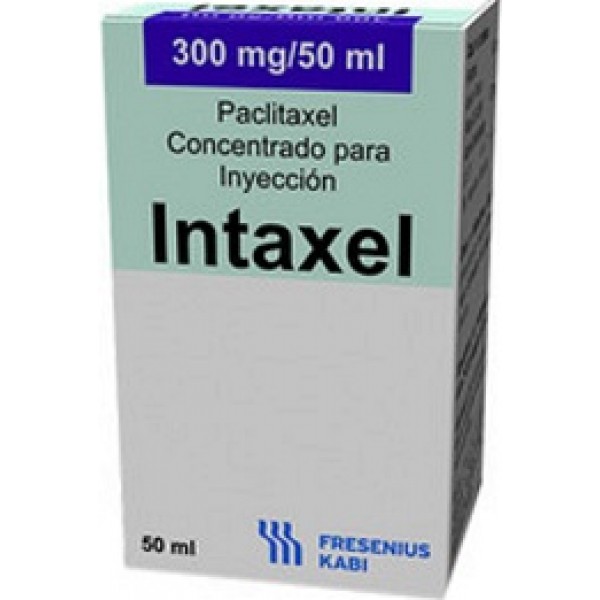
Paclitaxel 300 mg. / 50 ml.
Product Code: Paclitaxel 300 mg. / 50 ml.
Availability: In Stock
Product viewed: 2190


What Paclitaxel is and what it is used for
The name of your medicine is Paclitaxel 6 mg / ml concentrate for solution for infusion
This drug belongs to a group of anticancer drugs called taxanes. These agents suppress the growth of cancer cells.
Paclitaxel is used to treat:
Ovarian Cancer:
• as a first-line treatment (after initial surgery, in combination with cisplatin, a platinum-containing medicine).
• after an unsuccessful treatment with standard platinum-containing medicines.
Breast cancer:
• as the first line of treatment for advanced disease or disease that has spread to other parts of the body (metastatic disease). Paclitaxel is combined with an anthracycline (eg doxorubicin) or a medicine called trastuzumab (for patients in whom anthracyclines are inappropriate and whose cancer cells contain a protein called HER 2 on their surface, see trastuzumab leaflet).
• as an additional treatment after initial surgery after treatment with anthracycline and cyclophosphamide (AC).
• as a second line of treatment in patients who have not responded to standard types of anthracycline therapy or where such treatment should not be used.
Advanced non-small cell lung carcinoma:
• in combination with cisplatin when surgical treatment and / or radiotherapy are inappropriate.
AIDS-related Kaposi's Sarcoma:
• after an unsuccessful treatment with other agents (ie liposomal anthracyclines).
2. What you need to know before using Paclitaxel Kabi
Do not use Paclitaxel:
if you are allergic to paclitaxel or any of the other ingredients of this medicine (listed in section 6), especially macrogolglycerol ricinoleate;
if you are breast-feeding;
if you have too few white blood cells (baseline neutrophil count <1.5 x 10⁹ l your doctor will advise you) in the blood. Your doctor will take blood to check this;
if you have a serious uncontrolled infection and paclitaxel should be used to treat Kaposi's sarcoma.
If any of these apply to you, talk to your doctor before starting Paclitaxel.
To reduce allergic reactions to a minimum, you will be given other medicines before taking Paclitaxel.
Paclitaxel is not recommended for use in children (under 18 years of age).
Warnings and precautions
Talk to your doctor or nurse before receiving Paclitaxel.
Tell your doctor straight away if any of these apply to you:
If you get allergic reactions.
If you have signs of bone marrow suppression.
If you have tingling, tingling, a feeling of bruising, tenderness or weakness in the arms and legs.
If you have severe liver problems.
If you have heart problems.
If you develop severe or prolonged diarrhea.
If you have had previous chest radiation.
If you have pain or redness in your mouth and are being treated for Kaposi's sarcoma.
Paclitaxel should always be given in veins. Administration of Paclitaxel in the arteries may cause inflammation of the arteries and you may experience pain, swelling, redness and warmth.
Other medicines and Paclitaxel
Tell your doctor if you use or have recently used any other medicines.
Interaction means that different drugs can interact with each other. An interaction may occur and your doctor should know when Paclitaxel is used together with:
• Cisplatin (for cancer treatment): Paclitaxel should be used before cisplatin. Your kidney function may need to be checked more often.
• Doxorubicin (for cancer treatment): Paclitaxel should be given 24 hours after doxorubicin to avoid high levels of doxorubicin in your body.
• Trastuzumab (for cancer treatment): Administration of Paclitaxel may be initiated immediately after the infusion of trastuzumab if given well. Otherwise, the infusion of Paclitaxel may be delayed.
• efavirenz, nevirapine, ritonavir, nelfinavir or other protease inhibitors that are used to treat HIV. Paclitaxel dose adjustment may be necessary.
• erythromycin, antibiotic, fluoxetine, antidepressant or gemfibrozil used to lower cholesterol. A dose reduction of Paclitaxel may be necessary.
• rifampicin, an antibiotic used in tuberculosis. A dose increase of Paclitaxel may be necessary.
• carbamazepine, phenytoin or phenobarbital used in epilepsy.
Paclitaxel with food and drink and alcohol
Paclitaxel is not affected by food and drink (For alcohol see below for driving and using machines and excipients).
Pregnancy, breastfeeding and fertility
Tell your doctor if you are pregnant or think you may be pregnant before taking Paclitaxel. If you are able to become pregnant, use an effective and safe method of contraception during treatment. Paclitaxel should not be used
This product contains 49.7% by volume of ethanol (alcohol), ie. up to 23 g per dose equivalent to about 600 ml of beer or about 250 ml of wine per dose.
It is harmful to people suffering from alcoholism.
It should be taken into consideration in pregnant or breast-feeding women, children and groups of high-risk patients, such as those with liver disease or suffering from epilepsy.
3. How to use Paclitaxel Cabbage
• In order to minimize allergic reactions, other medicines will be given before taking Paclitaxel. corticosteroids (dexamethasone), antihistamines (diphenhydramine) and H2 blocker (cimetidine). These medicines can be given as tablets or infusion into the vein or both.
• You will receive paclitaxel drip into one of the veins (via an intravenous infusion) through a filter in the line. Paclitaxel will be administered by a healthcare professional. He or she will prepare the infusion solution before you are given it. The dose you receive will also depend on your blood test results. Depending on the type and severity of the cancer, you will receive Paclitaxel alone or in combination with another anticancer agent.
• Paclitaxel should always be given in one of the veins for a period of 3 or 24 hours. It is usually given within 2 or 3 weeks, unless your doctor decides otherwise. Your doctor will tell you the number of Paclitaxel courses you should receive.
If you have any further questions on the use of this medicine, ask your doctor.
If you take more Paclitaxel than you should
There is no known antidote for overdose of Paclitaxel. You will receive treatment according to your symptoms.
If you forget to take Paclitaxel
If you think you miss a dose, tell your doctor or nurse. Do not take a double dose if a dose is missed.
If you stop taking Paclitaxel
Your doctor will decide when to stop paclitaxel treatment.
If you have any further questions on the use of this medicine, ask your doctor or pharmacist.
4. Possible side effects
Like all medicines, this medicine can cause side effects, although not everyone gets them.
Tell your doctor immediately if you notice any signs of allergic reactions. They may include one or more of the following:
• redness of the skin,
• skin reactions,
• itching,
• chest tightness,
• shortness of breath or difficulty in breathing,
• swelling.
All of these effects may be signs of serious side effects.
Tell your doctor straight away if you get:
• fever, severe chills, sore throat or mouth sores (signs of bone marrow suppression).
• numbness or weakness in the hands and feet (signs of peripheral neuropathy).
• severe or persistent diarrhea with fever and stomach pain.
Very common: may affect more than 1 in 10 people:
Mild allergic reactions such as, for example, redness of the skin, rash, itching.
Infections: mainly upper respiratory tract infection, urinary tract infection.
Shortness of breath.
Sore throat or mouth ulcers, pain and redness of the mouth, diarrhea, nausea, vomiting).
Hair loss.
Pain in the muscles, spasms, joint pain.
Fever, severe chills, headache, dizziness, fatigue, paleness, bleeding, bruising easier than usual.
Tingling, tingling or weakness in the arms and legs (all symptoms of peripheral neuropathy).
Studies may show: a decrease in blood platelets, a number of white or red blood cells, low blood pressure.
Common: may affect up to 1 in 10 people:
• Temporary slight nail changes and skin changes, injection site reactions (local swelling, pain and reddening of the skin).
• Studies may show: slowing of the heart rhythm, heightened liver enzymes (alkaline phosphatase and AST - SGOT).
Uncommon: may affect up to 1 in 100 people:
• Shock due to infections (known as "septic shock").
• Palpitations, impaired cardiac function (AV block), rapid heartbeat, heart attack, respiratory distress.
• Fatigue, sweating, syncope, significant allergic reactions, phlebitis (inflammation of the vein), swelling of the face, lips, mouth, tongue or throat.
• Back pain, chest pain, pain in the arms and legs, chills, abdominal pain.
• Studies may show: a strong increase in bilirubin (jaundice), high blood pressure and blood clots.
Rare: may affect up to 1 in 1,000 people:
• Fever of white blood cells with fever and increased risk of infection (febrile neutropenia).
• Stinging nerves with a feeling of weakness in the muscles of the hands and feet (motor neuropathy).
• Heart failure (heart disease).
• Shortness of breath, pulmonary embolism, pulmonary fibrosis, interstitial pneumonia, dyspnoea, pleural effusion.
• Bowel obstruction, perforation of the intestine, inflammation of the large intestine (ischemic colitis), inflammation of the pancreas (pancreatitis).
• Itching, rash, flushing
How to Keep Paclitaxel Cabi
Keep out of the reach and sight of children.
Store below 25 ° C.
Store the vial in the outer carton in order to protect from light.
Do not use this medicine after the expiry date which is stated on the label of the vial and the carton after EXP. The expiry date refers to the last day of that month.
Do not use this medicine if you notice clouding of solution or insoluble precipitate.
Do not dispose of medicines in the sewage system or in the household waste container. Ask your pharmacist how to dispose of medicines you no longer use. These measures will help to protect the environment.
6. Package Contents and Additional Information
What Paclitaxel contains
The active substance is paclitaxel. Each ml of concentrate for solution for infusion contains 6 mg paclitaxel.
One 5 ml vial contains 30 mg paclitaxel.
One vial of 16.7 ml contains 100 mg paclitaxel.
One vial of 25 ml contains 150 mg paclitaxel.
One 50 ml vial contains 300 mg paclitaxel.
One 100 ml vial contains 600 mg paclitaxel.
The other ingredients are: ethanol, anhydrous, macrogolglycerol ricinoleate and citric acid, anhydrous (for pH adjustment).
What Paclitaxel looks like and what it contains
Concentrate for solution for infusion Paclitaxel is a clear, pale yellow solution.
Paclitaxel is available in glass vials. The glass vials are sealed with Teflon-coated rubber stoppers.
Types of packaging:
Packs contain 1 or 5 glass vials.
Not all pack sizes may be marketed.
Write a review
Your Name:Your Review: Note: HTML is not translated!
Rating: Bad Good
Enter the code in the box below:
Related Products