Your shopping cart is empty!
Welcome visitor you can login or create an account.
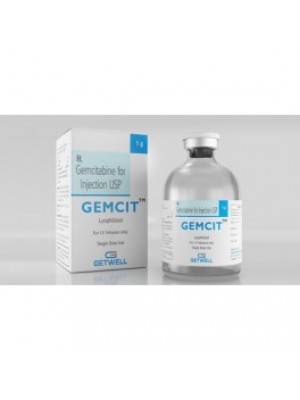
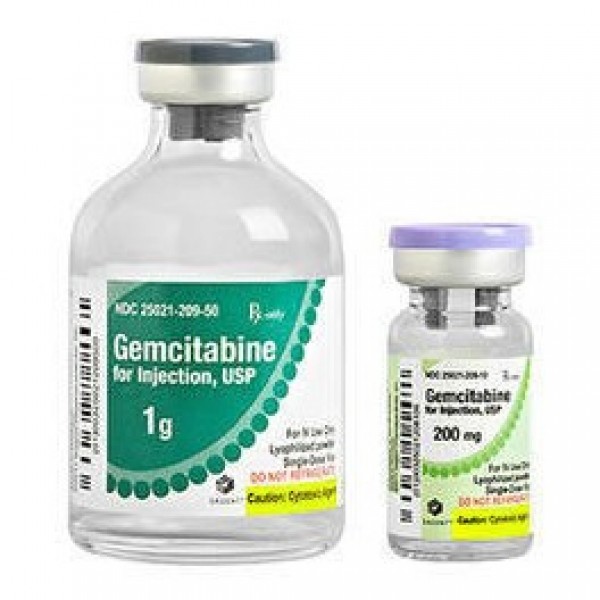
Gemcitabine 1000 mg.
Product Code: Gemcitabine 1000 mg.
Availability: In Stock
Product viewed: 1005


Gemcitabine 1000 mg.
WHAT gemcitabine ACCORD AND WHAT IT IS USED
Gemcitabine Accord belongs to a group of medicines called 'cytotoxic agents. "These drugs kill dividing cells, including cancer cells.
Accord Gemcitabine can be administered alone or in combination with other anticancer drugs, depending on the type of cancer.
Gemcitabine Accord is used to treat the following types of cancer:
non-small cell lung cancer (NSCLC), alone or in combination with cisplatin;
pancreatic cancer;
breast cancer in combination with paclitaxel;
ovarian cancer, in combination with carboplatin;
carcinoma of the bladder, in combination with cisplatin.
2. BEFORE YOU TAKE gemcitabine ACCORD
Do not take Gemcitabine Accord:
if you are allergic (hypersensitive) to gemcitabine or any of the other ingredients of Gemcitabine Accord;
if you are breastfeeding.
Take special care with Gemcitabine Accord:
Before the first infusion will take blood samples to assess whether you have sufficient kidney and liver. Before each infusion will take blood samples to assess whether you have enough blood cells to receive gemcitabine Accord. Your doctor may decide to change the dose or delay your treatment based on your general condition and if the number of your blood cells is too low. Periodically you will take blood samples to assess your kidney and liver.
Tell your doctor if:
have or have had liver disease, heart or blood vessels;
have recently had or will radiotherapy;
have recently been vaccinated;
breathing difficulties or feel very weak and are very pale (may be a sign of kidney failure).
Men are advised not to father a child during and up to 6 months after treatment with Gemcitabine Accord. If you want to father a child during treatment or during the 6 months after treatment, seek advice from your doctor or pharmacist. You can seek advice on conservation of sperm prior to treatment.
Taking other medicines
Please tell your doctor or hospital pharmacist if you are taking or have recently taken any other medicines, including vaccines and medicines obtained without a prescription.
Pregnancy and lactation
Tell your doctor if you are pregnant or intend to become pregnant. The use of gemcitabine Accord should be avoided during pregnancy. Your doctor will discuss with you the potential risk of taking Gemcitabine Accord during pregnancy.
If you are breastfeeding, tell your doctor.
You should stop breast-feeding during treatment with gemcitabine Accord.
Driving and using machines
Gemcitabine Accord can cause drowsiness, especially if you have consumed alcohol. Do not drive or operate machinery until you are sure that treatment with gemcitabine Accord does not make you drowsy.
Important information about some of the ingredients of Gemcitabine Accord
Gemcitabine Accord contains 3,5 mg (<1 mmol) sodium per vial of 200 mg and 17,5 mg (<1 mmol) sodium per vial of 1,000 mg. It should be borne in mind by the patients who are on a diet with a controlled intake of sodium.
3. HOW TO TAKE gemcitabine ACCORD
The usual dose of gemcitabine is 1000 to 1250 mg per square meter of your body surface. Will be measured your height and weight to calculate your body surface. Your doctor will use this body surface area to calculate the correct dose for you. This dose may be adjusted or treatment may be delayed depending on the number of your blood cells and your general condition.
How often receive infusion Gemcitabine Accord depends on the type of cancer that you are being treated. Hospital pharmacist or doctor will dissolve the powder gemcitabine before you implement it.
You will receive Gemcitabine Accord always by infusion into one of your veins. The infusion will last approximately 30 minutes.
If you have any further questions on the use of this product, ask your doctor or pharmacist.
4. POSSIBLE SIDE EFFECTS
Like all medicines, Gemcitabine Accord can cause side effects, although not everybody gets them.
The frequency of reported adverse reactions are defined as:
very common: affects more than 1 user in 10;
common: affects 1 to 10 users in 100;
uncommon: affects 1 to 10 users in 1000;
rare: affects more than 1 to 10 users in 10,000;
very rare: affects less than 1 user in 10,000;
not known, the available data can not be estimated.
You should contact your doctor immediately if you notice any of the following:
Fever or infection (common): if you have a temperature of 38 ° C or more, sweating or other signs of infection (since you have fewer white blood cells than normal, which is very common);
Irregular heart rhythm (arrhythmia) (frequency not known);
Pain, redness, swelling or sores in the mouth (common);
Allergic reactions: if you develop a skin rash (very common) / itching (often), or fever (very common);
Fatigue, fainting, shortness of breath easily or look pale (since you may have less hemoglobin than normal, which is very common);
Bleeding from the gums, nose or mouth or any bleeding that would not stop, reddish or pinkish urine, unexpected bruising (since you may have less platelets than normal, which is very common);
Difficulty breathing (very common to have mild difficulty breathing shortly after infusion of Gemcitabine, which soon passes, however infrequently or rarely may have more severe lung problems).
Side effects of Gemcitabine Accord may include:
Very common side effects:
Low hemoglobin (anemia);
Low white blood cells;
Low platelet count;
Difficulty in breathing;
vomiting;
nausea;
Skin rash - allergic skin rash, often itchy;
hair loss;
Liver problems: found by abnormal blood test results;
Blood in urine;
Abnormal urine, protein in the urine;
Flu-like symptoms, including fever;
Edema (swelling of the ankles, fingers, feet, face).
Common side effects:
Temperature, accompanied by a low number of white blood cells (febrile neutropenia);
Anorexia (loss of appetite);
headache;
insomnia;
drowsiness;
cough;
fever;
constipation;
diarrhea;
Pain, redness, swelling or sores in the mouth;
itching;
sweating;
Muscle pain;
Back pain;
fever;
weakness;
Chills.
Uncommon side effects:
Interstitial pneumonitis (scarring of the air sacs of the lungs);
Spasm of the respiratory tract (wheezing);
Abnormal radiograph / skenograma chest (formation of adhesions in the lungs).
Rare side effects:
Heart attack (myocardial infarction);
Low blood pressure;
Flaking, formation of wounds or blisters;
Reactions at the injection site.
Very rare side effects:
Increased platelet count;
Anaphylactic reaction (severe hypersensitivity / allergic reaction);
Necrosis of the skin and blistering of the skin severely.
Side effects with unknown frequency:
Irregular heart rhythm (arrhythmia);
Respiratory distress syndrome in adults (severe inflammation of the lungs causing respiratory failure);
Late toxicity after exposure (skin rash similar to severe sunburn) that can occur on skin that had previously been exposed to radiotherapy;
Fluid in the lungs;
Radiation Toxicity - scarring of the air sacs of the lung associated with radiation therapy;
Ischaemic colitis (inflammation of the lining of the large intestine caused by reduced blood supply);
Heart failure;
Renal failure;
Gangrene of the fingers or toes;
Serious liver injury, including liver failure;
Stroke.
You can have any of these symptoms and / or conditions. You should tell your doctor as soon as you start experiencing any of these side effects.
If any side effects worry you, talk to your doctor.
If any of the side effects gets serious, or you notice other effects not listed in this leaflet, please tell your doctor.
5. HOW TO STORE gemcitabine ACCORD
Keep out of the reach and sight of children.
Do not use Gemcitabine Accord after the expiry date stated on the carton and vial. The expiry date refers to the last day of that month.
Unopened vial: This medicinal product does not require any special storage conditions.
Reconstituted solution: The product should be used immediately. When prepared as directed, chemical and physical stability over the period of use of the prepared solution of gemcitabine for 21 days at 25 ° C. Further dilution can be done by a medical professional.
Dilutions of reconstituted gemcitabine should not be refrigerated, as crystallisation can occur.
This medicine is for single use only; any unused solution should be discarded according to local regulations.
6. FURTHER INFORMATION
What Gemcitabine Accord:
The active substance is gemcitabine. Each vial contains 200 mg or 1000 mg gemcitabine (gemcitabine hydrochloride).
The other ingredients are mannitol (E421), sodium acetate, hydrochloric acid and sodium hydroxide.
Gemcitabine Accord looks like and contents of pack
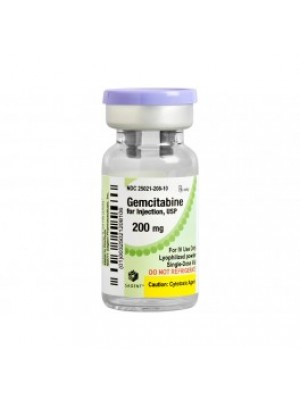
Gemcitabine Accord is white or off-white powder for solution for infusion in a vial.
Each vial contains 200 mg or 1 g gemcitabine.
Each package contains 1 Gemcitabine Accord vial.
Vials of 200 mg and 1 g are sold individually in separate packages. Not all pack sizes may be marketed.
Write a review
Your Name:Your Review: Note: HTML is not translated!
Rating: Bad Good
Enter the code in the box below:
Related Products