Your shopping cart is empty!
Welcome visitor you can login or create an account.
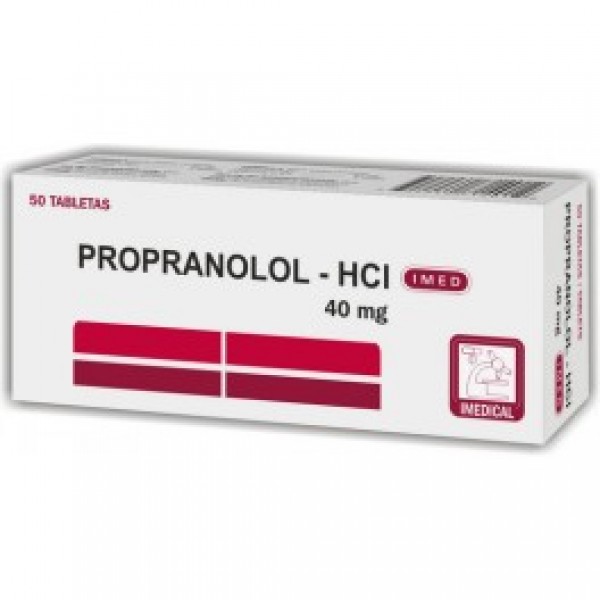
Propranolol 40 mg. 30 tablets
Product Code: Propranolol 40 mg. 30 tablets
Availability: In Stock
Product viewed: 1200


Propranolol 40 mg. 30 tablets
WHAT propranolol ACCORD AND WHAT IT IS USED
Propranolol belongs to the group of beta blockers. It is used to:
treat chest pain (due to poor blood flow to the heart muscle);
treatment of hypertension;
support and prevent additional heart attacks;
treatment of tremor;
control an irregular or fast heartbeat;
treatment of increased heart rate and other symptoms caused by overactive thyroid;
treatment of high blood pressure caused by a tumor in the vicinity of the kidney (pheochromocytoma);
reduction of severe headache (migraine);
the prevention of bleeding in the stomach in patients with high blood pressure in the liver or swollen blood vessels in the esophagus;
Under certain conditions, propranolol can be used to treat children with arrhythmia (abnormal heart rhythm). The dose will be determined by the doctor, depending on the age or weight of the child.
2. WHAT YOU SHOULD KNOW BEFORE YOU TAKE propranolol ACCORD
Do NOT take Propranolol Accord:
if you are allergic (hypersensitive) to propranolol hydrochloride or any of the other ingredients of this medicine (listed in section 6);
have untreated / uncontrolled heart failure;
shock caused by heart problems;
severe heart defects (second or third degree heart block);
you are suffering due to cardiac conduction or rhythm problem;
have a slow heart rate;
increased acidity of the blood (metabolic acidosis);
you are on a strict diet, fasting;
suffer from asthma or other breathing problems;
suffer from untreated phaeochromocytoma (high blood pressure may be due to a tumor near the kidney);
have severe circulatory problems (which can lead to numbness of the fingers and toes to pallor or bruising);
suffer from less than painful sensation in the chest with periods of rest (Prinzmetal angina);
have very low blood pressure.
If you think that one of these conditions apply to you, or if you have any doubts, consult your doctor before using Propranolol Accord.
Warnings and Precautions
Talk to your doctor or nurse before you start taking Propranolol Accord:
have a history of allergic reactions;
suffer from muscle weakness (myasthenia gravis);
have a weak heart or first degree heart block;
have kidney disease;
have liver disease;
may mask the symptoms of hyperthyroidism (increased appetite, weight loss, sweating);
suffer from diabetes. Your medicine may reduce blood sugar levels (hypoglycaemia), leading to a slow heart rate;
have a condition caused by an overactive thyroid gland (thyrotoxicosis). Your medicine may mask the symptoms of thyrotoxicosis;
suffer from Raynaud's disease (cold sensations in fingers and toes) or intermittent claudication (narrowing of the arteries in the legs, causing pain when walking).
Other drugs and propranolol
Tell your doctor or pharmacist if you are taking, have recently taken or may take any other medicines:
barbiturates (to treat severe insomnia);
MAO inhibitors (for treating depression);
Propafenone (used to treat life-threatening cardiac conduction or rhythm problems);
Fingolimid (for treatment of multiple sclerosis);
Verapamil, bepridil, and diltiazem (for the treatment of cardiovascular diseases);
disopyramide, quinidine and amiodarone, lidocaine or flekanid (to treat irregular heart rhythms and arrhythmias);
indomethacin (for the treatment of pain);
cimetidine (used to treat stomach ulcers);
adrenaline (epinephrine, which is used in anaphylactic shock);
fluoksamin (used to treat depression);
clonidine, moxonidine and methyldopa (used to treat high blood pressure);
chlorpromazine (for mental illness);
drugs for the treatment of diabetes, including insulin;
drugs for the treatment of migraine such as ergotamine and rizatriptin;
rifampicin (to treat infection);
Theophylline (the treatment of asthma and reversible airway obstruction);
smoking tobacco.
Anesthetics or tests
If required you are given anesthesia or you are having a blood test or urine, please tell your doctor or dentist that you are taking propranolol tablets.
If you see another doctor or go into hospital, let them know what medications you are taking.
Pregnancy, lactation and fertility
If you are pregnant or breast-feeding, think you may be pregnant or are planning to have a baby, ask your doctor or pharmacist before taking this medicine.
Propranolol Accord is not recommended during pregnancy or breastfeeding.
Driving and using machines
Because of the side effects, i.e., fatigue and dizziness, it is possible, the ability to drive and use machines to be affected.
Important information about some of the ingredients of Propranolol Accord:
Propranolol Accord contains lactose. If you have been told by your doctor that you have intolerance to some sugars, contact your doctor before taking this medicine.
3. HOW TO TAKE propranolol ACCORD
Always take this medicine exactly as described in this leaflet or as you have been told your doctor or pharmacist or nurse. Consult your doctor or pharmacist or nurse if you are unsure.
Take it with water before meals.
Do not stop taking this medicine unless your doctor tells you to stop.
adults:
Angina - initial 40 mg two or three times per day, the maximum recommended dose of 120-240 mg per day;
High blood pressure - initial 40 mg two or three times daily, may be increased by 80 mg per day to 160-320 mg per day;
Heart attack (myocardial infarction after) - initial 40 mg 2-3 times daily, and later, the dose may be increased up to 80 mg twice daily;
Tremor - 40 mg two to three times a day;
Irregular heartbeat - 10 to 40 mg twice or three times a day;
Increased thyroid function - the dose should be determined on the basis of clinical response;
pheochromocytoma:
Before surgery - 60 mg per day for 3 days;
No operation - 30 mg per day;
Migraine: initially 40 mg two or three times a day up to 80-160 mg per day;
Liver disease due to high blood pressure - initially 40 mg twice daily, the maximum recommended dose is 160 mg twice daily.
Children and adolescents:
Arrhythmias under certain conditions, propranolol can be used to treat children with arrhythmia (abnormal heart rhythm). The dose will be determined by the doctor, depending on the age or weight of the child.
Elderly: Dose must be determined on the basis of clinical response.
Hepatic or renal insufficiency, the dose should be determined based on clinical response.
If you take Propranolol Accord more than you need
If you take more than the prescribed dose, contact your nearest emergency department or you tell your doctor or pharmacist. Overdose causes too slow heartbeat, very low blood pressure, heart failure and breathing difficulties, with symptoms such as fatigue, hallucinations, fine tremor, confusion, nausea, vomiting, spasms of the body, loss of consciousness or coma, low blood sugar.
If you forget to take Propranolol Accord
Do not take a double dose to make up for a missed dose.
If you stop taking Propranolol Accord
If you stop taking propranolol tablets suddenly can appear unpleasant side effects, including sweating, shakiness, worsening of angina, irregular heartbeat, heart attack or death. Discontinuation should be gradual.
If you have any questions about using this medicine, ask your doctor, pharmacist or nurse.
4. POSSIBLE SIDE EFFECTS
Like all medicines, this medicine can cause side effects, although not everybody gets them.
Stop treatment and contact your doctor if you have the following symptoms:
intolerance Propranolol Accord as slow heart rate and low blood pressure causing dizziness, light-headedness, fainting, or blurred vision;
allergic reaction such as itching, difficulty breathing or swelling of the face or tongue.
Tell your doctor if you notice any of these side effects or if you notice other effects not listed:
Common (less than 1 in 10 people):
fatigue, cold extremities, difficulty sleeping (these symptoms usually disappear);
slow or irregular heartbeat, severely restricted blood flow to the fingers and toes (Raynaud's syndrome);
nightmares, shortness of breath.
Uncommon (less than 1 in 100 people):
nausea or vomiting, diarrhea (these symptoms usually disappear), vomiting.
Rare (less than 1 in 1000 people):
Your medicine may change the number and type of blood cells. If you notice increased bruising, nosebleeds, sore throats or infections, you should tell your doctor, who may be required to do a blood test;
worsening heart failure, low blood pressure / fainting on standing, dizziness;
skin rash, worsening of psoriasis, hair loss, dry and scaly skin;
seeing, hearing or feeling things that seem real but do not happen (hallucinations), mood changes, tingling, severe mental disorders (psychosis), loss of memory;
in patients with asthma or a history of this - breathing problems;
dry eyes, visual disturbances;
loss of ability to thinking;
abnormal skin sensations (as tingling or tickling or itching or burning);
swelling of the blood vessels under the skin, which can be painful and accompanied by redness.
Very rare (less than 1 in 10,000 users):
muscle weakness;
sweating.
Known (from the available data can not be estimated):
pain in the head;
acute disease of the blood;
difficulty in breathing;
signs of hyperthyroidism may be masked;
changes in the level of fat in the blood, changes in renal function;
changes in blood glucose levels;
seizures (convulsions) associated with low blood zaxap;
worsening chest pain, depression;
constipation, dry mouth, eye infections;
changes in sexual desire or potency;
joint pain.
If any of the side effects talk to your doctor or nurse. This includes any other side effects not listed in this leaflet.
5. HOW TO STORE propranolol ACCORD
Keep this medicine out of the reach of children.
This medicinal product does not require any special storage conditions.
Do not use this medicine after the expiry date stated on the label after "EXP". The expiry date refers to the last day of that month.
Do not dispose of medicines via wastewater or household waste. Ask your pharmacist how to dispose of medicines no longer required. These measures will help to protect the environment.
6. Contents of the pack and further information
What Propranolol Accord
The active substance is propranololov hydrochloride. Each tablet contains 40 mg or 80 mg propranololov hydrochloride.
Other ingredients are:
corn starch;
lactose monohydrate;
microcrystalline cellulose (E460);
magnesium stearate.
Composition of the tablet coating:
hypromellose (E464);
microcrystalline cellulose (E460);
acetylated monoglycerides and diglycerides;
titanium dioxide (E171).
Propranolol Accord looks like and contents of pack
40 mg: White to off-white, round, biconvex (curved on both sides) film-coated tablet with "AL" on one side and scored on the other side rug.
80 mg: White to off-white, round, biconvex (curved on both sides) film-coated tablet with "AM" on one side and scored on the other side.
The scoreline is only to facilitate breaking for ease of swallowing and not to divide into equal doses.
Blister PVC-PVdC / ALU in packs of 25, 28, 30, 50, 56, 60, 100 and 250 tablets.
Not all pack sizes may be marketed.
Write a review
Your Name:Your Review: Note: HTML is not translated!
Rating: Bad Good
Enter the code in the box below:
Related Products
Propranolol table. 20 mg. 50 tablets What is Propranolol is..
29.00€