
Your shopping cart is empty!
Welcome visitor you can login or create an account.
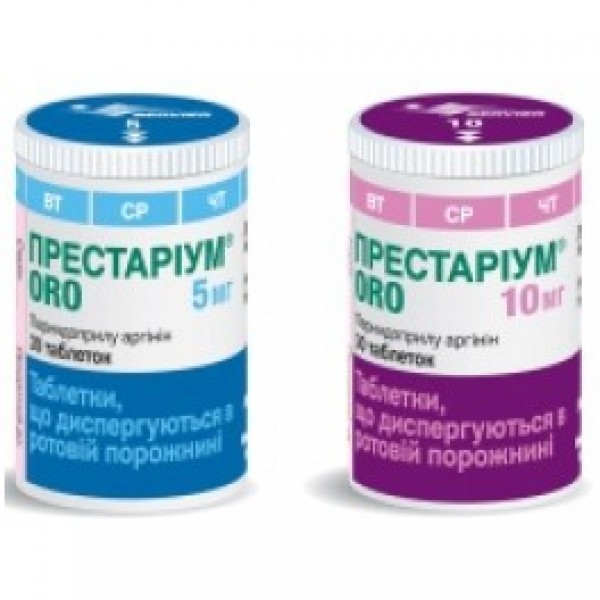
PRESTARIUM ORO 10 mg. 30 tablets
Product Code: PRESTARIUM ORO 10 mg. 30 tablets
Availability: In Stock
Product viewed: 1123


PRESTARIUM ORO 10 mg. 30 tablets
QUALITY AND QUANTITATIVE COMPOSITION
One tablet, orodispersible contains 6,790 mg perindopril (perindopril), corresponding to 10 mg of perindopril arginine (perindopril arginine).
3. PHARMACEUTICAL FORM
Tablets, orodispersible, White, round tablet.
4. CLINICAL DATA
Therapeutic indications
Hypertension. Treatment of hypertension
Stable coronary artery disease: Reduction of risk of cardiovascular events in patients with myocardial infarction and / or revascularisation
Dosage and method of administration
- For oral administration.
Recommended PRESTARIUM tablets disperse in the mouth, to be taken once daily in the morning on an empty stomach.
The tablet should be placed on the tongue to collapse and be swallowed with saliva.
The dosage should be individualized according to the patient's condition and blood pressure response.
hypertension:
PRESTARIUM may be administered alone or in combination with other groups, antihypertensive drugs.
The recommended starting dose is 5 mg and is taken once daily in the morning. In patients with high activity of the renin-angiotensin-aldosterone system (in particular, renovascular hypertension, violations of water-salt balance and / or dehydration, cardiac decompensation or severe hypertension) may occur excessive drop in blood pressure after the initial dose. In such patients recommended starting dose of 2,5 mg as the initial stages of treatment should be done under medical supervision. After one month of treatment, the dose may be increased to 10 mg once daily.
After beginning therapy with PRESTARIUM may appear symptomatic hypotension; this is more likely in patients receiving diuretics parallel. Therefore, it is recommended in the treatment to be performed with caution, since these patients may have violations of water-salt balance and / or dehydration.
If possible, the diuretic should be discontinued 2 to 3 days before beginning therapy with PRESTARIUM.
In hypertensive patients where it is impossible to stop the diuretic therapy PRESTARIUM should start with a dose of 2,5 mg. You need to monitor renal function and serum potassium levels. Then PRESTARIUM dose should be adjusted according to blood pressure response. If necessary, the adoption of a diuretic may be resumed.
In elderly patients, treatment should begin with a dosage of 2,5 mg, which can be gradually increased to 5 mg after one month and then to 10 mg, if necessary, depending on renal function (see. The table -down).
Stable coronary artery disease:
PRESTARIUM should be initiated at a dose of 5 mg once a day for 2 weeks, then increased to 10 mg once daily, depending on renal function and provided that the 5 mg dose is well tolerated.
In older patients must be adopted 2,5 mg once daily for 1 week, next week - 5 mg once a day, before increasing the dose to 10 mg once daily, depending on renal function. The dose should be increased only if the previous lower dose is well tolerated.
Children and adolescents (under 18 years):
There have been no studies on the efficacy and safety of use in children and adolescents. Therefore not recommended for use in children and adolescents.
Contraindications
• Hypersensitivity to perindopril or to any of the excipients, or to any other ACE inhibitor;
• A history of angioedema related to previous treatment with an ACE inhibitor;
• Hereditary or idiopathic angioedema;
• Second and third trimester of pregnancy.
Special warnings and precautions for use
Stable coronary artery disease:
If the first month of treatment with perindopril occur symptoms of unstable angina pectoris (strong or not) must be carried out careful evaluation of the benefit / risk before treatment can be continued.
hypotension
ACE inhibitors can cause a fall in blood pressure. Symptomatic hypotension was rarely seen in patients with uncomplicated hypertension and is more likely to occur in dehydrated patients, for example. by diuretics, limited intake of table salt, dialysis, diarrhea or vomiting, or who suffer from severe hypertension reninozavisima. In patients with symptomatic heart failure with or without associated renal failure has been observed symptomatic hypotension. This is most likely to occur in patients with expressed stages of heart failure, which results in the use of high doses of loop diuretics, hyponatremia or renal dysfunction. In patients at increased risk of symptomatic hypotension, should be carried out strict control during the initiation of therapy and dose adjustment. The same considerations apply to patients with ischemic heart disease or cerebrovascular disease in whom an excessive fall in blood pressure could result in a myocardial infarction or cerebrovascular accident.
When you are hypotension the patient should be placed in the supine position and, if necessary, should be given intravenous infusion of sodium chloride 9 mg / ml (0.9%) solution. A transient hypotensive response is not a contraindication to further adoption of appropriate doses, whose intake usually can be continued without problems after high blood pressure due to increased volume.
In some patients with congestive heart failure who have normal or low blood pressure due to the use of PRESTARIUM may appear further lowering of systemic blood pressure. It is expected effect and is usually not a reason for discontinuation. If hypotension grow into a symptomatic one may require dose reduction or discontinuation of PRESTARIUM.
Aortic and mitral valve stenosis / hypertrophic cardiomyopathy:
As with other ACE inhibitors, PRESTARIUM should be administered with caution to patients with mitral valve stenosis and obstruction in the outflow of the left ventricle such as aortic stenosis or hypertrophic cardiomyopathy.
Impaired renal function:
In cases of renal impairment (creatinine clearance <60 ml / min), the initial dose of perindopril should be adjusted according to the patient's creatinine clearance (see. 4.2), then the dose is determined as a function of the patient's response to treatment. In these patients, part of normal medical practice routine monitoring of potassium and creatinine. In patients with symptomatic heart failure development of hypotension following initiation of therapy with ACE inhibitors may lead to further impairment of renal function. In this situation there are reports of occurrence of acute renal failure, usually reversible.
Patients on hemodialysis:
In patients with dialysis membranes with high flow rate (high flux) and simultaneously treated with an ACE inhibitor was reported occurrence of anaphylactoid reactions. In such patients should consider using a different type of dialysis membrane or antihypertensive agent from a different class.
Kidney transplantation:
There is no experience on the implementation of PRESTARIUM in patients with a recent kidney transplant.
Hypersensitivity / angioedema:
Rare cases of angioedema of the face, extremities, lips, mucous membranes, tongue, glottis and / or larynx in patients treated with ACE inhibitors, including PRESTARIUM. This can happen at any time during therapy. In such cases PRESTARIUM be terminated immediately and take appropriate follow-up, which continued until complete resolution of symptoms. In cases where the swelling is limited to the face and lips, the condition is generally controlled without treatment, although for the relief of symptoms is a useful application of antihistamines.
Hepatic impairment:
Rarely, ACE inhibitors have been associated with a syndrome that starts with cholestatic jaundice and progresses to fulminant hepatic necrosis and (sometimes) death. The mechanism of this syndrome is unclear. Patients receiving ACE inhibitors who develop jaundice or marked elevations in liver enzymes, ACE inhibitors should be discontinued and their status should be monitored in an appropriate manner by a doctor (see. Section 4.8).
Neutropenia / agranul otsitoza / thrombocytopenia / anemia:
In patients receiving ACE inhibitors have been observed neutropenia / agranulocytosis, thrombocytopenia and anemia. In patients with normal renal function with no other complicating factors, neutropenia occurs rarely. Perindopril should be used with extreme caution in patients with collagen vascular disease, immunosuppressive therapy, treatment with allopurinol or procainamide, or a combination of these complicating factors, especially in cases where there is a predetermined impaired renal function. Some of these patients developed serious infections, which in some cases are not affected by intensive antibiotic therapy. If such patients appoint perindopril regular monitoring of levkogramata and patients should be instructed to report any signs of infection (eg sore throat, fever).
Race:
The proportion of cases of angioedema caused by ACE inhibitors is higher in black patients than in non black patients.
Like other ACE inhibitors, perindopril may be less effective in lowering blood pressure in black than in non blacks, possibly because of the prevalence of lower renin levels among the black population of hypertensives.
cough
There have been reports of occurrence of cough in use of ACE-inhibitors. The cough is nonproductive, persistent and resolves after discontinuation of therapy. As part of the differential diagnosis of cough should be considered cough induced by ACE inhibitors.
Surgery / anesthesia:
In patients undergoing major surgery or during anesthesia with agents that cause hypotension, PRESTARIUM can block the formation of angiotensin II, obtained as a result of compensatory renin release. Treatment should be discontinued one day before surgery. If hypotension occurs and is considered to be due to this mechanism, it can be corrected by volume expansion through acquisitions.
hyperkalemia:
Increases in serum potassium have been observed in some patients treated with ACE inhibitors, including perindopril. Risk factors for the development of hyperkalemia include renal failure patients, worsening of renal function, advanced age (> 70 years), diabetes mellitus, vmetnatite events, in particular dehydration, acute cardiac decompensation, metabolic acidosis and concomitant use of potassium-sparing diuretics (eg. cpiponolakton, eplerenone, salt or amiloride), potassium supplements or potassium-containing substitutes for patients taking other drugs associated with increases in serum potassium (eg. heparin). The use of potassium supplements, potassium-sparing diuretics or potassium-containing salt substitutes, particularly in patients with impaired renal function may lead to significant increases in serum potassium. Hiperkapiemiyata can cause serious, sometimes fatal arrhythmias. If concomitant use of the above substances is deemed appropriate, they should be used with caution and frequent monitoring of serum potassium.
diabetics:
During the first month of treatment with ACE inhibitors diabetics who are taking oral antidiabetic agents or insulin should be regularly glycemic control.
lithium:
The combination of lithium and perindopril is generally not recommended.
Potassium-sparing diuretics, potassium supplements or potassium containing salt substitutes table: Generally not recommended combination of perindopril and potassium sparing diuretics, potassium supplements or potassium containing salt substitutes table.
pregnancy:
ACE inhibitors should not be initiated during pregnancy. Unless continued ACE inhibitor therapy is considered essential, patients planning pregnancy should be changed to alternative antihypertensive treatments which have an established safety profile for use in pregnancy. If pregnancy is diagnosed, treatment with ACE inhibitors should be stopped immediately and, if necessary, an alternative treatment (see. 4.3 and 4.6).
Excipients:
Due to the presence of lactose, patients with a rare hereditary problems of galactose intolerance, glucose-galactose malabsorption or the Lapp lactase deficiency should not take this medicine.
Contains phenylalanine source. May be harmful for people with fenilketoruniya.
Interaction with other medicinal products and other forms of interaction
diuretics:
In patients receiving diuretics, especially patients with dehvdratatsiya and / or an aqueous salt disorders may occur excessive reduction in blood pressure after initiation of therapy with ACE inhibitors. The probability of hypotensive effects can be reduced by discontinuation of the diuretic, fluid resuscitation or salt intake prior to initiating therapy with low and increasing doses of perindopril.
Potassium-sparing diuretics. potassium supplements or potassium containing salt substitutes table: Although serum potassium usually remains within normal limits, in some patients treated with perindopril can occur hyperkalemia. Potassium sparing diuretics (eg. Spironolactone, triamterene or amiloride), potassium supplements or potassium-containing substituents of table salt can lead to a significant increase in serum potassium. Therefore, the combination of perindopril with the above drugs are not recommended. If concomitant use is indicated because of demonstrated hypokalaemia they should be used with caution and frequent monitoring of serum potassium.
lithium:
Reversible increases in serum lithium concentrations and toxicity concomitant lithium and ACE inhibitors. Concomitant use of thiazide diuretics may increase the risk of lithium toxicity and enhance the already increased risk of lithium toxicity with ACE inhibitors. Simultaneous use of perindopril and lithium, but if the combination proves necessary, serum lithium levels should be monitored carefully.
Non-steroidal anti-inflammatory drugs (NSAIDs) including aspirin> 3 g / day When ACE inhibitors are administered simultaneously with NSAIDs (eg. Acetyl salicylic acid in inflammatory doses, COX-2 inhibitors and nonselective NSAIDs) may occur attenuation of the antihypertensive effect . Concomitant use of ACE inhibitors and NSAIDs may lead to an increased risk of worsening of renal function, including possible acute renal failure, and an increase in serum potassium, especially in patients with poor pre-existing renal function. The combination should be administered with caution, especially in the elderly. Patients should be adequately hydrated and must provide for monitoring of renal function after initiation of concomitant therapy, and then - periodically.
Antihypertensive agents and vasodilators:
Concomitant use of these agents may increase the hypotensive effects of perindopril. Concomitant use with nitroglycerin and other nitrates or other vasodilators may further reduce blood pressure.
Antidiabetic agents:
The results of epidemiological studies have shown that concomitant administration of ACE inhibitors and antidiabetic drugs (insulin, oral hypoglycemic agents) may cause more powerful glucose-lowering effect with risk of hypoglycaemia. This phenomenon is more likely to occur during the first weeks of combined treatment and in patients with renal impairment.
Tricyclic antidepressants / antipsychotics / anestetini:
Concomitant use of certain anesthetic medicinal products, tricyclic antidepressants and antipsihototsi with ACE inhibitors may result in further reduction of blood pressure.
sympathomimetic:
Sympathomimetics may reduce the antihypertensive effects of ACE inhibitors. Acetyl salicylic acid, thrombolytics. beta-blockers. nitrates:
Perindopril may be used concomitantly with acetylsalicylic acid (when used as a thrombolytic), thrombolytics, beta-blockers and / or nitrates.
Write a review
Your Name:Your Review: Note: HTML is not translated!
Rating: Bad Good
Enter the code in the box below:
Related Products
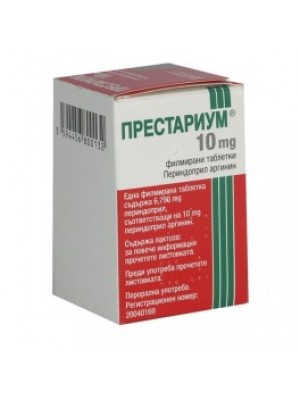
PRESTARIUM table. 10 mg. 30 table PRESTARIUM 10 mg, tablets ..
32.00€
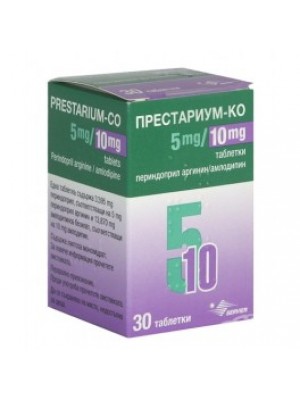
Co-PRESTARIUM table. 5 mg. 30 table WHAT PRESTARIUM-KO AND W..
29.00€

PRESTARIUM-KO 10 mg. / 10 mg. 30 tabletsWHAT PRESTARIUM-KO A..
28.00€