
Your shopping cart is empty!
Welcome visitor you can login or create an account.
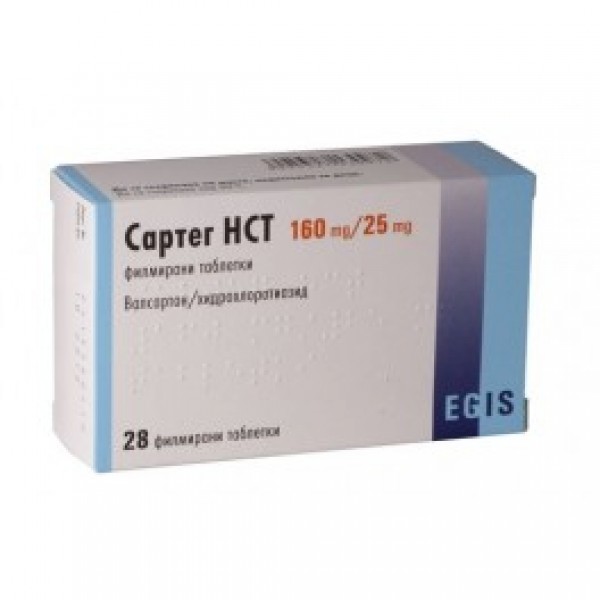
SARTEG HCT 160/25 mg. 30 tablets
Product Code: SARTEG HCT 160/25 mg. 30 tablets
Availability: In Stock
Product viewed: 905


SARTEG HCT 160/25 mg. 30 tablets
What is Sarteg HCT is and what it is used
Sarteg HCT contains two active substances called valsartan and hydrochlorothiazide. Both drugs help control high blood pressure (hypertension)
Valsartan belongs to a class of medicines known as angiotensin II receptor antagonists, which help to control high blood pressure. Angiotensin II is a substance in the body that causes vessels to constrict and blood pressure as they grow. Valsartan blocks the effect of angiotensin II. As a result, blood vessels relax and blood pressure is lowered.
Hydrochlorothiazide belongs to a group of medicines called thiazide diuretics (also known as "water"). Hydrochlorothiazide increases urine output, which also lowers blood pressure.
Sarteg HCT is used to treat high blood pressure, which can not successfully be controlled by only one drug.
High blood pressure increases the work of the heart and arteries. If left untreated, it can damage the blood vessels of the brain, heart and kidneys, causing stroke (stroke), heart failure or kidney failure. High blood pressure increases the risk of heart attack. Lowering blood pressure can reduce the risk of these injuries.
2. What you need to know before taking Sarteg HCT
Do not take Sarteg HCT:
if you are allergic to valsartan, hydrochlorothiazide, sulfonamides (substances associated with hydrochlorothiazide), soybean oil, peanut oil or to any of the ingredients of this medicine (listed in section. 6);
if you are older than 3 months of pregnancy (also better not to take Sarteg HCT in early pregnancy, see "Pregnancy and breastfeeding");
if you have serious liver disease, impairment of the small bile ducts in the liver (biliary cirrhosis), causing retention of bile in the liver (cholestasis);
if you have serious kidney disease;
if you can not urinate (anuria);
if you are treated with "artificial kidney"
if you are on a low potassium and sodium in the blood of normal or calcium levels in the blood are higher, irrespective of therapy;
if you have gout.
If any of the above applies to you, do not take this medicine and talk to your doctor.
Warnings and Precautions
Talk to your doctor or pharmacist before taking Sarteg HCT:
if you are taking potassium - retaining drugs, potassium supplements or salt substitutes containing potassium or other substances that increase the level of potassium in the blood, such as heparin. Your doctor may regularly check the levels of potassium in the blood;
if you have low levels of potassium in the blood;
if you have diarrhea or severe vomiting;
if you are taking high doses of diuretics (water pills);
if you have severe heart disease;
if you suffer from heart failure or have had a heart attack. Carefully follow prescribed. Your doctor may also examine your kidney function;
if you have a narrowing of the renal arteries;
if you have had a kidney transplant (kidney transplant);
if you suffer from aldosteronism. This is a disease in which the adrenal glands produce too much of the hormone aldosterone. If this applies to you, the use of Sarteg HCT is not recommended;
if you have liver or kidney disease;
if you have ever had swelling of the tongue or face caused by an allergic reaction called angioedema when taking other medications (including ACE inhibitors). If these symptoms occur when taking Sarteg HCT, stop taking Sarteg HCT and tell your doctor. Never again should not be prescribed Sarteg HCT. See also section. 4 Possible side effects;
if you have fever, rash and joint pain, which can be signs of systemic lupus erythematosus (ie. autoimmune disease);
if you have diabetes, gout, high cholesterol or fats in the blood;
if you are allergic (have hypersensitivity) to any other medicines in the same group as valsartan (an angiotensin II receptor antagonists) or if you have allergy or asthma;
if you feel a decrease in vision or eye pain. These may be signs of increasing pressure in your eyes and can happen hours to weeks of Sarteg HCT. It can lead to permanent loss of vision if not treated. If you have had an allergy to penicillin or sulfonamides You may have a higher risk of developing it;
may cause increased skin sensitivity to sun.
Children and adolescents
The use of Sarteg HCT in children and adolescents (under 18 years) is not recommended.
You should tell your doctor if you think you are (or might become) pregnant. Sarteg HCT is not recommended in the early months of pregnancy because it may seriously harm your baby if taken after the third month of pregnancy (see section. Pregnancy and lactation).
Other medicines and Sarteg HCT
Tell your doctor or pharmacist if you are taking, have recently taken or might take any other medicines.
The effect of the treatment can be influenced if Sarteg HCT is taken with certain other medicines. You may need to change the dose, to take precautions, or in some cases to stop taking any medicine. This applies to the following medicines:
Lithium, a medicine used for the treatment of certain types of mental illness;
medicines that affect or can be affected by the levels of potassium in the blood, such as digoxin to control the heart rhythm, some antipsychotic drugs;
drugs which can increase potassium levels in the blood, such as potassium supplements, salt substitutes containing potassium, potassium-sparing medicines, heparin;
drugs to reduce potassium levels in the blood, such as corticosteroids, some laxatives;
drugs used to treat HIV / AIDS infections (ritonavir). These medicines may increase the effect of HCT Sarteg;
drugs that can cause "torsades de pointes" (irregular heartbeat) such as antiarrhythmics (medicines for heart problems) and some antipsychotics;
drugs that can reduce the amount of Narita in your body, such as antidepressants, antipsychotics, antiepileptics;
diuretics (water tablets), medicines for gout, such as allopurinol, Vitamin D and calcium supplements, medicines for the treatment of diabetes (oral or insulin);
other medications for high blood pressure, such as beta blockers or methyldopa, or medicines constricts blood vessels or stimulate your heart, such as adrenaline and noradrenaline;
drugs that increase blood sugar levels, such as diazoxide;
drugs for the treatment of cancer, such as methotrexate or cyclophosphamide;
painkillers such as nonsteroidal anti-inflammatory drugs (NSAIDs), including selective cyclooxygenase-2 inhibitors (Cox-2 inhibitors) and acetylsalicylic acid> 3 g;
arthritis medicines;
medications to relax the muscles as tubocurarine;
anticholinergic drugs such as atropine or biperiden;
amantadine (a medicine for the treatment of Parkinson's disease and prevention of influenza);
cholestyramine and colestipol (for the treatment of high levels of blood fats);
cyclosporin to prevent organ transplant rejection;
certain antibiotics (tetracycline, rifampicin), drugs and sedatives;
carbamazepine, to treat seizures;
iodinated contrast agents (agents used for contrast studies).
Sarteg HCT with food and alcohol
You can take Sarteg HCT with or without food.
Avoid alcohol before talking to your doctor. Alcohol can cause low blood pressure and / or increase the risk of dizziness or fainting.
Pregnancy and lactation
If you are pregnant or breast feeding, or think you may be pregnant, or are planning to have a baby, ask your doctor or pharmacist for advice before taking this medicine.
You should tell your doctor if you are pregnant or may become pregnant.
Usually, your doctor will advise you to stop taking Sarteg HCT before you become pregnant or as soon as you become aware that you are pregnant and will advise you to take another medicine instead Sarteg HCT. Sarteg HCT is not recommended in early pregnancy and must not be used after the third month of pregnancy because it can cause serious harm to your baby if used after the third month of pregnancy.
You should tell your doctor if you are breastfeeding or about to start breast-feeding.
Sarteg HCT is not recommended for nursing mothers, your doctor may choose another treatment if you want to breast-feed, especially if your baby is newborn, or born prematurely.
Driving and using machines
Prior to drive and use tools or machines, or perform activities that require concentration, make sure you know how you affect Sarteg HCT. Like other medications for high blood pressure, Sarteg HCT can cause in rare cases somnolence and fatigue, which can affect the ability to concentrate.
Sarteg HCT contains lactose, if you were told by your doctor that you have intolerance to some sugars, contact your doctor before taking the drug.
Sarteg HCT contains soya oil. If you are allergic to peanut or soya, do not take this medicine.
Sarteg HCT 160 mg / 12,5 mg also contains Sunset yellow FCF (E110) which may cause allergic reactions.
3. How to take Sarteg HCT
Always take this medicine exactly as prescribed by your doctor or pharmacist. This will have the best results and reduce the risk of side effects. If you are not sure how to take your medicine, specify this with your doctor or pharmacist.
People with high blood pressure often do not notice any signs of this problem. Many of them feel good. Why it is so important to visit your doctor as agreed, even if you feel well.
Your doctor will tell you exactly how many tablets to take Sarteg HCT. Depending on how you respond to treatment, the doctor may suggest a higher or lower dose.
The recommended dose Sarteg HCT is one tablet daily.
Do not change your dose or stop taking your tablets without you consulted with your doctor.
This medication should be taken at the same time of day, usually in the morning.
You can take the tablets with or without food.
Take the tablet with a glass of water.
If you take more dose HCT Sarteg
If you experience severe dizziness and / or fainting, lie down and contact your doctor. If you take too many tablets by accident, contact your doctor, pharmacist or hospital.
If you forget to take Sarteg HCT
If you forget to take a dose of medicine you should take it as soon as possible. If it's time for your next dose, skip the missed dose. Do not take a double dose to make up the missed dose.
If you stop taking Sarteg HCT
Stopping treatment with HCT Sarteg can lead to worsening of high blood pressure. Do not stop taking this medicine unless your doctor tells you to do.
If you have further questions on the use of this medicine, ask your doctor or pharmacist.
4. Possible side effects
Like all medicines, this medicine can cause side effects, although not everybody gets them.
The frequency of adverse reactions listed below is defined using the following wording:
Very common: affects more than 1 out of 10 patients;
Common: affects 1 to 10 patients in 100;
Uncommon: affects 1 to 10 patients in 1000;
Rare: affects 1 to 10 patients in 10,000;
Very rare: affects less than 1 out of 10,000 patients;
Not known: frequency can not be estimated from the available data.
Some side effects can be serious and require immediate medical attention:
You should immediately see your doctor if you experience any symptoms of angioedema, such as:
swelling of the face, tongue or swallow;
difficulty swallowing;
urticaria (hives) and difficulty in breathing.
If you experience any of these symptoms stop taking Sarteg HCT and immediately contact your doctor (see also item. 2 Warnings and Precautions).
Other side effects include:
Uncommon:
cough;
low blood pressure;
feeling light-head;
dehydration (with thirst, dry mouth and tongue, urinating infrequently, dark urine, dry skin);
muscle pain;
tiredness;
tingling or numbness;
blurred vision;
noises in the ears (eg. hiss, hum).
Very rare:
dizziness;
diarrhea;
joint pain.
Not known:
shortness of breath;
severely decreased urine output;
low sodium levels in the blood (sometimes with nausea, tiredness, confusion, malaise, convulsions);
low levels of potassium in the blood (sometimes with muscle weakness, muscle spasms, irregular heartbeat);
reduced number of white blood cells (with symptoms such as fever, skin infections, sore throat or mouth);
ulcers due to infections, weakness;
elevated levels of bilirubin in the blood (which in severe cases can lead to yellowing of the skin and eyes);
an increase in levels of blood urea nitrogen and creatinine (which can indicate impaired renal function);
increased levels of uric acid in the blood (which in severe cases can trigger gout);
syncope (fainting).
Adverse reactions observed with valsartan alone or hydrochlorothiazide:
Valsartan
Uncommon:
feeling dizzy;
abdominal pain.
Not known:
skin rash with or without itching together with some of the following symptoms: fever, joint pain, muscle pain, swollen lymph nodes and / or flu-like symptoms;
rash, purplish-red spots, fever, itching (signs of inflammation of blood vessels);
decreased number of blood platelets (sometimes with unusual bleeding or bruising);
increase the levels of potassium in the blood (which can, in severe cases can lead to muscle spasms and abnormal heart rhythm);
allergic reactions (with symptoms such as rash, itching, hives, shortness of breath and difficulty swallowing, dizziness);
swelling mainly of the face and throat, rash, pruritus;
increase in liver values;
reduction in the level of hemoglobin and reduction of red blood cells (which can in severe cases lead to anemia);
kidney failure;
low sodium levels in the blood (sometimes with nausea, tiredness, confusion, malaise, convulsions).
Hydrochlorothiazide
Very common:
low levels of potassium in the blood;
elevated blood lipids.
Common:
low sodium levels in the blood;
low levels of magnesium in the blood;
high levels of uric acid in the blood;
itchy rash and other types of rashes;
decreased appetite;
slight nausea, vomiting;
lightheadedness, fainting upon standing;
impotence.
Rare:
swelling and bumps on the skin (due to increased sensitivity to sun);
high levels of calcium in the blood;
high levels of blood glucose;
sugar in the urine;
worsening of diabetic metabolic condition;
constipation, diarrhea, gastrointestinal discomfort, liver problems, which can occur together with yellow skin and eyes;
irregular heartbeat;
headache;
sleep disorders;
sad mood (depression);
decreased number of blood platelets (sometimes with bleeding or bruising under the skin);
dizziness;
tingling or numbness;
visual disturbances.
Very rare:
inflammation of blood vessels with symptoms such as rash, purplish-red spots, fever (inflammation of blood vessels);
rash, itching, hives, shortness of breath or difficulty swallowing, pimples on the lips, eyes or mouth, peeling skin, fever (toxic epidermal necrolysis);
facial rash, joint pain, muscle disorders, fever (possible signs of lupus erythematosus);
severe abdominal pain in the upper stomach (probable sign of pancreatitis, inflammation of the pancreas);
shortness of breath with fever, cough, wheezing, "Stay Away" (respiratory distress including pneumonitis and pulmonary edema);
fever, sore throat, more frequent infections (possible signs of agranulocytosis);
pale skin, tiredness, "Stay Away", dark urine (possible signs of hemolytic anemia);
fever, sore throat or mouth ulcers due to infections (possible signs of leucopenia);
confusion, fatigue, muscle twitching and cramps, shortness of breath (possible signs of hypochloremic alkalosis).
Not known:
weakness, bruising and frequent infections (possible signs of anemia);
severely decreased urine output (possible signs of renal impairment or failure);
loss of vision or eye pain due to high pressure (possible signs of glaucoma);
rash, red skin, bumps on the lips, eyes or mouth, skin peeling, fever (possible signs of erythema multiforme);
muscular spasms;
fever (increased temperature);
weakness (asthenia).
Write a review
Your Name:Your Review: Note: HTML is not translated!
Rating: Bad Good
Enter the code in the box below:
Related Products
SARTEG. HCT . 160 mg. 28 tablets SARTEG WHAT IS AND WHAT IT ..
15.00€
SARTEG HCT. 80 mg. / 12.5 mg. 28 tablets WHAT SARTEG AND ..
12.00€
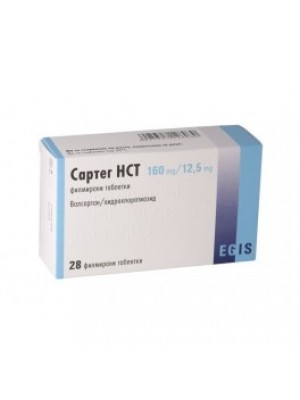
SARTEG HCT. 160 mg. / 12.5 mg. 28 tablets WHAT SARTEG AND..
19.00€