Your shopping cart is empty!
Welcome visitor you can login or create an account.
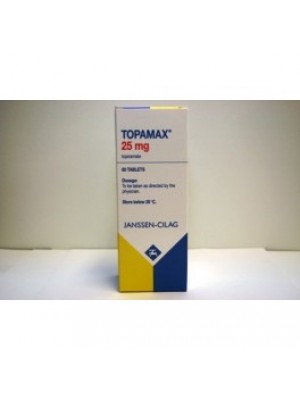
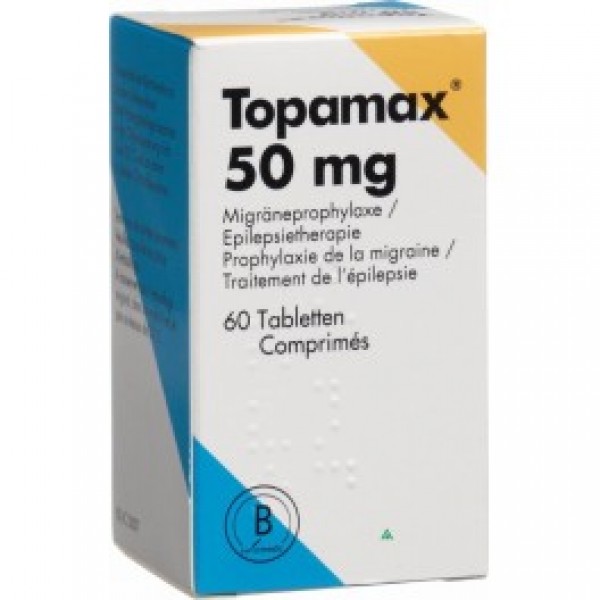
Topamax 50 mg. 60 tablets
Product Code: Topamax 50 mg. 60 tablets
Availability: In Stock
Product viewed: 1339


Topamax 50 mg. 60 tablets
WHAT TOPAMAX AND WHAT IT IS USED FOR?
Topamax Topiramate contains as the active substance.
Topamax is indicated;
• a single agent in patients with newly diagnosed epilepsy or for transition to monotera-
drink in patients with epilepsy;
• adjunctive therapy in adults and children / or more than 2 years with partial onset or generalized tonic-clonic seizures;
• adjunctive therapy in adults and children with seizures associated with Syndrome Lennox_Gastaut.
Topamax is indicated for the prevention of migraine in adults. Topamax for treating acute attacks of migraine have not yet been investigated.
2. BEFORE YOU TAKE TOPAMAX
Do not take Topamax
• If you have an allergy (hypersensitivity) to the active substance or to any of the other
ingredients of this medicine.
Take special care with Topamax
In patients with / or without a history of seizures or epilepsy, antiepileptic drugs, including Topamax should be withdrawn gradually to minimize the appearance of seizures or increase their frequency. In clinical trials, daily dosages were reduced weekly intervals from 50 to 100 mg, in adults with epilepsy and in intervals of 25 to 50 mg, in adults receiving Topamax in doses up to 100 mg / day for the prevention of migraine. In clinical trials in children Topamax withdrawn gradually over a period of two to eight weeks.
Unchanged topiramate and its metabolites are mainly eliminated by the kidneys. Elimination at this time depends on renal function and is independent of age. In patients with moderate or severe renal impairment may take 10-15 days to reach steady-state plasma concentrations, and for comparison, in patients with normal renal function this is for 4-8 days.
As with all patients, the appointment of the regimen must be based on clinical
results, ie seizure control and prevention of side effects, keeping in mind that for patients with renal failure may be required over a longer period of time to achieve the steady state at each dose.
Proper hydration lo during treatment with Topamax is very important. The hydration can reduce the risk of nephrolithiasis (see. Below). Proper hydration before and during activities related to physical exertion or exposure to high temperatures may reduce the risk of side effects associated with heat (see, possible side effects).
Mood / Depression
Were observed more frequent manifestations of mood swings and depression during treatment topiramate.
Suicide attempt
Small number of people being treated with antiepileptics such as topiramate have had thoughts of harming or killing yourself-ing. If these occur, immediately contact your doctor.
Nephrolithiasis
In some patients, and in particular susceptible to nephrolithiasis, the risk of kidney stone formation and the associated signs and symptoms such as renal colic, lumbar pain or a groin may be larger.
Risk factors for nephrolithiasis include prior history of stone formation, a family history of nephrolithiasis and hypercalciuria (svrahizhvarlyane of salts in the urine) None of these risk factors can reliably predict the formation of kidney stones during treatment with toliramat.
Moreover, with the increased risk may be and patients treated with other medications associated with the risk of nephrolithiasis.
Reduced hepatic function
In patients with a change in liver function caution is recommended prescription tapiramat because it can reduce the treatment by medication.
Acute myopia and secondary angle closure glaucoma
A syndrome consisting of acute myopia and secondary angle closure glaucoma has been described in patients treated with Topamax. Early symptoms include a sharp reduction in visual acuity and / or ocular pain. Ocular findings include myopia, anterior chamber edema, ocular hyperemia (redness) and increased intraocular pressure. There may be, and may not mydriasis (pupil expansion and iris). This syndrome may be associated with accumulation of fluid supratsiliarno resulting in anterior displacement of the lens and iris, with secondary angle closure glaucoma. Symptoms usually occur one month after starting treatment with Topamax. Unlike the primary narrow-angle glaucoma, which is rare in people under 40 years of age, secondary angle closure glaucoma associated with topiramate has been reported in children than in adults. Treatment includes discontinuation of Topamax as quickly as possible and on the advice of the doctor, and adequate measures to reduce intraocular pressure. These measures generally result in a decrease in intraocular pressure.
Metabolic acidosis
Svrahkiselinnata metabolic acidosis, without loss of anions, ie the reduction of serum bicarbonate levels below normal reference without respiratory alkalosis, binds to topiramate therapy. This decrease in serum bicarbonate is due to the inhibitory esrekt of topiramate on renal carbonic anhydrase. Typically, the decrease in the bicarbonate occurs at the beginning, but can occur at any time during treatment. The reduction of the bicarbonate is usually mild to moderate (average decrease of 4 mmol / l. At doses equal to or higher than 100 mg topiramate per day in adults, and about 6 mg / kg / day for children. Rarely occurs in some patients, a reduction of values below 10 mmol / l. The clinical or therapeutic conditions which predispose to the occurrence of acidosis, for example, renal disease, severe respiratory disease, status epilepticus, diarrhea, surgery, ketogenic diet, or certain drugs, may have an additive effect on the reduction of bicarbonate induced by topiramate, Chronic metabolic acidosis in pediatric patients can reduce growth, the effect of topiramate on growth and the effects on the bone has not been studied systematically in children or adults. Depending on underlying conditions, during topiramate treatment, it is recommended that do research in plasma bicarbonate levels. If the metabolic acidosis and continues, to be taken dose reduction or discontinuation of topiramate (using dose tapering).
Nutritional supplements
Consideration should be given dietary supplement or increased food intake of patients who lost weight during treatment with this medication.
Taking Topamax with other medicines
Effects of Topamax on other antiepileptic drugs
The addition of Topamax to other antiepileptic drugs (phenytoin, carbamazepine, valproic acid, phenobarbital or primidone) does not affect their plasma concentrations at steady state, with the exception of individual cases where the addition of Topamax to phenytoin may result in increased plasma concentrations phenytoin. This is probably due to the inhibition of the isoform of a specific polymorphic enzyme (SYR2S19). Therefore, with each patient being treated with phenytoin, wherein the signs or symptoms of toxicity should be carried out monitoring of plasma levels of phenytoin. Pharmacokinetic interaction study in patients with epilepsy suggests that the addition of topiramate to lamotrigine had no effect on its plasma concentrations of topiramate at a dose of 100 to 400 mg / day. Furthermore, no change in plasma concentrations of topiramate during and after discontinuation of lamotrigine (average dose 327 mg / day).
Effects of other antiepileptic drugs on TOPAMAX
Phenytoin and karbamazelin decrease the plasma concentration of toliramat. Addition or withdrawal of phenytoin or carbamazepine, an on-therapy with Topamax may require adjustment of dosage him. These changes should be made after evaluation of clinical effect. Addition or withdrawal of treatment with valproic acid do not cause clinically significant changes in plasma concentrations of topiramate and thus, in this case, it is not necessary to make a change in the dosage of Topamax
Other drug interactions Digoxin
In single-dose study, the area under the curve (AUC) of the plasma concentration of serum digoxin decreased 12% due to concomitant administration of Topamax. The clinical relevance of this observation is not specified. When added or stopping topamax in patients treated with digoxin should be paid special attention to the routine monitoring of serum digoxin.
Depressants of the central nervous system
Concomitant administration of Topamax and alcohol or other drugs that suppress the central nervous system has not been evaluated in clinical trials. Not recommended Topamax concurrently with alcohol or other drugs that inhibit the central nervous system,
Oral contraceptives
In a study on pharmacokinetic interactions in healthy volunteers assigned concurrent combination oral contraceptive product containing 1 mg norethindrone + 35 mcg ethinylestradiol and Topamax given in the absence of other medications at doses of 50 to 200 mg / day was not associated with statistically significant changes in mean exposure (AUC) of any component of oral contraceptives. In another study, exposure to ethinyl estradiol was statistically significantly decreased at doses of Topamax of 200.400 and 800 mg / day (18%, 21% and 30%, respectively) when given as adjunctive therapy in patients taking valproic acid. In both studies, Topamax (50 mg / day to 800 mg / day} does not significantly affect the effect of norethindrone. Although there is a dose-dependent reduction of the ethinyl-effects at doses between 200-800 mg / day, there was no significant dose-dependent change in etiniestradiop-exposure at doses between 50 and 200 mg / day. The clinical significance of the changes observed is not known. You can avoid the possibility of decreased contraceptive efficacy and increased breakthrough bleeding on in patients taking combination oral contraceptive products with Topamax . Patients taking estrogen containing contraceptives should be asked to report any changes in their menstruation, contraceptive efficacy can be decreased even in the absence of breakthrough bleeding.
Lithium
In healthy volunteers noticed a reduction of 18% of ADR in systemic exposure of lithium during concomitant administration of topiramate 200 mg / day. In patients with bipolar disease, the pharmacokinetics of lithium is not affected during treatment with topiramate to 200 mg / day. Furthermore, it is observed an increase of 26% of the A11S in the systemic exposure of lithium, after treatment with topiramate at doses up to 600 mg / day. Serum lithium levels should be monitored when administered with topiramate.
Risperidone
Drug interaction studies conducted with single or multiple dose in healthy volunteers and patients with bipolar, gave similar results. Risleridon when used concomitantly with topiramate at escalating doses by 100 200 n 400 mg / day. nastygva reduction in the systemic exposure of risperidone (16% and 33% of the AUC at steady state topiramate at dosages of 250 and 400 mg / day, respectively), when given in doses ranging between 1 and 6 mg / day. In all active antipsychotic fraction (risperidone and 9-hydroxyrisperidone) observed minor changes in the pharmacokinetics as not observed in isolated 9-hydroxyrisperidone. There is still no clinical changes in the systemic exposure of the total active fraction of risperidone or topiramate. Therefore, this interaction is probably not clinically significant.
Hydrochlorothiazide (NSTZ)
A drug interaction study in healthy volunteers evaluated the steady state pharmacokinetics of NST2 (25 mg / day) and topiramate (96 mg in 12/12 hours), taken separately or simultaneously. The survey results showed that Cmax combed mat has increased by 25% and AUC increased by 29% after the addition of topiramate to NST2. The clinical significance of this change is unknown. Adding NSTZ to topiramate therapy may require dose adjustment of the topiramate. Steady-state pharmacokinetics of NSTZ not changed significantly since the adoption of topiramate Laboratory results show a decrease in serum potassium after topiramate or acceptance NSTZ. This decrease is more pronounced when the adoption of topiramate and NSTZ simultaneously.
Metformin
Study conducted in healthy volunteers for drug-drug interaction evaluated the steady state pharmacokinetics of metformin and topiramate in plasma when teyopsh was given alone and when teyoggsh and topiramate were given simultaneously. The results of the study showed that the average C max and AUC 0-12h average. increased by 18% and 25%, while the average CL / F decreased 20% when metformin was co-administered with topiramate. Toriramat not affect Tmah metformin. The clinical significance of the effect of topiramate tip pharmacokinetics of metformin is not clearly. Oral plasma clearance of topiramate was decreased when administered with metformin. The degree of change in the clearance is unclear. The clinical significance of the effect of metformin on the pharmacokinetics of topiramate is not clear. When topiramate is added or withdrawn in patients on metformin therapy, careful attention should be given to the routine monitoring for adequate control of their diabetes.
Lioglitazon
Drug interaction study conducted in healthy volunteers evaluated the steady-state concentration of topiramate and pioglitazone when administered alone and in combination. There is a 15% reduction in AUC of pioglitazone unchanged with no statistical monitoring max.Tova znachimostpri active hydroxy and 60% decrease in Cmax and AUC for the active keto-metabolites. The clinical significance of these findings is unknown. The addition of topiramate to pioglitazone or if pioglitazone is added to topiramate therapy, careful routine prospedyavane of patients for adequate control of their diabetes.
Gliburit
A drug interaction study in patients with diabetes type II, assess pharmaco-kinetics at steady state of glyburide (5mg / day) and topiramate (150mg / day) taken separately or simultaneously. Saw was a 25% reduction of AUC 24 of glyburide when given topiramate. The systemic exposure to the active metabolite 4-trans-hydroxy-glyburide (M1) and 3-cis-hydroxy-glyburide, reduced by 13% and 15%, respectively, at steady-state pharmacokinetics of topiramate is affected by simultaneous administration of glyburide. When topiramate is coadministered with glyburide or vice versa, should be paid special attention to the routine monitoring for adequate control of diabetes.
Interactions
Drugs that predispose to nephrolithiasis
When used in conjunction with other medications that can predispose to nephrolithiasis, Topamax may increase the risk of nephrolithiasis. During treatment with Topamax to avoid these drugs, since they can establish a physiological medium, which could increase the risk of formation of kidney stones.
Valproic acid
Concomitant administration of topiramate and valproic acid has been associated with svrahamoniemiya with / or without encephalopathy in patients who have tolerated these drugs when they were taken separately. In most cases, the signs and symptoms disappear after discontinuation of treatment. This side effect is not due to a pharmacokinetic interaction. No association was found between svrahamoniemiyata and topiramate therapy or concomitant treatment with other anti-epileptic medicine.
Laboratory tests
Results from clinical studies indicate that topiramate was associated with a mean decrease of 4 mmol / l in serum bicarbonate (see. Special precautions in Topamax).
Pregnancy and lactation
Consult your doctor or pharmacist before taking any medication.
Pregnancy
All women of childbearing age (who may become pregnant) should get advice from a specialist doctor before starting treatment, because of the increased risk of congenital malformations. Treatment with protivoepiliptichni drugs must be assessed again when a woman is planning to become pregnant. 06iknoveno risk of congenital malformations is 2-3 times higher in children of pregnant women treated with antiepileptic drugs during pregnancy. The most common malformations affecting the lips and oral cavity, the cardiovascular system and the neural tube.
Treatment with other anti drugs (polytherapy) is associated with a higher risk of congenital malformations than treatment with a single drug (single agent).
Write a review
Your Name:Your Review: Note: HTML is not translated!
Rating: Bad Good
Enter the code in the box below:
Related Products