Your shopping cart is empty!
Welcome visitor you can login or create an account.
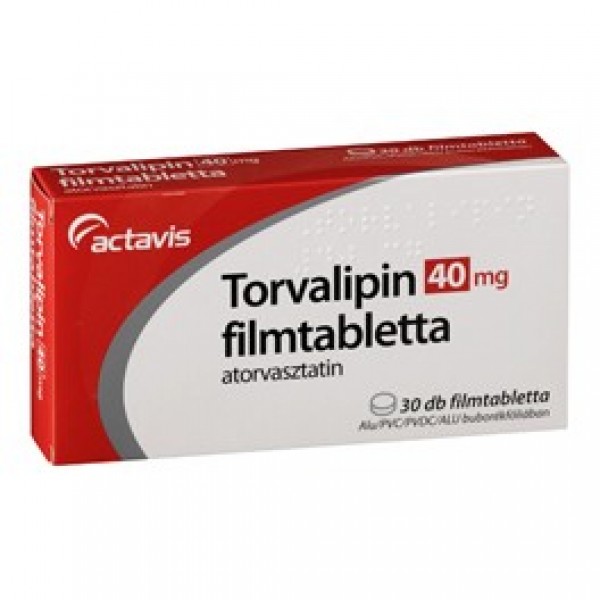
TORVALIPIN 40 mg. 30 tablets
Product Code: TORVALIPIN 40 mg. 30 tablets
Availability: In Stock
Product viewed: 1368


TORVALIPIN 40 mg. 30 tablets
WHAT TORVALIPIN AND WHAT IT IS USED
Torvalipin belongs to a group of medicines known as statins that regulate lipids (fats).
Torvalipin be used to lower blood lipids known as cholesterol and triglycerides, when a diet low in fat and changes in lifestyle alone are insufficient. If you are at increased risk of heart disease, Torvalipin can also be used to reduce this risk even if your cholesterol levels are normal. You must maintain a standard diet to lower cholesterol during treatment.
2. BEFORE YOU TAKE TORVALIPIN
Do not take Torvalipin
if you are hypersensitive (allergic) to atorvastatin or a similar medicine used to lower blood lipids, or any of the other ingredients of Torvalipin - for details, see Section 6;
if you have or have had a disease that affects the liver;
if you have unexplained abnormal blood tests of liver function;
if you are a woman who can not have children and not using reliable contraception;
if you are pregnant or trying to get pregnant;
if you are breastfeeding.
Take special care with Torvalipin
if you had a stroke with brain haemorrhage or have small pockets fluid in the brain from previous strokes;
if you have kidney problems;
if you have underactive thyroid (hypothyroidism);
if you had multiple unexplained muscle pain, personal or family history of muscle problems;
If you have had previous muscular problems during treatment with other lipid-lowering drugs. (ie. other "-statin" or "-fibrat" drugs);
if you regularly consume large amounts of alcohol;
if you have a history of liver disease;
if you are over 70 years old.
Consult your doctor or pharmacist before you start taking Torvalipin if you have severe respiratory failure.
If any of these apply to you, you may need your doctor to perform a blood test before and possibly during your treatment with Torvalipin to predict your risk of muscle related side effects. It is known that the risk of muscle related side effects, e. rhabdomyolysis is increased by concomitant administration of certain drugs (see Chapter 2, "Using other medicines").
Using other medicines
There are some medicines that can alter the effect of Torvalipin or their effect may be changed by Torvalipin. This kind of interaction could make one or both drugs less effective. Eventually it may increase the risk or severity of adverse effects, including the important muscle-wasting condition known as rhabdomyolysis described in Section 4:
Medicines used to alter the way your immune system works, such as cyclosporin;
Some antibiotics or antifungal drugs, such as erythromycin, clarithromycin, telithromycin, ketoconazole, itraconazole, voriconazole, fluconazole, posaconazole, rifampin, fusidic acid;
Other drugs for regulating lipid levels, e. gemfibrozil, other fibrates, colestipol;
Certain calcium channel blockers, used for the angina, or hypertension, for example. amlodipine, diltiazem, medicines to regulate your heart rate, for example. digoxin, verapamil, amiodarone;
Drugs used in the treatment of AIDS, for example. ritonavir, lopinavir, agazanavir, indinavir, darunavir, etc .;
Other drugs with known to interact with Torvalipin include ezetimibe (which lowers cholesterol), warfarin (which reduces blood clotting), oral contraceptives, stiripentol (anticonvulsant for epilepsy), cimetidine (used for heartburn and peptic ulcers), phenazone (painkiller) and antacids (indigestion products containing aluminum or magnesium);
Medicines obtained without a prescription: St John's Wort.
Please tell your doctor or pharmacist if you are taking or have recently taken any other medicines, including medicines obtained without a prescription.
Taking Torvalipin with food and drink
See Section 3 for instructions on how to take Torvalipin. Please note the following:
Grapefruit juice
Do not take more than one or two small cups of grapefruit juice per day because large quantities of grapefruit juice can change the effects of Torvalipin.
alcohol
Avoid consuming too much alcohol while taking this medicine. See Section 2 "Take special care with Torvalipin" for details.
Pregnancy and lactation
Do not take Torvalipin during pregnancy or if you are trying to become pregnant.
Do not take Torvalipin if it is possible to become pregnant unless you use reliable contraceptives.
Do not take Torvalipin if you are breastfeeding.
Torvalipin safety during pregnancy and lactation has not yet been proven.
Ask your doctor or pharmacist before taking any medicine.
Driving and using machines
Normally this medicine does not affect your ability to drive and use machines. However, do not drive if this medicine affects your ability to drive. Do not use any tools or machines if your ability to use them is affected by this medicine.
3. HOW TO TAKE TORVALIPIN
Before starting treatment, your doctor will put on a diet low in cholesterol, which is to maintain and during therapy Torvalipin.
The usual starting dose Torvalipin is 10 mg once daily in adults and children over 10 years. If necessary, the dose may be increased by your doctor until you are taking the necessary amount. Your doctor may change the dose at intervals of 4 weeks or more. Torvalipin maximum dose is 80 mg per day for adults and 20 mg once daily in children.
Tablets Torvalipin should be swallowed whole with water and can be administered at any time of the day, with or without food. However, try to take the tablet at the same time each day.
Always take Torvalipin exactly as prescribed by your doctor. If you're not sure, ask your doctor or pharmacist.
The duration of treatment with Torvalipin is determined by your doctor
Please ask your doctor if you think that the effect of Torvalipin is too strong or too weak.
If you take more than the amount Torvalipin
If not want you take too many tablets Torvalipin (more than your usual daily dose), contact your doctor or nearest hospital for advice.
If you forget to take Torvalipin
If you forget to take a dose, just take your next dose when the time came for her.
Do not take a double dose to make up the missed dose.
If you stop taking Torvalipin
If you have any further questions on the use of this medicine or wish to stop your treatment, ask your doctor or pharmacist.
4. POSSIBLE SIDE EFFECTS
Like all medicines, Torvalipin can cause side effects, although not everybody gets them.
If any of the following serious side effects, stop taking the tablets and contact your doctor immediately or go to the emergency department of the nearest hospital.
Rare side effects: affects 1 to 10 patients in 10,000:
Serious allergic reaction which causes swelling of the face, tongue and throat that can cause great difficulty in breathing;
Serious illness with severe peeling and swelling of the skin, blistering of the skin, mouth, eyes, genitals and fever. Skin rash with pink-red blotches especially on palms of hands or soles of the feet, which may form blisters;
Muscle weakness, tenderness or pain, especially if at the same time you feel unwell or have a fever This may be caused by abnormal muscle breakdown which can be life-threatening and lead to kidney problems.
Very rare: affects less than 1 in 10,000:
If you experience problems with unexpected or unusual bleeding or bruising, this may be a symptom of a liver complaint. Consult your doctor as soon as possible.
Other possible side effects in Torvalipin
Common side effects (affects 1 to 10 patients in 100) include:
inflammation of the nasal passages, throat pain, nosebleed;
allergic reactions;
raising the level of blood sugar (if you have diabetes continue careful monitoring of blood sugar levels), increased creatine kinase in the blood;
headache;
nausea, constipation, flatulence, indigestion, diarrhea;
pain in the joints, muscles and back;
results of blood tests that show abnormal liver function.
Uncommon side effects (affects 1 to 10 patients in 1000) include:
anorexia (loss of appetite), weight gain, reduced blood sugar levels (if you have diabetes continue careful monitoring of blood sugar levels);
nightmares, insomnia;
dizziness, numbness or tingling in the fingers or toes, reducing the feeling of pain or touch, taste disturbances, memory loss;
blurred vision;
ringing in the ears and / or head;
vomiting, belching, pain in the upper or lower part of the abdomen, pancreatitis (inflammation of the pancreas, leading to abdominal pain);
hepatitis (inflammation of liver);
rashes, skin rashes and itching, hives, hair loss;
neck pain, muscle weakness;
fatigue, malaise, weakness, chest pain, swelling especially in the ankles (edema), fever;
urine tests positive for white blood cells.
Rare side effects (affects 1 to 10 patients in 10,000) include:
visual impairment;
unexpected bleeding or bruising;
stagnation of bile (yellowing of the skin or whites of the eyes);
damage to the tendons.
Very rare side effects (affects less than 1 in 10,000) include:
allergic reaction - symptoms may include sudden wheezing and pain or tightness in the chest, swelling of eyelids, face, lips, mouth, tongue or throat, difficulty breathing, collapse;
hearing loss;
gynecomastia (breast enlargement in men and women).
Possible side effects reported with some statins (drugs of the same type):
Sexual difficulties;
depression;
Breathing problems including persistent cough and / or shortness of breath or fever.
If any of the side effects gets serious, or if you notice any side effects not listed in this leaflet, please tell your doctor or pharmacist.
5. HOW TO STORE TORVALIPIN
Keep out of reach of children.
This medicinal product does not require any special storage conditions.
Do not use Torvalipin after the expiry date stated on the carton and blister after "EXP". The expiry date refers to the last day of that month.
Medicines should not be disposed of in wastewater or household waste. Ask your pharmacist how to dispose of medicines no longer required. These measures will help to protect the environment.
6. FURTHER INFORMATION
What Torvalipin
The active substance is atorvastatin as atorvastatin calcium. Each tablet contains 10 mg, 20 mg or 40 mg of atorvastatin.
The other ingredients are:
Tablet core: mannitol, cellulose, microcrystalline, crospovidone, sodium carbonate anhydrous, povidone, methionine, magnesium stearate;
Tablet coating: hypromellose 6cP, titanium dioxide (E171), macrogol 6000, talc.
Torvalipin looks like and contents of the pack
10 mg; White, round, biconvex tablets marked with "10 on one side and A on the other";
20 mg; White, round, biconvex tablets marked with "20 on one side and A on the other";
40 mg; White, round, biconvex tablets marked with "40 on one side and A on the other."
packaging:
blister:
Torvalipin 10 mg film-coated tablets: 10, 20, 28, 30, 50, 98, 100 tablets.
Torvalipin 20 mg film-coated tablets: 10, 20, 28, 30, 50, 98, 100 tablets.
Torvalipin 40 mg film-coated tablets: 10, 20, 28, 30, 50, 98, 100 tablets.
Tablet:
Torvalipin 10 mg film-coated tablets: 30, 100, 250, 500 tablets.
Torvalipin 20 mg film-coated tablets: 30, 100, 250, 500 tablets.
Torvalipin 40 mg film-coated tablets: 30, 100, 250, 500 tablets.
Not all pack sizes may be marketed.
Write a review
Your Name:Your Review: Note: HTML is not translated!
Rating: Bad Good
Enter the code in the box below:
Related Products
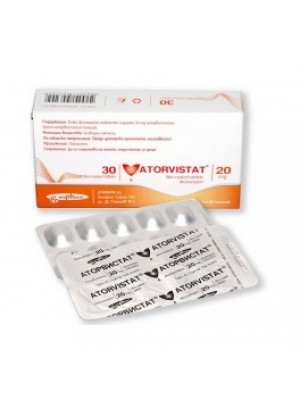
ATORVISTAT K 20 mg. 30 tabletsWhat is Atorvistat K and what ..
14.00€