Your shopping cart is empty!
Welcome visitor you can login or create an account.
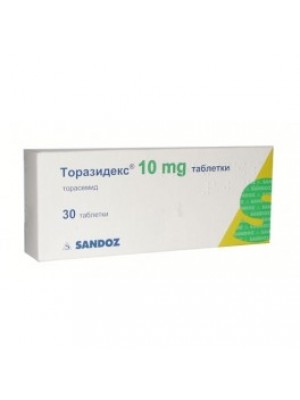
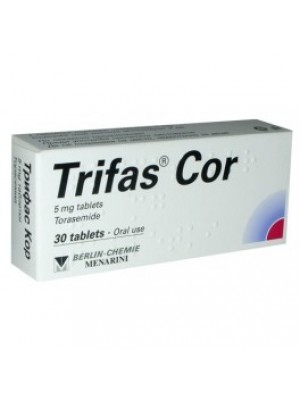
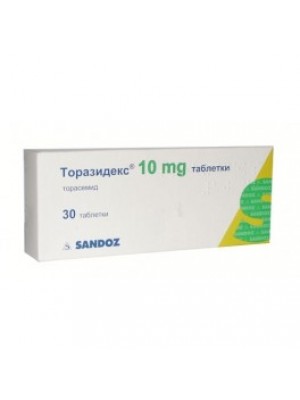
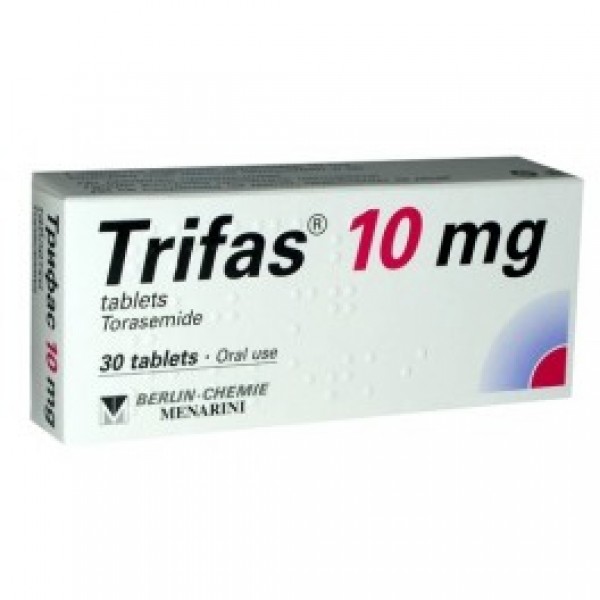
TRIFAS 10 mg. 30 tablets
Product Code: TRIFAS 10 mg. 30 tablets
Availability: In Stock
Product viewed: 1993


TRIFAS 10 mg. 30 tablets
What is Trifas 10 mg is and what it is used
Trifas 10 mg is the medicine of the loop diuretics which increases the formation and excretion of urine and lowers blood pressure.
Trifas 10 mg is used for the treatment and prevention of edema (stagnation of fluid in the tissue) and / or effusion (fluid in the cavities of the body) caused by heart failure.
2. Before you take Trifas 10 mg
Do not take Trifas 10 mg
♦ if you are hypersensitive to the active substance torasemide to substances with similar structure (sulfonylureas) and any of the other ingredients of Trifas 10 mg;
♦ renal failure with releasable retention (anuria);
♦ with severely impaired hepatic function with clouding of consciousness (hepatic coma or coma);
♦ pathologically low blood pressure (hypotension);
♦ the reduced volume of blood (hypovolemia);
♦ low levels of sodium or potassium in the blood (hyponatremia, hypokalemia);
♦ serious disturbances in urination (eg. Due to pathological enlargement of the prostate);
♦ if you are breastfeeding.
Take special care with Trifas 10 mg
Since it lacks a sufficient therapeutic experience Trifas 10 mg should be used with caution in:
♦ gout;
♦ presence of peysmeykarovo action (stimulation of the heart) and cardiac conduction disorders (eg. Sinoatrial block, second and third degree atrioventricular block);
♦ pathological changes in acid-base balance;
♦ concomitant lithium and certain antibiotics (aminoglycosides or cephalosporins);
♦ pathological changes in the blood count (reduced platelet count or anemia in patients with impaired renal function);
♦ impaired renal function caused by toxic substances kidneys.
Children under 12 years
As yet there is no sufficient therapeutic experience with children under 12 years Trifas 10 mg should not be given to children.
Taking other medicines
Tell your doctor about all other medicines you are currently or have recently taken, whether prescribed or sold without a prescription.
Please note that this information may also apply to drugs that have recently taken.
Trifas 10 mg enhancer of other blood pressure lowering drugs, especially ACE-inhibitors. If ACE inhibitors are administered in addition to or immediately following administration of 10 mg Trifas can expect a strong drop in blood pressure.
The reduction of potassium levels caused by Trifas 10 mg, may lead to honor and more severe side effects of digitalis drugs administered at the same time.
Trifas 10 mg can reduce the effect of medicines used to treat diabetes. Probenecid (medicine for the treatment of gout) and certain anti-inflammatory drugs (eg. Indomethacin, acetylsalicylic acid) can reduce the effects of 10 mg Trifas to enhance the separation of urine and lowers blood pressure.
During treatment with high doses of salicylates (medicines against pain and rheumatism), their effects on the central nervous system may be enhanced by Trifas 10 mg.
Trifas 10 mg, particularly at high doses can lead to the following side effects:
Adverse effects on hearing and kidney aminoglycoside antibiotics (eg., Kanamycin, gentamicin, tobramycin), of products with cisplatin (drug inhibiting cell growth for treating cancer), as well as adverse effects on the kidneys of the cephalosporins (antibiotics).
Trifas 10 mg may enhance the effects of theophylline (medicine to treat asthma), and a muscle-relaxant effect of curare-like drugs.
Trifas 10 mg can enhance the effects of laxative medicines and hormones by the adrenal cortex (mineralo- and glucocorticoids, eg. Cortisone) by induced loss of potassium.
When coadministered Trifas and lithium may be seen increased levels of lithium in the blood and harmful effects on the heart and kidneys.
Trifas 10 mg may reduce the sensitivity of the arteries to substances that lead to vasoconstriction (eg. Epinephrine, norepinephrine).
Co-administration of cholestyramine (a drug for the reduction of lipids in the blood) can inhibit absorption in the gastro - intestinal tract of Trifas 10 mg, and from here - and its effects.
Pregnancy and lactation
Pregnancy
So far there is not enough clinical experience of the effect of 10 mg Trifas the fetus. Experiments on animals torasemide, the active substance of Trifas 10 mg did not show teratogenic effects. However, after administration of high doses of the active substance in animals are observed adverse effects in the fetus and the mother.
Due to the lack of new data Trifas 10 mg may be used during pregnancy only if the doctor considers it absolutely necessary. In this case it can be used only at the lowest dose. Therefore, consult your doctor if you are planning to become pregnant or if you are already pregnant.
Breastfeeding
No evidence of passage of torasemide, the active substance of Trifas 10 mg in milk in animals and humans. Therefore Trifas 10 mg can not be used during breastfeeding. If your doctor decides that you should be treated with Trifas 10 mg during lactation should stop breastfeeding.
Driving and using machines
Even when used properly, Trifas 10 mg can change the response time to such an extent that impair the ability to actively participate in traffic, use machines and to work without firm support legs. This applies especially to the beginning of treatment, at dose increase and a change in treatment or adding another medication, and in conjunction with alcohol.
Important information about some of the ingredients of Trifas 10 mg
Trifas 10 mg contains lactose. Therefore, if you have an intolerance to some sugars, consult your doctor before taking Trifas 10 mg.
3. How to take Trifas 10 mg
Always take Trifas 10 mg exactly as prescribed by your doctor. If you're not sure, ask your doctor.
Route of administration:
Oral (taken by mouth).
Unless otherwise prescribed, the usual dose is:
Treatment begins with 5 mg torasemide day. For this purpose, there are tablets with a suitable concentration of the active substance. This dose is typically and the maintenance dose.
If the normal dose of 5 mg torasemide is not sufficiently effective, is treatment with 1 tablet Trifas 10 mg (equivalent to 10 mg of torasemide).
In this case, take 1 tablet Trifas 10 mg (equivalent to 10 mg of torasemide) daily. If this dose is not sufficiently effective, the dose can be increased to 2 tablets Trifas 10 mg (20 mg torasemide) per day, depending on the severity of the condition.
Instructions for separating tablets
The tablets can be easily divided into two by means of a score line on one side and thus the dosage may be adjusted to the individual needs.
Place the tablet on a hard surface. Tablet press with both thumbs on the right and left of the score to the solid surface. This will lead to easy separation of the tablet.
Patients with impaired hepatic function
Treatment should be initiated with caution in patients with impaired hepatic function as the plasma levels of torasemide may increase.
Elderly
In elderly patients need not be changed at the recommended dose.
Please take a tablet in the morning, do not chew it with liquid.
Trifas 10 mg can be taken with or without food or meals.
Your doctor will determine the duration of treatment.
Please consult your doctor if you feel that the effect of Trifas 10 mg is too strong or too weak.
If you take more than the 10 mg dose Trifas
If you inadvertently or deliberately you take more tablets Trifas 10 mg, this can lead to severe, potentially separating the salt and water, even to impaired consciousness, confusion, low blood pressure, circulatory collapse and gastro - intestinal complaints. In this case your doctor immediately to take the necessary measures.
If you forget to take Trifas 10 mg
If you take a lower dose or you miss a dose of 10 mg Trifas, the effect will diminish. This may be manifested by strengthen complaints e. increase in weight, an increase in the swelling, etc.
You should take the dose as possible in advance. However, if time is short until the next regular intake should not compensate the missed dose. In this case, do not take a double dose to make up for a forgotten tablet, but continue as prescribed.
If you stop using Trifas 10 mg
Strengthening complaints can be expected upon discontinuation or premature discontinuation of treatment. Do not interrupt or stop taking Trifas 10 mg without consulting your doctor!
4. Possible side effects
As with all drugs, Trifas 10 mg can cause side effects, although not everybody gets.
Adverse reactions known to Trifas 10 mg and other loop diuretics are described below.
Assessment of adverse reactions is considered the following frequencies:
Very common: More than 1 in 10 patients treated
Common: Less than 1 in 10 but more than 1 in 100 patients treated
Uncommon: Less than 1 in 100 but more than 1 in 1000 patients treated
Rare: Less than 1 in 1,000 but more than 1 in 10,000 patients treated
Very rare: Less than 1 in 10,000 patients treated, including isolated cases
Adverse effects
Metabolism / electrolytes
Common: aggravation of disturbed acid-base balance (metabolic alkalosis); muscle cramps (especially at the beginning of treatment); increased concentration of uric acid and glucose levels, and blood lipids (triglycerides, cholesterol); low potassium (hypokalemia), accompanied by a diet low in potassium, vomiting, diarrhea, after abuse of laxatives, and in patients with chronic liver diseases. Depending on the dose and duration of treatment may occur disturbances in the water and electrolyte balance, e. mostly depleted fluid volume (hypovolemia), a decrease of potassium and / or sodium (hypokalaemia and / or hyponatraemia).
Cardiovascular
Very rare due to increased blood viscosity may arise tromboembo-personal complications, mental confusion, low blood pressure (hypotension), as well as violations of circulation and reduced blood flow to the heart muscle and the heart. This can lead to as irregular heart rhythm (arrhythmia), a sense of weight and chest pain (angina), acute heart attack or sudden loss of consciousness (syncope).
Gastrointestinal tract
Common: gastrointestinal complaints (eg. Loss of appetite, stomach pain, nausea, vomiting, diarrhea, constipation), especially in early treatment.
Very rare: impairment of the pancreas (pancreatitis).
Kidney and urinary system
Uncommon: increased levels of urea and creatinine in the blood. In patients with obstruction of the urinary excretion tract may occur urinary retention.
Liver
Common: increases in certain liver enzymes (gamma-GT).
Skin, allergic reactions
Very rare: allergic reactions, such as. itching (pruritus), inflammatory skin changes (exanthema), sensitivity to light (photosensitivity), severe skin reactions.
Blood and blood system
Very rare: decreased erythrocytes, leukocytes and platelets.
General
Common: headache, dizziness, fatigue, weakness (especially at the beginning of treatment).
Uncommon: dry mouth, tingling and feeling of cold in the extremities (paraesthesia).
Very rare: visual disturbances, ringing in the ears (tinnitus), hearing loss.
What should be done?
If you notice any of these symptoms, please contact your doctor. It will assess the severity of symptoms and decide what measures to take.
If any adverse reaction occur suddenly or show a serious, tell your doctor, because under certain circumstances, some of the side effects can be life-threatening. The doctor will decide what measures should be taken and whether treatment can continue.
At the first signs of hypersensitivity Trifas 10 mg should not be re-administered.
Please tell your doctor or pharmacist if you notice any side effects not listed in this leaflet.
5. Storing Trifas 10 mg
Keep out of reach of children.
Do not use Trifas 10 mg after the expiry date stated on the carton and blister.
Write a review
Your Name:Your Review: Note: HTML is not translated!
Rating: Bad Good
Enter the code in the box below:
Related Products