
Your shopping cart is empty!
Welcome visitor you can login or create an account.
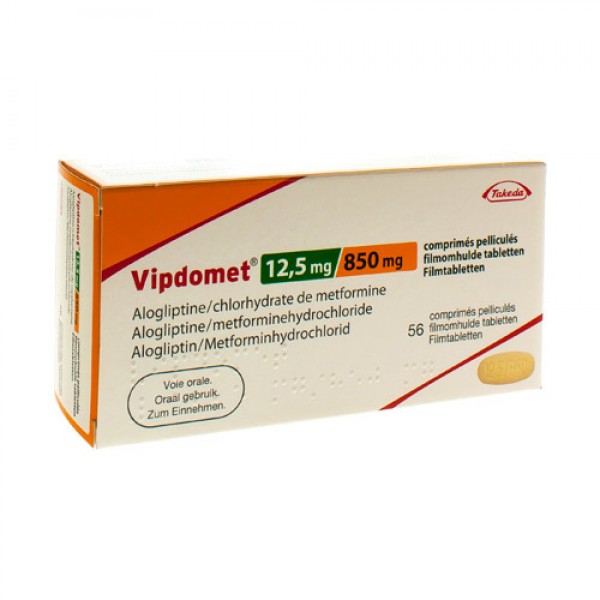
Vipdomet 12.5 mg. / 850 mg. 56 tablets
Product viewed: 3272


What Vipdomet is and what it is used for
What is Vipdomet
Vipdomet contains two different medicines, called alloglypine and metformin, in one tablet:
alloglobin belongs to a group of medicines called DPP-4 inhibitors (dipeptidyl peptidase 4). Alogliptin works by increasing insulin levels in the body after eating and reducing the amount of sugar;
metformin belongs to a group of medicines called biguanides that also help reduce the amount of sugar produced in the liver and for more effective insulin action.
Both groups are "oral antidiabetic drugs".
What Vipdomet is used for
Vipdomet is used to lower blood sugar levels in adults with type 2 diabetes. Type 2 diabetes is also called non-insulin dependent diabetes mellitus or NIDDD.
Vipdomet is taken when your blood sugar can not be adequately controlled by diet, exercise or other antidiabetic medicines, such as metformin alone, with insulin alone or with metformin and pioglitazone taken together.
If you already take alloglobin and metformin in separate tablets, they may be replaced with one Vipdomet tablet.
It is important to continue to follow the diet and exercise advice provided by your nurse or doctor.
2. What you need to know before you take Vipdomet
DO NOT take Vipdomet:
if you are allergic to alloglyptin, metformin or any of the other ingredients of this medicine (listed in section 6);
if you have had a serious allergic reaction to any other similar medicines you are taking to control your blood sugar. Symptoms of serious allergic reaction may include rash, raised red spots on the skin (hives), swelling of the face, lips, tongue and throat, which may cause breathing or swallowing difficulties;
if you have had a heart attack lately or have severe blood circulation problems including shock;
if you have severe breathing difficulties;
if you have liver disease;
if you have moderate or severe kidney disease;
if you drink too much alcohol (every day or in large quantities only occasionally);
if you have diabetic ketoacidosis (a serious complication of poorly controlled diabetes). Symptoms include excessive thirst, frequent urination, loss of appetite, nausea or vomiting and rapid weight loss;
if you have a severe infection or serious dehydration (your body has lost plenty of water).
Warnings and precautions
Talk to your doctor or pharmacist before taking Vipdomet:
if you have type 1 diabetes (your body does not produce insulin);
if you are taking Vipdomet with insulin or thiazolidinedione. Your doctor may wish to reduce the dose of insulin or thiazolidinedione when taking it together with Vipdomet to avoid excessive blood sugar (hypoglycaemia);
if you are taking another medicine for diabetes that contains a "sulphonylurea", you should not start taking Vipdomet;
if you are going to have surgery with general, spinal or epidural anesthesia. You may be advised to stop taking this medicine for a while before and after the procedure;
if you have had allergic reactions to other medicines you take to control your blood sugar. Symptoms may include itching around the body and a feeling of warmth - affecting in particular the hairy part of the head, mouth, throat, palms of the hands or feet (Stevens-Johnson syndrome);
if you have or have had a pancreatic disease.
During treatment with Vipdomet, your doctor will check your kidney function at least once a year and more often if you are elderly or your kidneys are working at the limit of normal or if there is a risk of deterioration.
Children and adolescents
Vipdomet is not recommended for children and adolescents under 18 due to a lack of data in these patients.
Other medicines and Vipdomet
Tell your doctor or pharmacist if you are taking, have recently taken or might take any other medicines.
Obviously tell your doctor or pharmacist if you are taking any of the following:
hydrocortisone and prednisolone (corticosteroids) used to treat inflammatory diseases such as asthma and arthritis;
cimetidine used to treat stomach problems;
bronchodilators (beta-2 agonists) that are used to treat asthma;
ramipril, lisinopril and enalapril (ACE inhibitors) used to treat high blood pressure;
drainage tablets (diuretics) that increase urine output;
iodine-containing contrast agents used in radiological studies;
medicines containing alcohol.
Vipdomet with alcohol
Do not take this medicine with excessive amounts of alcohol, as you may be at greater risk of developing lactic acidosis - a serious complication that needs to be treated in a hospital (see section 4, Possible side effects).
Pregnancy and breastfeeding
If you are pregnant or breast-feeding, you think you may be pregnant or not
If you take more Vipdomet than you should
If you take more tablets than you should or if someone else or a child is taking your medicine, contact or go to the nearest emergency center immediately. Take this leaflet or a few tablets with you so the doctor knows exactly what you have taken.
If you forget to take Vipdomet
If you forget to take a dose, take it as soon as you remember. Do not take a double dose to make up for the missed dose.
If you stop taking Vipdomet
Do not stop taking Vipdomet before consulting your doctor. Your blood sugar levels may increase when you stop taking Vipdomet.
If you have any further questions on the use of this medicine, ask your doctor or pharmacist.
4. Possible side effects
Like all medicines, this medicine can cause side effects, although not everyone gets them.
Stop taking Vipdomet and contact a doctor immediately if you notice any of the following serious side effects:
Very rare (may affect less than 1 in 10,000 people):
Lactic acidosis (accumulation of lactic acid in the blood). Lactic acidosis is an emergency and should be treated in a hospital. It can affect patients whose kidneys are not working well. Symptoms include some or all of the following: feeling cold or discomfort, severe nausea with or without vomiting, unexplained weight loss or rapid breathing.
Not known (frequency can not be estimated from the available data):
Alergic reaction. Symptoms may include: rash, hives, problems with swallowing or breathing, swelling of your lips, face, throat or tongue, and a feeling of weakness;
Severe allergic reaction. Symptoms may include: whole-body itching and a feeling of warmth - affecting in particular the hairy part of the head, mouth, throat, palms of the hands or feet (Stevens-Johnson syndrome);
Severe and persistent stomach pain that can spread to the back as well as nausea and vomiting, as it may be a sign of inflammation of the pancreas.
You should talk to your doctor and if you have the following side effects:
Very common (may affect more than 1 in 10 people):
Tummy ache;
Diarrhea;
Loss of appetite;
Nausea;
Vomiting.
Common (may affect up to 1 in 10 people):
Symptoms of low blood sugar (hypoglycaemia) may occur when Vipdomet is taken in combination with insulin or sulphonylureas (eg glipizide, tolbutamide, glibenclamide). Symptoms may include: trembling, sweating, anxiety, blurred vision, tingling in the lips, pallor, mood swings or confusion. Your blood sugar may fall below the normal level, but may rise again after taking sugar. It is advisable to bring with you some sugars of lumps, sweets, biscuits or fruit juice containing sugar;
Symptoms of a cold such as sore throat, runny or stuffy nose, feeling tired, fever, chills, dry cough;
Rash;
Itchy skin with or without hives;
Headache;
Poor digestion, burning behind the sternum (heartburn);
Vomiting and / or diarrhea.
Very rare:
Decreased levels of vitamin B12 or anemia; symptoms include fatigue, lethargy, feeling weak, shortness of breath;
Liver problems (hepatitis).
Not known:
Hepatic problems such as nausea or vomiting, stomach pain, abnormal or unexplained fatigue, loss of appetite, dark urine or yellowing of the skin or whites of your eyes.
Reporting of side effects
If any of the side effects gets serious, tell your doctor or pharmacist. This includes all possible side effects not listed in this leaflet. You can also report side effects directly through the national reporting system. As you report side effects, you can contribute to getting more information on the safety of this medicine.
How to store Vipdomet
Keep out of the reach and sight of children.
Do not use this medicine after the expiry date which is stated on the carton and blister after EXP. The expiry date refers to the last day of that month.
This medicine does not require any special storage conditions.
Do not dispose of medicines in the sewage system or in the household waste container. Ask your pharmacist how to dispose of medicines you no longer use. These measures will help to protect the environment.
6. Package Contents and Additional Information
What Vipdomet contains
The active substances are: alloglypine and metformin hydrochloride.
Each 12.5 mg / 850 mg film-coated tablet contains alloglypine benzoate equivalent to 12.5 mg of alloglypine and 850 mg metformin hydrochloride.
Each 12.5 mg / 1000 mg film-coated tablet contains alloglypine benzoate equivalent to 12.5 mg of alloglypine and 1000 mg of metformin hydrochloride.
The other ingredients are: mannitol, microcrystalline cellulose, povidone, crospovidone, magnesium stearate, hypromellose, talc, titanium dioxide (E171) and yellow iron oxide (E172).
What Vipdomet looks like and contents of the pack
Vipdomet 12.5 mg / 850 mg film-coated tablets are light yellow, oblong (approximately 21.0 mm long and 10.1 mm wide), biconvex, film-coated tablets debossed with "12.5 / 850" on one side and " 322M "on the other.
Vipdomet 12.5 mg / 1000 mg film-coated tablets (tablets) are pale yellow, oblong (approximately 22.3 mm long and 10.7 mm wide), biconvex, film-coated tablets debossed with "12.5 / 1000" on one side and "322M" on the other.
Vipdomet is available in blister packs containing 10, 14, 20, 28, 56, 60, 98, 112, 120, 180, 196 or 200 tablets.
Not all pack sizes may be marketed.
Write a review
Your Name:Your Review: Note: HTML is not translated!
Rating: Bad Good
Enter the code in the box below:
Related Products
JENTADUETO . 2.5 mg. / 850 mg. 60 tablets What Jentadueto an..
89.00€
Jentadueto 2,5 mg / 1000 mg .60 tablets What Jentadueto and ..
95.00€
What Synjardy is and what it is used for
Synjardy is a medi..
79.00€
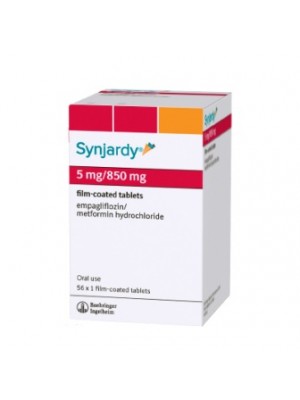
What Synjardy is and what it is used for
Synjardy is a medi..
69.00€