Your shopping cart is empty!
Welcome visitor you can login or create an account.
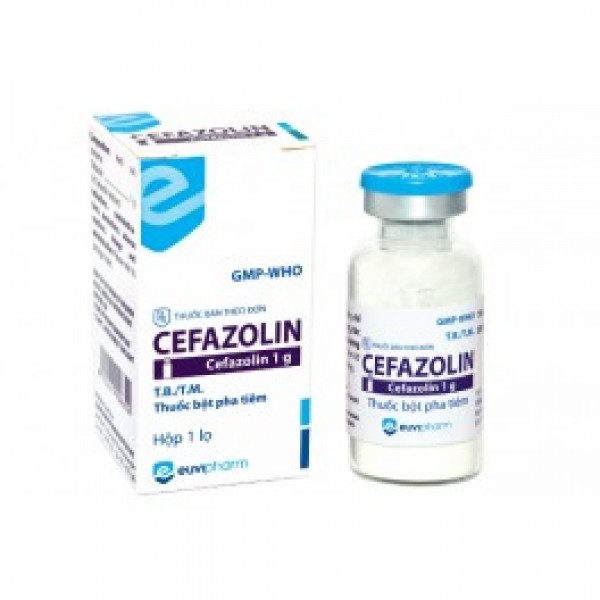
Cefazolin vial - 1 gram.
Product Code: Cefazolin vial - 1 gram.
Availability: In Stock
Product viewed: 1953


Cefazolin vial - 1 gram.
QUALITATIVE AND QUANTITATIVE COMPOSITION
cefazoline sodium 0,524g Eq. of cefazoline 0,5g
cefazoline sodium l, 048g Eq. of cefazoline lg
cefazoline sodium 2,096g Eq. of cefazoline 2g
3 PHARMACEUTICAL FORM
powder for injection
4 CLINICAL DATA
4.1. INDICATIONS
For the treatment of infections caused by antibiotic-sensitive microorganisms:
- Respiratory infections - ENT - infections, streptococcal carriage in the nasopharynx, bronchopulmonary infections;
- Urogenital infections - pyelonephritis, cystitis, prostatitis, epididymitis, endometritis, parametritis bartolinities, pelvioperitonit;
- Biliary infections - cholecystitis, cholangitis, etc. .;
- Infections of skin and soft tissue - acute abscesses phlegmons, postoperative wound infections, lymphadenitis;
- Infection of the bone and joints - osteomyelitis, osteitis, septic - serositis - peritonitis, endocarditis, pleurisy, etc. .;
- Eye infections - supurirasht conjunctivitis panoftalmit;
- Septic conditions of a different nature;
- For prophylaxis in surgery: pre-, para-and postoperatively.
4.2. DOSAGE AND METHOD OF USE
Cefazolin applies deep intramuscular or intravenous injection as, or infusion.
In adults, the usual dose is 0,5-lg every 6-8 hours. The maximum dose is 6g / 24 hours.
In children over one month dose is 25-50 rag / kg body weight per 24 hours, spread over 3-4 taken every 6-8 hours. In severe infections, the daily dose is 100 mg / kg.
Prophylactic surgery applies lg Cefazolin 1/2 to 1 hour before the operation. In operations lasting more than two hours to re-apply 0,5-lg Cefazolin during operation. When the risk of infectious complications, postoperative applies 0,5-lg every 6-8 hours until 24th hour or 3-5 days after the intervention. In renal insufficiency initially apply the usual dose depending on the severity of the infection, then the dose and timing of administration vary according to creatinine clearance.
Dosage in adults:
- Upon clearance 11-34 ml / min - 1A of the dose over 12 hours;
- At clearance less than 10 mL / min - ½ of the dose in 18-24 hours.
Dosage in children:
- On clearance 70-40 ml / min - 60% of the daily dosage in 12 hours
- On clearance 40-20 ml / min - 25% of the daily dosage in 12 hours;
- Clearance at 20-5 ml / min - 10% of the daily dosage in 24 hours;
The duration of treatment depends on the severity of the infection, and usually 7-10 days.
4.3. CONTRAINDICATIONS
Known hypersensitivity to cephalosporins.
4.4. SPECIAL WARNINGS AND SPECIAL PRECAUTIONS FOR USE
In patients hypersensitive to penicillin, penicillamine and griseofulvin (cross-allergy) and those with other forms of allergy first application requires caution and medical supervision.
Before each new course of treatment with Cefazolin patient should be carefully examined to determine whether he had previous hypersensitivity reactions to cephalosporins, penicillins, or other drugs. About 10% of patients with known hypersensitivity to penicillin are also allergic to cephalosporins.
In the absence of an allergic history do cutaneous scarification sample solution preparation, and for a history of allergy initially performed epicutaneous test and if it is negative is done scarification sample. Samples were read after 30 minutes. In the case of severe acute hypersensitivity reactions require application of epinephrine or 0, l-0,5mg adrenaline subcutaneous, intravenous infusion of a potent corticosteroid formulations, an antihistamine (parenteral) novphylline and selective beta-mimetic in bronchospasm oxygen respiration if required intubation.
In patients with renal failure the dose and dosing interval can be changed according to the creatinine clearance.
Not recommended intrathecal and intraventricular administration of Cefazolin, due to the risk of CNS toxicity. Possible coagulation in patients with uraemia. Prolonged use of Cefazolin (by analogy with other antibacterials) may result in the overgrowth of nonsusceptible organisms. In case of superinfection have to reassess the patient during treatment and if necessary to take additional measures.
Possible pseudomembranous colitis, so caution should be exercised in patients with diarrhea following antibiotic use. In severe diarrhea recommended endoscopic examination of pseudomembranous colitis. Mild cases of pseudomembranous colitis be managed only intermittent use of the drug. Moderate or severe cases handled through immediate introduction of fluids, electrolytes and proteins, and if necessary oral antibacterial agents.
Not proven the safety of antibiotics in premature and newborn infants from birth to 1 month.
Possible influence of Cefazolin on the results of laboratory tests - false positive reactions for glucose in urine (using reduction methods); Coombs direct and indirect test of Coombs.
Cefazolin (and other broad spectrum antibiotics) should be used with caution in patients with a history of gastrointestinal disease, particularly colitis.
For patients who require limiting sodium intake be considered quantitative content in the preparation («48,3 mg / g).
4.5. DRUG INTERACTIONS AND OTHER
Probenecid inhibits the renal excretion of Cefazolin and combined administration keeps its continuous high serum concentrations.
When combined administration of potential nephrotoxic drugs and potent diuretics such as furosemide, ethacrynic acid is likely to increase the risk of renal impairment. The antibiotic may be decreased prothrombin index and thus potentiate the action of the anticoagulant drugs.
Salicylates and indomethacin delay broadcast of Cefazolin.
4.6. Pregnancy and lactation
Safety of Cefazolin in pregnant has not been established, so it is recommended to avoid its use during pregnancy unless urgent indications. Caution should be exercised in the application of Cefazolin of lactating women, as is excreted in low concentrations in human milk.
4.7. EFFECTS ON THE ABILITY TO DRIVE AND USE MACHINES
Administration of Cefazolin does not affect the ability to drive or operate machinery.
4.8. SIDE EFFECTS
Allergic reactions - fever, eosinophilia, pruritus, skin rash, rarely anaphylaxis in hypersensitive patients (see PRECAUTIONS).
Haematological reactions - neutropenia, leukopenia, thrombocytopenia and positive for direct and indirect test Coombs, rarely bleeding.
Renal effects - transient increases in BUN, rarely instetsialen jade.
Hepatic reactions - often transient increase of ASAT, ALAT, and alkaline phosphatase.
Gastrointestinal effects - rarely nausea, vomiting, loss of appetite, diarrhea, oral candidiasis, pseudomembranous colitis symptoms.
Reactions CNS - encephalopathy administration of a high dose, especially in renal failure. Other side effects - tenderness and induration in intramuscular, intravenous phlebitis, genital and anal pruritus, vaginitis, genital moniliasis.
4.9. OVERDOSE
When an overdose of antibiotics can be observed convulsions and other signs of toxicity (dizziness, paresthesia, headache) of the central nervous system. In case of overdose (especially in the application of high doses in patients with renal
failure) use of the preparation is interrupted. If necessary, appoint anticonvulsant therapy. Cefazolin is removed by hemodialysis and less by peritoneal dialysis.
5 Pharmacological
ATC code: J01DA04. Anti-infective agents for systemic use. Cephalosporins and related substances.
5.2. Pharmacodynamic properties
Cefazolin is a semisynthetic broad-spectrum cephalosporin antibiotic first generation. Bactericidal act by inhibiting the synthesis of bacterial cell wall. The antibacterial activity of Cefazolin is similar to that of benzylpenicillin, but Cefazolin is active against penicillinase-producing staphylococci. The antibacterial spectrum of the composition comprises:
- Gram-positive organisms - Staphylococcus aureus (including. Penicillinase-producing strains), Staphylococcus epidermidis, Group A beta-hemolytic Streptococcus sp., Streptococcus pneumoniae, Streptococcus pyogenes, Streptococcus viridans, and other strains of Streptococcus, Corynebacterium diphtheriae;
- Gram-negative organisms - Escherichia coli, Proteus mirabilis, Klebsiella sp., Enterobacter aerogenes, Haemophilus influenzae, Neisseria sp. incl. penicillin-resistant, neprodutsirashti beta-lactamase N.gonorrhoeae, Moraxella (Branhamella) catarralis;
- Anaerobic organisms - Bacteroides sp. (B.fragilis resistant), Fusobacterium sp., Veillonella sp.
Methicillin-resistant Staphylococcus strains are typically resistant and Cefazolin. Strains of indolpozitivni Proteus (Proteus vulgaris), Enterobacter cloacae, Morganella morganii and Providencia rettgeri resistant Cefazolin. Serratia sp., Pseudomonas sp., Acinetobacter sp., Mycobacteria, mycoplasmas and fungi are resistant to Cefazolin. The antibiotic is hydrolyzed by a great number of enterobacterial beta-lactamases.
5.2. Pharmacokinetic properties
After intramuscular administration of Cefazolin maximum serum concentrations are reached in about an hour, and after intravenous administration a few minutes afterwards. The biological half-life is 1.5-2 hours and is increased in patients with impaired renal function. In patients with hepatic cirrhosis, biological half-life may be reduced. Approximately 75-85% of the antibiotic is bound to plasma proteins.
Cefazolin penetrates the body tissues and fluids (including. Pleural, peritoneal and synovial), bones, joints, prostate. If there is no obstruction of the gallbladder, bile achieving concentrations higher than in serum. Does not pass the blood-brain barrier. In inflamed meninges reached minimum concentrations. Transplacental passes from the mother to the fetus. Cefazolin not metabolized. About 60% of the administered dose is excreted unchanged by the kidneys by glomerular filtration and tubular secretion during the first 6 hours, Cefazolin high concentrations are reached in the urine. Probenecid inhibits the renal radiation Cefazolin. Cefazolin is excreted in trace amounts and bile. At low concentrations excreted in human milk. Fairly well was removed by hemodialysis, and less in peritoneal dialysis.
5.5. Preclinical safety data
The acute toxicity (LD 50) of Cefazolin was studied in white mice and
rats after intramuscular and intravenous administration.
After repeated (15 days) intramuscular administration of Cefazolin for dogs "Beagle" in a dose 250 mg / kg.TM did not induce toxic effects, and changes in blood chemistry or structural changes in the internal organs.
Repeated intramuscular treatment of rats at doses of 1000 and 2000 mg / kg. BW Cefazolin does not cause abnormalities in blood chemistry. There were no changes themselves in the structure of the internal organs.
Such are the results of intramuscular administration of Cefazolin doses of 500 and 1000 mg / kg.TM rats in a 90-day chronic toxicity. There were no toxic effects and adverse changes in the biochemical parameters of blood. The data obtained from toxicological studies of Cefazolin it characterized as less toxic antibiotic, which is in agreement with the toxicity data of Cefazolin.
Cefazolin administered intramuscularly at a dose of 2000 mg / kg. female rats from the 4th to the 19th day of pregnancy showed no evidence of embryotoxicity. There were no external malformations, skeletal and visceral abnormalities in fetuses of treated animals, suggesting the absence of a teratogenic effect of the antibiotic.
6 PHARMACEUTICAL PARTICULARS
6.1. LIST OF OTHER SUBSTANCES AND THEIR QUANTITIES:
Finished dosage form contains no excipients.
6.2. Physico - Chemical Incompatibilities
Incompatibility was observed in in vitro mixing of Cefazolin with aminoglycoside antibiotics. Possible precipitation upon mixing of Cefazolin with solutions with a pH below 4.5 or hydrolysis when mixed with solutions with a pH above 8.5. Due to possible physicochemical interactions of Cefazolin in vitro is not desirable mixed in the same syringe with other drugs.
The combination of Cefazolin with aminoglycoside antibiotics is one-way and in need of co-administration, they should not be mixed in the same syringe or infusion because of the risk of inactivation and need to bring in different places in 1 hour intervals.
6.3. SHELF LIFE
Two (2) years from date of manufacture.
6.4. STORAGE CONDITIONS
Dry and protected from light, at temperatures below 25 ° C. After reconstitution, store at 2 ° to 8 ° C (refrigerated) .To Store in the original package. Keep out of reach of children!
6.5. PHARMACEUTICAL FORM AND CONTENTS
Colorless glass vials of 9 ml, 10 per carton.
6.6. RECOMMENDATIONS FOR USE
The product subject to medical prescription and dosage, dosing interval and duration of treatment prescribed by the doctor.
The preparation should not be used after the expiry date stated on the packaging.
Preparation of solutions:
- For intramuscular use - 0,5g, lg and 2g Cefazolin dissolved respectively in 2ml, 3ml and 5ml of sterile water for injection. Shake well to dissolve.
- Intravenous - for direct intravenous injection 0,5g Cefazolin is dissolved in at least 5 ml, a lg and 2g respectively in 10ml and 20ml of solvent (SWI) or a 5-10% solution of glucose. Shake well to dissolve. Inject slowly for at least 3-5 min.
- For intravenous infusion - prepared for direct intravenous solution diluted with 50-100ml infusion of intermittent intravenous infusion, or added to the infusion (5-10% glucose solution, Hartmann's solution, 0.9% sodium chloride or sterile water for injection) in a continuous drip.
Write a review
Your Name:Your Review: Note: HTML is not translated!
Rating: Bad Good
Enter the code in the box below:
Related Products