
Your shopping cart is empty!
Welcome visitor you can login or create an account.
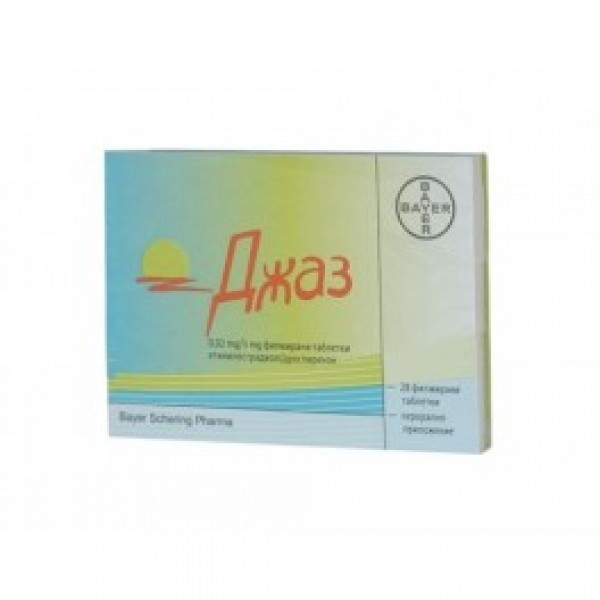
JAZZ table. 28 tablets
Product Code: JAZZ table. 28 tablets
Availability: In Stock
Product viewed: 1149


JAZZ table. 28 tablets
QUALITATIVE AND QUANTITATIVE COMPOSITION

24 light pink tablets
Each tablet contains 0,020 mg ethinylestradiol [ethinilestradiol) (as betadeksov clathrate) (betadex clathrate) and 3 mg drospirenone (drospirenone).
Excipient: lactose 46 mg.
4 white coated placebo tablets: tablet contains no active substances.
Excipient: lactose 50 mg.
For a full list of excipients, see section 6.1.
PHARMACEUTICAL FORM
/ Yaz tabl. film 0,02 mg / 3 mg - 1 x 28, 3 x 28, 6 x 28 /
Tablet
Active tablet is a pale pink, round with convex faces, one side embossed with the letters "DS" in a regular hexagon.
Placebo tablet is white, round with convex faces, one side embossed with the letters "DP" in a regular hexagon.
CLINICAL DATA
Therapeutic indications
Oral contraception.
Posology and method of administration
Route of administration: Oral.
How to take JAZZ?
The tablets should be taken every day at the same time, if necessary with a little liquid under specified on the blister. Taking the tablets consistent. Take one tablet daily for 28 consecutive days. Each subsequent pack is started the day after taking the last tablet from the front pack. Bleeding stopped taking the active ingredient usually occurs 2-3 days after initiation of placebo tablets (last row, and may not have finished before the next pack.
How to start taking jazz?
No prior hormonal contraceptive use (last month)
Tablet-taking has to start on Day I-st of the natural menstrual cycle of women (ie the first day of her menstrual bleeding).
Changing from a combined hormonal contraceptive method (combined oral contraceptive, SMC) (combined oral contraceptive pill, vaginal ring or transdermal patch)
The woman should start taking Jazz preferably on the day after the last active tablet (the last tablet containing the active ingredient) of its preceding combined contraceptive method, but not later than the day after the usual interval preceding its combined contraceptive method in which not accept tablets or placebo tablets. If it has been used a vaginal ring or transdermal patch woman should start taking Jazz as possible on the day of removal, but no later than the day on which would be the next place.
Changing from a progestogen-only-method (progestogen-only pill, injection, implant) or progestogen-delivering intrauterine system (IUS)
The woman may switch on any day of the period of administration of progestogen-only pill (from an implant or the IUS on the day of its removal, from an injectable when you apply after injection), but in all these cases should be advised to apply a barrier method for the first 7 days of tablet-taking.
After a miscarriage in the first three months of pregnancy
The woman may start immediately. When doing this, it should not take additional contraceptive measures.
Following delivery or abortion in the second trimester of pregnancy
The woman should be advised to start the adoption in 21 to 28 days after delivery or abortion in the second trimester of pregnancy. When starting later, the woman should be advised to additionally use a barrier method for the first 7 days. In the meantime, if you have had sex, should be excluded pregnancy before the actual start of COC use or the woman has to wait for her first menstrual period.
For breastfeeding women, cf. Section 4.6.
Management of missed tablets
Placebo tablets from the last (fourth) row of the blister can be ignored. At the same time, they should be discarded to avoid inadvertently prolonging the placebo tablet. The following advice only applies to missed active tablets:
If the woman is overdue less than 12 hours in the making of any tablet, contraceptive protection is not reduced. The woman should take the tablet as soon as remembered and the next dose should be taken at the usual time.
If it is delayed more than 12 hours in taking any tablet, contraceptive protection may be reduced. Management of missed tablets can be guided by the following two basic rules:
1. tablet-taking must never be discontinued for longer than 4 days
2. it takes 7 uninterrupted tablet to achieve adequate suppression of the hypothalamic-pituitary-ovarian axis.
In daily practice, therefore, can give the following advice:
Day 1-7
The user should take the last missed tablet as soon as she remembers, even if this means taking two tablets at the same time. She then continues to take tablets at her usual time. Moreover, during the next seven days should apply a barrier method such as a condom. If you had intercourse in the preceding 7 days, it should be borne in mind that there is likely to be pregnant. The more tablets are missed and the closer they are to the placebo tablet phase, the greater is the risk of pregnancy.
Days 8-14
The user should take the last missed tablet as soon as she remembers, even if this means taking two tablets at the same time. She then continues to take tablets at her usual time. Provided that the woman has taken her tablets correctly in the 7 days preceding the first missed tablet, there is no need to take additional contraceptive measures. At the same time, if she has missed more than one pill a woman should be advised to use extra precautions 7 days.
Day 15-24
The risk of reduced reliability is imminent because of the forthcoming placebo tablet phase. At the same time, by adjusting the scheme taking the pill, reduced contraceptive protection can still be prevented. By observing one of these two options, there is no need to apply additional contraceptive protection, provided that in the 7 days preceding the first missed tablet the woman take the tablets correctly. However, if it is not, it should move to the first of two opportunities, apply extra precautions for the next 7 days.
1. The user should take the last missed tablet as soon as she remembers, even if this means taking two tablets at the same time. It will then continue to take your tablets at the usual time while using all the active tablets. 4 tablets from the last row should be ignored. Immediately to start the next blister pack. Less likely to receive bleeding stopped taking active part before the close of the active tablets of the second pack, but she may experience spotting or breakthrough bleeding on days when taking tablets.
2. The woman may also be advised to stop taking the active tablets from the current blister pack. Then she should take placebo tablets from the last row for no more than four days, including the days when she missed tablets, and then continue with the next blister pack.
If the woman missed tablets and subsequently has no withdrawal bleed adoption of active ingredient in the phase when placebo tablets should be kept in mind that there is a possibility of pregnancy.
Advice in case of gastro-intestinal disturbances
In case of severe gastro-intestinal disorders (eg, vomiting or diarrhea), absorption may not be complete and should take additional contraceptive measures. If vomiting occurs within 3-4 hours after taking the active tablet as soon as possible to take a new (replacement) tablet. The new tablet should be taken, if possible, within 12 hours after normal hours of taking the tablet. If you take more than 12 hours, should be given advice on missed tablet similar to that in section 4.2 "Management of missed tablets." If the woman is unwilling to change its normal schedule of making tablets, she should take extra tablet (s) from another blister pack.
How to delay the appearance of bleeding stopped taking the active ingredient
To delay the onset of bleeding, the woman should continue with another blister Jazz without taking placebo tablets from the current pack. The extension can continue as desired, up to end of the active tablets in the second pack. During the extension the woman may experience breakthrough bleeding or spotting. Therefore, regular intake of Jazz recovered after phase placebo tablets.
To replace regular bleeding in another day of the week other than that in which it is accustomed with the existing schedule of taking tablets, it can be advised to shorten the forthcoming placebo tablet phase by as much as desired. The shorter the interval, the greater the risk that it will not get breakthrough bleeding or spotting at the next pack (just as when delaying the onset of bleeding).
Contraindications / Yaz tabl. film 0,02 mg / 3 mg - 1 x 28, 3 x 28, 6 x 28 /
Combined oral contraceptives (COCs) should not be used in any of the following conditions. If any of these conditions appear for the first time in the application of SMC, taking the medicinal product should be stopped immediately.
Venous thrombosis present or in history (deep venous thrombosis, pulmonary embolism)
Arterial thrombosis present or in history (eg myocardial infarction) or prodromal conditions (eg angina pectoris and transient ischemic attack)
Cerebrovascular accident present or in history
Presence of heavy (s) or multiple (and) risk (s) factor (s) for arterial thrombosis:
Diabetes mellitus with vascular symptoms severe hypertension
severe dyslipoproteinemia
Hereditary or acquired predisposition for venous or arterial thrombosis, such as APC-resistance, antithrombin-III deficiency, protein C deficiency, protein S deficiency, hiperhomotsistei dumb and antiphospholipid antibodies (anticardiolipin antibodies, lupus anticoagulant)
Pancreatitis or a history of such, if associated with severe hypertriglyceridemia
Presence or history of severe hepatic disease as long as liver function values that are not returned to normal
Severe renal insufficiency or acute renal failure
Presence or history of liver tumors (benign or malignant)
Known or suspected malignancy influenced by hormones (such as the genitals or breasts)
Nediagiostitsirano vaginal bleeding
History migraine with focal neurological symptoms
Hypersensitivity to the active substance or to any of the ingredients in the film-coated tablet Jazz
Special warnings and precautions for use
Warnings
If any of the conditions / risks mentioned below, the benefits of COC should be assessed by the possible risks for each individual woman and discussed with her before the woman to decide whether to start using the product. In aggravation, exacerbation or first appearance of any of these conditions or risk factors, the woman should consult a doctor. When the doctor should decide whether COC use should be discontinued.
Circulatory Disorders
The use of any combined oral contraceptive is associated with an increased risk of venous thromboembolism (VTE) compared with women who did not use such drugs. The increased risk of VTE is highest during the first year in which women used combined, oral contraceptive.
Epidemiological studies have shown that the incidence of VTE in women with known risk factors for VTE, used oral contraceptives with low estrogen (<0,05 mg ethinylestradiol) ranges from 20 cases per 100 000 women-years (for levonorgestrel containing a "second generation" COCs) to 40 cases per 100,000 women-years (desogestrel / gestodene-containing "third" generation COC). In comparison, female contraception such unused frequency is 5 to 10 cases per 100,000 women-years and 60 cases per 100,000 pregnancies. VTE ends fatal in 1-2% of cases.
Data from a large, prospective 3-branched group study showed that the incidence of VTE in women with or without other risk factors for VTE, who used ethinylestradiol / drospirenone 0,03 mg | / 3 mg is in the same range as in users of other COCs with low estrogen, including levonorgestrel-containing OC (so-called 'second' generation OS). Ute at risk of Jazz is unknown at present.
Epidemiological studies have also shown a relationship between use of combined COCs and an increased risk for arterial (myocardial infarction, transient ischemic attack) thromboembolism.
Extremely rarely, oral contraceptives, thrombosis occur in other blood vessels, eg. hepatic, mesenteric, renal, cerebral or retinal veins and arteries. There is no general agreement on the existence of a relationship between the occurrence of these events and the use of hormonal contraceptives.
Symptoms of venous or arterial thrombotic / thromboembolic or cerebrovascular accident can include:
unusual unilateral leg pain and / or swelling • sudden severe chest pain with or without radiation to the left arm
sudden shortness of breath
suddenly started coughing
any unusual, severe or prolonged headache
sudden partial or complete loss of vision
diplopia
drawl or aphasia
dizziness
collapse with or without focal seizure
weakness or marked numbness suddenly affecting one side or one part of the body
movement disorders
"acute" abdomen.
The risk of venous thromboembolic complications in applying SMC increased by
age
a positive family history (venous thromboembolism ever in a sibling or parent at a relatively early age). If a hereditary predisposition is suspected, the woman should be referred to a specialist for advice before deciding about any COC use.
prolonged immobilisation, major surgery, any surgery to the legs, or major trauma. In these situations it is appropriate to adopt the pill be stopped (in the case of elective surgery at least four weeks in advance) and not resume until two weeks after complete remobilisation. Consideration should be given antithrombotic treatment if pills have been discontinued in advance.
obesity
There is no consensus about the possible role of varicose veins and superficial thrombophlebitis in the onset or progression of venous thrombosis.
The risk of arterial thromboembolic complications or cerebrovascular accident in COC users increases with:
age
smoking (women over age 3 5 years should be strongly advised not to smoke if they want to apply SMC)
dyslipoproteinemia
hypertension
Migraines
obesity
a positive family history (venous thromboembolism ever in a sibling or parent at a relatively early age). If a hereditary predisposition is suspected, the woman should be referred to a specialist for advice before deciding about any COC use.
disease of the heart valves
atrial fibrillation
The presence of major risk factors or multiple risk factors respectively for venous or arterial disease, may also constitute a contraindication. The possibility of anticoagulant therapy should also be taken into account. COC users should be specifically directed to consult with your doctor if you experience possible symptoms of thrombosis. In suspected or confirmed thrombosis, COC use should be discontinued. Should immediately begin an adequate alternative contraception because teratogenicity of anticoagulant therapy (coumarins).
In the postpartum period must be borne in mind the increased risk of thromboembolism
Other medical conditions that are associated with adverse effects on the cardiovascular system include diabetes mellitus, systemic lupus erythematosus, haemolytic uraemic syndrome and chronic intestinal inflammation (Crohn's disease or ulcerative colitis) and sickle cell anemia.
Increased incidence of severe migraine during COC use (which may be prodromal phenomenon cerebrovascular event) may be a reason for immediate discontinuation of the COC.
Tumors
Some epidemiological studies have reported an increased risk of cervical cancer in long-term users of COCs (over 5 years), but there are still controversies about the degree to which these findings are the result of sexual behavior or other factors such as human papillomavirus (HPV ).
Meta-analysis of 54 epidemiological studies reported that there is a slightly increased relative risk (RR = 1,24) of breast cancer in women using COCs. The increased risk gradually decreased during the 10-year follow-up after discontinuation of COCs. Because breast cancer is rare in women under the age of 40 years, the increased number of diagnosed with breast cancer treated at the time or before a COC users is small in relation to the overall risk of breast cancer. These studies do not provide evidence for causation. The observed pattern of increased risk may be due to earlier diagnosis of breast cancer in COC users, the biological effects of COCs or a combination of both. Breast cancers diagnosed in ever-SMC is less advanced clinically than the cancers perspective diagnosed in never users SMC.
Rarely used in the SMC are benign liver tumors and even more rarely, malignant liver tumors. In isolated cases, these tumors have led to life-threatening abdominal bleeding. Hepatic tumor should be considered in the differential diagnosis when severe pain in the upper abdominal, liver enlargement or signs of abdominal bleeding in women taking COCs.
With the use of high-COC (50 μg ethinylestradiol) the risk of endometrial cancer and ovarian cancer is reduced. Whether this applies to low-dose COCs remains to be confirmed.
Other Conditions
Progestin component of Jazz is an aldosterone antagonist with properties allowing retention of potassium. In most cases it is not expected to increase in the levels of potassium. In a clinical study, however, in some patients with mild to moderate renal impairment and concomitant use of potassium sparing medicinal products serum potassium levels slightly, but not significantly, increased when taking drospirenone. It is therefore advisable to check serum potassium during the first treatment cycle in patients with renal insufficiency and serum potassium before treatment to the upper limit of normal, especially when concomitant medicinal products, preservatives potassium.
When using SMC women with hypertriglyceridemia, or a family history thereof may be at increased risk for pancreatitis.
Although there are reports of small increases in blood pressure in many women taking COCs, clinically relevant increases cases are rare. Only in these rare cases is warranted immediate discontinuation of the COC. If using SMC and previous hypertension, permanent or significant increases in blood pressure is not adequately respond conducted by antihypertensive treatment, SMC must be stopped. If considered appropriate, COC use may be restored in achieving antihypertensive treatment with normal blood pressure.
Reported the emergence or worsening of these conditions during pregnancy and COC use, the data for the application of COC use is inconclusive: jaundice and / or pruritus related to cholestasis, gallstones, porphyria, systemic lupus erythematosus, haemolytic uraemic syndrome; Sydenham Sydenham's, herpes gestationis, otosclerosis-related hearing loss.
In women with hereditary angioedema exogenous estrogens may induce or exacerbate symptoms of angioedema.
Acute or chronic disturbances of liver function may necessitate the discontinuation of COC use until markers of normalization of liver function. The appearance again holestaichen: jaundice and / or pruritus related to cholestasis, which previously appeared during pregnancy or previous use of sex hormones require discontinuance of the COC.
Although COCs may affect peripheral insulin resistance and glucose tolerance, there is no evidence for a need to alter the therapeutic regimen in diabetics using low-dose COCs (containing <0,05 mg ethinylestradiol). However, diabetic women should be carefully monitored, especially at the start of COC use.
Worsening of endogenous depression, of epilepsy, of Crohn's disease and ulcerative colitis with the use of COCs.
Sometimes it can develop chloasma, especially in women with a history of chloasma gravidarum. Women with a tendency to chloasma should avoid exposure to the sun or ultraviolet radiation whilst taking COCs.
Each light pink tablet of this product contains 46 mg lactose per tablet, each white tablet contains 50 mg. Patients with rare hereditary problems of galactose intolerance, Lapp lactase deficiency or glucose-galactose malabsorption who are lactose-free diet should have that kind of quantity.
Medical examination / consultation
Before starting the application again, the Jazz must be removed complete medical history (including
family) and to exclude pregnancy. You should measure your blood pressure and do a physical examination, taking into account contraindications (see section 4.3) and warnings
(See section 4.4). The woman should be instructed more carefully read the user leaflet and to adhere to the advice given. The frequency and nature of examinations should be based on established practice and are individually tailored to each individual
wife.
Women should be advised that oral contraceptives do not protect against HIV infection (AIDS) and other sexually transmitted diseases.
Reduced efficacy
The efficacy of COCs may be reduced in the case of so missed active tablets (see section 4.2), gastro-intestinal disturbances in taking active tablets (see section 4.2) or concomitant
Reduced control of the menstrual cycle
With all COCs may occur outside normal bleeding (spotting or breakthrough bleeding episodes), especially in the first months of use. The evaluation of any irregular bleeding is only meaningful after an adaptation interval of about three cycles.
If irregular bleeding persists or occurs after previously regular cycles, then you should look for non-hormonal causes and adequate diagnostic measures are indicated to exclude malignancy or pregnancy. These may include curettage.
Some women may not appear bleeding stopped taking the active ingredient in the placebo tablet phase. If the COC has been taken according to the guidelines provided in Section 4.2, it is unlikely that the woman is pregnant. However, if the COC has not been taken according to these directions prior to the first missing bleeding stopped taking the active ingredient or if this happens twice, to exclude pregnancy before continuing use of COCs.
Interaction with other medicinal products and other forms of interaction
Note: You need to read the accompanying prescribing information for treatment and to identify potential interactions.
Effects of other medicinal products on Jazz
Interactions between oral contraceptives and other medicines can cause bleeding stopped taking the active ingredient and / or contraceptive failure. In the literature, the following interactions.
Hepatic metabolism
Interactions can occur with drugs that induce liver enzymes, which may have consequently increased clearance of sex hormones (eg phenytoin, barbiturates, primidone, carbamazepine, rifampicin, bosentan and HIV-medication (eg ritonavir, nevirapine), and and oxcarbazepine, topiramate, felbamate, griseofulvin and products containing the herb St. John's Wort (hypericum perforatum)). Maximum enzyme induction is generally observed for about 10 days, but may last at least 4 weeks after cessation of treatment.
Interaction with enterohepatic circulation
Contraceptive failure is observed during treatment with antibiotics, such as penicillins and tetracyclines. The mechanism of this effect is not understood.
Management
Women on short-term treatment (up to one week) with any of the above classes of drugs or individual active substances (drugs that induce liver enzyme) than rifampicin should temporarily use a barrier method in addition to the COC, ie the period of concurrent product and 7 days after their discontinuation.
Women of rifampicin should be used a barrier method in addition to SMC, while taking rifampicin and 28 days after discontinuation of it.
Women-term treatment with hepatic enzyme-inducing active compounds, it is advisable to administer another reliable, non-hormonal contraceptive method.
Women on treatment with antibiotics (besides rifampicin, see above) should use the barrier method until 7 days after discontinuation.
If concomitant use of medicinal products continue after the end of the active tablets in your current pack SMC placebo tablets should be skipped and immediately begin next COC pack.
The main metabolites of drospirenone in human plasma are generated without involvement of the cytochrome P450 system. Inhibitors of this enzyme system are therefore unlikely to affect the metabolism of drospirenone.
Influence of Jazz on other medicinal products
Oral contraceptives may affect the metabolism of other active ingredients. Can therefore increase (eg ciclosporin) or decrease (eg lamotrigine) plasma and tissue concentrations.
According to the results of studies of the effects of inhibition in vitro and in vivo interactions in female volunteers using omeprazole, simvastatin and midazolam as marker substrate are unlikely effects of drospirenone 3 mg with the metabolism of other compounds.
Other interactions
In patients without renal failure, concomitant administration of drospirenone and ACE inhibitors or NSAIDs had no significant effect on serum potassium. However, concomitant administration of Jazz and aldosterone antagonist or potassium-sparing diuretics has not been studied. In this case, during the first treatment cycle should be examined serum potassium.
Laboratory tests
The use of contraceptive steroids may influence the results of certain laboratory tests, including biochemical parameters of liver, thyroid, adrenal and renal function, plasma levels of (carrier) proteins, eg. corticosteroid-binding globulin and lipid / lipoprotein fractions, parameters of carbohydrate metabolism and parameters of coagulation and fibrinolysis. Changes generally remain within the normal laboratory range. Drospirenone causes increased plasma renin activity and plasma aldosterone induced by its low antimineralocorticoid activity.
Pregnancy and lactation
Jazz is not indicated during pregnancy.
If using Jazz pregnancy develops, the product should be stopped immediately. Epidemiological studies indicate no increased risk of the existence or risk of birth defects in children born to mothers who have taken SMC prior to pregnancy, nor a teratogenic effect when adopting a mistake SMC child.
Animal studies have demonstrated the existence of side effects during pregnancy and lactation (see section 5.3). The results of these animal studies can not exclude adverse effects caused by hormonal action of the active ingredient. At the same time, the experience as a whole SMC in pregnancy indicates the practice of side effects in humans.
Existing data regarding the use of Jazz in pregnancy are too limited to allow to draw conclusions about the Jazz negative effect on pregnancy, health of the fetus or newborn. So far, no relevant epidemiological data.
Lactation may be influenced by COCs as they may reduce the quantity and change the composition of breast milk. The use of COCs should generally not recommended for nursing mothers until they stop breastfeeding completely. Small amounts of the contraceptive steroids and / or their metabolites may be excreted in breast milk when using COCs. These amounts may affect the child.
Effects on ability to drive and use machines
No studies on the effects on ability to drive and use machines. Not affect the ability to drive and use machines using SMC
Adverse reactions / Yaz tabl. film 0,02 mg / 3 mg - 1 x 28, 3 x 28, 6 x 28 /
For serious adverse reactions in COC users
The following adverse reactions have been reported with the use of Jazz:
The table below reports adverse reactions by MedDRA database system (MedDRA SOC). Frequencies are based on clinical trials. Use
appropriate MedDRA term to describe a certain reaction and its symptoms and related conditions.
Adverse reactions associated with the use of jazz as an oral contraceptive or to treat moderate acne in skin accordance with snstemo organ classification and terminology MedDRA MedDRA
Mr. infestations Infections
rare-Candidiasis
Blood and lymphatic system
rare-Anemia Thrombocythaemia
Immune System
rare, allergic reaction
Endocrine disorders
rare-Endocrine Disorders
Metabolism and nutrition
Rare, increased appetite, anorexia, Hyperkalaemia, Hyponatraemia
Psychiatric Disorders
common - Emotional lability
uncommon, depression, decreased libido, nervousness, drowsiness
Rare, anorgasmia, Insomnia
Nervous System
Headache frequency
uncommon, Dizziness, Peresteziya
rare - Vertigo, Tremor
Eye Disorders
rare-conjunctivitis, dry eyes, eye disorders
Cardiac disorders
rare-Tachycardia
Vascular Disorders
uncommon, migraine, varicose veins, hypertension
rare-Phlebitis, vascular disorder, epistaxis, syncope
Gastrointestinal Disorders
Common-Nausea
uncommon, abdominal pain, vomiting, Dyspepsia Bloating Diarrhea Gastritis
rare - Enlarged abdomen, Gastrointestinal disturbance, Gastrointestinal sensation filling Hiatusova hernia Oral candidiasis, constipation, dry mouth
Hepatobiliary disorders
rare - Biliary pain Cholecystitis
Skin and subcutaneous tissue disorders
uncommon acne, pruritus, rash
Rare, chloasma, Eczema, Alopecia, Acne and forms dermatitis, dry skin, erythema nodosum, hypertrichosis, Skin disorder, skin striae, Contact dermatitis, photosensitivity dermatitis
Skin nodule
Disorders Musculoskeletal and connective tissue disorders
uncommon, Back Pain, Pain in extremity, muscle cramps
Reproductive system and breast disorders
common - chest pain, metrorrhagia * Amenorrhea
uncommon - Vaginal candidiasis, pelvic pain, breast enlargement, fibrocystic breasts, uterine / vaginal bleeding * genital secretions, hot flushes, vaginitis, menstrual disorder Dizmenoreya, Hipomenoreya, Menorrhagia dry vagina, suspicious Pap
rare - Dizpareuniya, vulvovaginitis, bleeding after intercourse bleeding stopped taking the active ingredient Cystic breast hyperplasia, breast, Breast Neoplasm Cervical polyp, endometrial atrophy, ovarian cysts, uterine enlargement
General disorders and administration site conditions
uncommon, asthenia, increased sweating, edema
(Generalized edema, peripheral edema, Swelling of the face)
rare - Malaise
Research
uncommon - Increased body weight
rare - Reduced body weight
Bleeding abnormalities ... usually resolve with continued treatment
The following serious adverse reactions were reported in women taking COCs
Special warnings and precautions for use:
Venous thromboembolism violation;
Arterial thromboembolic disorders;
Hypertension;
Liver tumors;
Occurrence or deterioration of conditions for which association with COC use is not conclusive: Crohn's disease, ulcerative colitis, epilepsy, migraine, endometriosis, uterine fibroids porfiririya system
lupus erythematosus, herpes gestationis, Sydenham chorea of, haemolytic uraemic syndrome, cholestatic jaundice;
Chloasma;
Acute or chronic disturbances of liver function may necessitate the discontinuation of COC use until markers of normalization of liver function.
In women with hereditary angioedema exogenous estrogens may induce or exacerbate symptoms of angioedema.
The frequency of diagnosis of breast cancer is very slightly increased among COC users. Because breast cancer is rare in women under 40 years, the excess number is small relative to the overall risk of breast cancer. Causation with COC use is unknown.
Write a review
Your Name:Your Review: Note: HTML is not translated!
Rating: Bad Good
Enter the code in the box below:
Related Products



Jangee 0.03 mg. / 3 mg. 21 tabletsWhat JANGEEand what it is ..
23.00€